
YouTube will now automatically label videos that are generated by AI.
YouTube is set to automatically identify and label videos that feature significant photorealistic AI content, moving away from its previous system that relied on creators to voluntarily disclose such information. This update signifies a departure from the platform's earlier method, which has been based on voluntary disclosure by creators since its introduction in 2024.
The automatic labeling will be implemented gradually, starting in May 2026. YouTube stated that the detection system will utilize its own signals to recognize AI-generated content, although the specific technical methods have not been disclosed.
In conjunction with this change, YouTube is repositioning the AI labels to make them more visible. For long-form videos, labels will now be displayed directly beneath the video player instead of being hidden in the expanded description, where many viewers do not pay attention. For Shorts, the label will appear as an overlay directly on the video.
Previously, labels were only prominently shown when AI content involved sensitive subjects like health, news, elections, or finance, with other disclosures placed in the description. This distinction will be eliminated, and every AI-labeled video will feature a visible marker regardless of its content.
Creators will still have the option to update their disclosures if they feel a video has been erroneously flagged by the automatic system. However, YouTube will enforce permanent labels in two specific scenarios: when a video is created using YouTube’s own AI tools, like Veo, Gemini Omni, and Dream Screen, and when C2PA metadata indicates the content is entirely AI-generated.
C2PA, or the Coalition for Content Provenance and Authenticity, is an open standard that attaches metadata to files to document their origin and editing history. Established in 2021 by companies such as Adobe, Arm, the BBC, Intel, Microsoft, and Truepic, the coalition has grown to include over 6,000 member organizations. OpenAI joined the C2PA steering committee on May 19, 2026, in addition to partnering with Google to integrate invisible SynthID watermarks into its AI-generated images.
So far, Google’s SynthID watermarking tool has been applied to over 100 billion AI-generated images and videos. This tool embeds an imperceptible signal into generated content that can be recognized by detection systems while remaining invisible to viewers. YouTube’s automatic detection system will be able to read C2PA metadata and SynthID watermarks as part of its identification process.
This expansion of labeling coincides with the enhancement of YouTube’s deepfake detection and removal system. As of May 16, 2026, deepfake protections have been extended to all adults over age 18, allowing any adult to file complaints about AI-generated content depicting their likeness, whereas previously only public figures could request such removals. Currently, the protection system focuses on face-based deepfakes, with voice cloning detection anticipated later in 2026.
YouTube has been clear about what the labels will not do. Videos labeled as AI-generated will not suffer penalties in the recommendation algorithm or lose monetization opportunities. Instead, the labels are intended as informative tools rather than punitive measures. The platform presents this change as a strategy for increased transparency rather than content moderation.
The timing aligns with the upcoming AI Act from the European Commission, which mandates platforms to label AI-generated content and implement machine-readable provenance markers effective August 2026. By implementing these changes ahead of the regulatory deadline, YouTube positions itself favorably, although the company has not specifically stated that compliance is the motivation for these changes.
This situation highlights a broader trend, as all major platforms are facing similar challenges. Meta uses C2PA signals to label AI-generated content across Instagram, Facebook, and Threads, while TikTok requires creators to declare AI content. However, voluntary disclosure has been inconsistent, as some creators may forget, misunderstand the requirements, or deliberately avoid labeling to enhance engagement. YouTube's shift to automated detection acknowledges the shortcomings of the previous system.
The accuracy of AI detection remains a challenge. There is a risk of false positives that could alienate creators who produce legitimate content that inadvertently triggers the detection system. YouTube's allowance for creators to contest automated labels indicates that the company anticipates potential errors. The more straightforward permanent label policy for its own tools and C2PA-verified content simplifies the process, as these signals are definitive.
YouTube is also heavily investing in AI features for content creation. At Google I/O 2026, the company unveiled "Ask YouTube," a conversational AI search function, an AI playlist generator, and AI-driven video summaries. Google’s Gemini Omni, a multimodal video model, is now available in YouTube Shorts Remix and the YouTube Create app. This means the platform is making it easier to create AI content while simultaneously increasing transparency regarding such content.
This evolving landscape will continue to present challenges. As AI video tools advance and while OpenAI shifts its focus away from standalone AI video products, Google is integrating Gemini Omni more deeply into You
Other articles
 YouTube will now automatically mark videos that are generated by AI.
YouTube is transitioning from optional creator disclosures to automated AI detection of videos, featuring noticeable labels and permanent indicators for content created using its tools or validated by C2PA metadata.
YouTube will now automatically mark videos that are generated by AI.
YouTube is transitioning from optional creator disclosures to automated AI detection of videos, featuring noticeable labels and permanent indicators for content created using its tools or validated by C2PA metadata.
 Vincent Bolloré turns down Ackman's $64 billion offer for Universal Music.
Vincent Bolloré has officially declined Bill Ackman's $64 billion offer from Pershing Square for Universal Music Group, bringing an end to the biggest take-private proposal in the history of the music industry.
Vincent Bolloré turns down Ackman's $64 billion offer for Universal Music.
Vincent Bolloré has officially declined Bill Ackman's $64 billion offer from Pershing Square for Universal Music Group, bringing an end to the biggest take-private proposal in the history of the music industry.
 Robinhood enables AI agents to engage in stock trading and utilize credit cards.
Robinhood introduces autonomous stock trading through MCP and a virtual credit card for AI agents that offers 3% cashback, making it the first significant retail brokerage to allow bots to take control.
Robinhood enables AI agents to engage in stock trading and utilize credit cards.
Robinhood introduces autonomous stock trading through MCP and a virtual credit card for AI agents that offers 3% cashback, making it the first significant retail brokerage to allow bots to take control.
 EXCLUSIVE: The director and cast of Backrooms discuss the process of transforming a viral web series into one of A24's most disturbing horror films.
Kane Parsons, Chiwetel Ejiofor, and Renate Reinsve discuss how A24's Backrooms transforms the popular liminal horror series into a haunting psychological movie that explores themes of isolation, liminal spaces, and emotional trauma.
EXCLUSIVE: The director and cast of Backrooms discuss the process of transforming a viral web series into one of A24's most disturbing horror films.
Kane Parsons, Chiwetel Ejiofor, and Renate Reinsve discuss how A24's Backrooms transforms the popular liminal horror series into a haunting psychological movie that explores themes of isolation, liminal spaces, and emotional trauma.
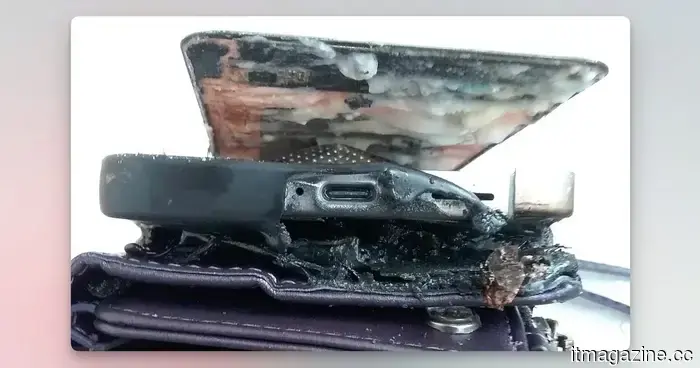 A Samsung Galaxy S25 FE exploded during the night, marking it as not the first instance of a Galaxy S25 experiencing such an incident.
A Samsung Galaxy S25 FE ignited while being charged in bed, injuring its owner and sparking new concerns regarding the safety of Samsung's batteries.
A Samsung Galaxy S25 FE exploded during the night, marking it as not the first instance of a Galaxy S25 experiencing such an incident.
A Samsung Galaxy S25 FE ignited while being charged in bed, injuring its owner and sparking new concerns regarding the safety of Samsung's batteries.
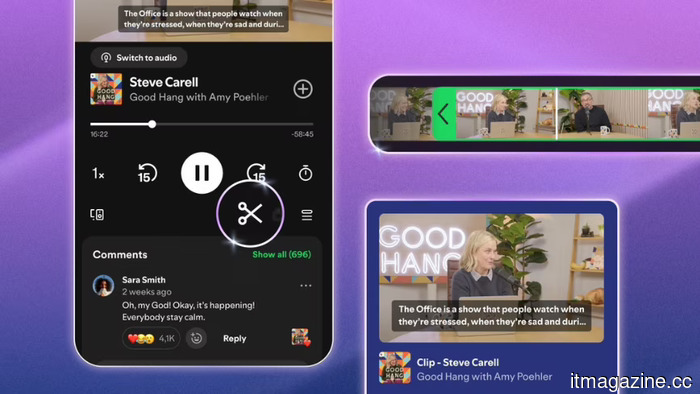 Spotify now enables users to clip and share segments from any podcast.
Spotify introduces Podcast Clips, allowing listeners to cut and share audio snippets from episodes using a new scissors icon, accessible globally on mobile for both free and Premium users.
Spotify now enables users to clip and share segments from any podcast.
Spotify introduces Podcast Clips, allowing listeners to cut and share audio snippets from episodes using a new scissors icon, accessible globally on mobile for both free and Premium users.
YouTube will now automatically label videos that are generated by AI.
YouTube is transitioning from a system of voluntary creator disclosures to an automatic detection method using AI for videos. This will include clear labels and permanent markers for content created with its tools or validated by C2PA metadata.