
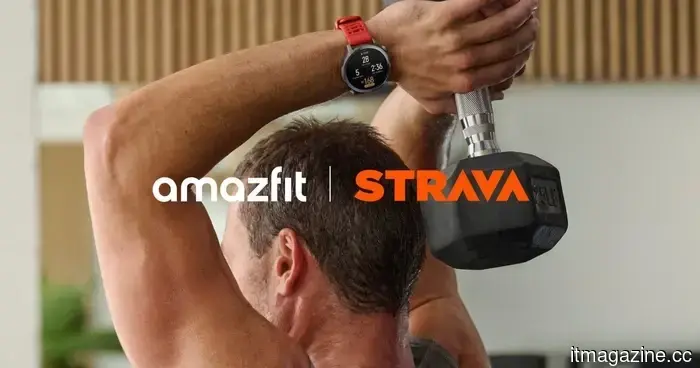
Amazfit users will be the first to access Strava’s significant strength training update.
Strava is introducing muscle maps, workout logs, and shareable strength milestones
Strava has recently launched a significant update focused on strength training, and Amazfit users are among the first to take advantage of these new features. This update allows for a more detailed synchronization of strength workouts, moving away from being categorized merely as standard gym sessions.
Amazfit is one of 14 initial partners, along with Garmin, COROS, WHOOP, Fitbod, Hevy, Runna, JEFIT, Caliber, Liftoff, Motra, REMAKER, iFIT Personal Trainer, and 24 Hour Fitness, that will receive this update this summer.
Strava is enhancing its focus on strength training
The update introduces a new Workout Log specifically for strength training, enabling users to log sets, reps, and weights, thereby improving the tracking of their progress over time and allowing them to revisit past sessions and repeat workouts more easily.
Additionally, the update features auto-generated muscle maps that display the muscle groups engaged during workouts. This provides users with a better understanding of how their training is distributed throughout the week and may help identify trends, such as frequently training certain areas while neglecting others.
Amazfit
Another notable enhancement in this update is the introduction of five shareable strength-related milestones and workout details. Users can share these updates with friends, clubs, and the larger Strava community.
Strava is appealing to hybrid athletes
This update is particularly beneficial for hybrid athletes who engage in running, cycling, lifting, CrossFit, and mobility training within the same week. The enhanced Workout Log and muscle map can assist in preventing the overtraining of a particular muscle group across various activities and enhance recovery management.
Users worldwide can expect to receive this update in the coming weeks. As of now, Strava and Amazfit have not provided a specific rollout date.
Google Health’s challenging transition from Fitbit prompts significant cleanup efforts
Google is responding to feedback about its revamped Google Health app, which has replaced Fitbit and is now available for Android and iOS users in version 5.0. The first update addresses a key issue: runs that some users saw categorized as general workouts will be corrected this week, with run splits being added to the summaries.
XREAL’s $299 glasses simplify AR access for casual users
XREAL is making AR glasses less daunting with its recently announced X By XREAL (also known as xbx), a new budget-friendly sub-brand designed for those seeking a big-screen experience without the premium price tag. The brand's inaugural product, the a01, is a pair of lightweight AR glasses currently available in China, with a US launch anticipated in July, starting at $299.
Luna challenges fitness subscription models with its screenless band
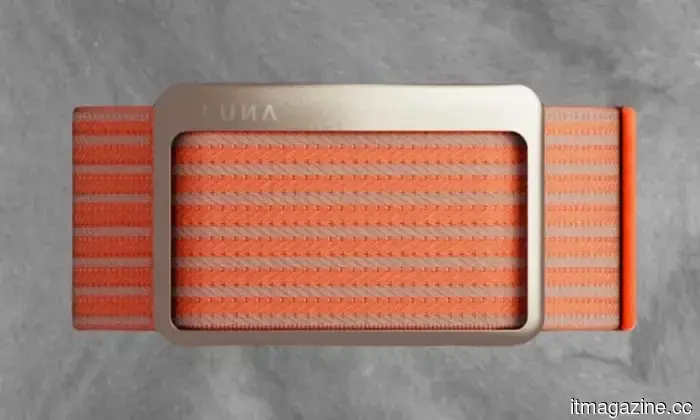
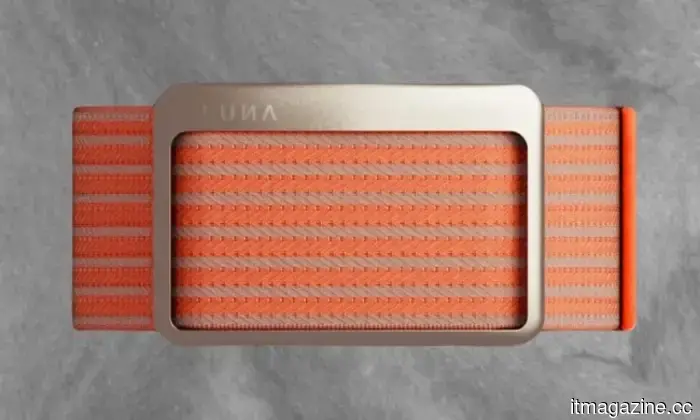
Luna Band enters the heavily subscription-based consumer tech market with a no-fee approach and boasts a 10-day battery life. While Whoop charges $30 monthly and Fitbit Air limits advanced metrics to its $9.99 Google Health Premium subscription, the Oura Ring also comes with costs. The screenless fitness tracker sector has evolved into one of the most subscription-heavy areas in consumer tech. Luna is betting that many users have noticed this shift and are seeking an alternative, with plans to launch its first screenless fitness band in July 2026.




Other articles
 Xiaomi might be looking to adopt Samsung's anti-snoop feature, but without the costly display technology.
Xiaomi is said to be working on a feature similar to Privacy Display for HyperOS 4, which will allow users to prevent screen snooping without requiring Samsung's latest hardware.
Xiaomi might be looking to adopt Samsung's anti-snoop feature, but without the costly display technology.
Xiaomi is said to be working on a feature similar to Privacy Display for HyperOS 4, which will allow users to prevent screen snooping without requiring Samsung's latest hardware.
 Amazfit users will be the first to access Strava’s significant strength training update.
Amazfit users are among the initial recipients of Strava’s new strength features, which include muscle maps, workout logs, and enhanced lift tracking.
Amazfit users will be the first to access Strava’s significant strength training update.
Amazfit users are among the initial recipients of Strava’s new strength features, which include muscle maps, workout logs, and enhanced lift tracking.
 Samsung might finally eliminate the most criticized camera lens on the Galaxy Ultra.
The anticipated Galaxy S27 Pro from Samsung could feature the same top-tier camera hardware as the Ultra but may eliminate one of the telephoto configurations that has faced significant criticism.
Samsung might finally eliminate the most criticized camera lens on the Galaxy Ultra.
The anticipated Galaxy S27 Pro from Samsung could feature the same top-tier camera hardware as the Ultra but may eliminate one of the telephoto configurations that has faced significant criticism.
 Samsung might finally eliminate the most criticized camera lens of the Galaxy Ultra.
The anticipated Galaxy S27 Pro from Samsung might feature the same top-tier camera hardware as the Ultra, but it could eliminate one of the telephoto configurations that has faced significant criticism.
Samsung might finally eliminate the most criticized camera lens of the Galaxy Ultra.
The anticipated Galaxy S27 Pro from Samsung might feature the same top-tier camera hardware as the Ultra, but it could eliminate one of the telephoto configurations that has faced significant criticism.
 The Witcher 3 is bringing Geralt back from retirement for one final quest.
Geralt is making a comeback in The Witcher 3: Songs of the Past, a 2027 expansion that may offer CD Projekt Red's former lead character one final significant hunt before the series progresses.
The Witcher 3 is bringing Geralt back from retirement for one final quest.
Geralt is making a comeback in The Witcher 3: Songs of the Past, a 2027 expansion that may offer CD Projekt Red's former lead character one final significant hunt before the series progresses.
 Google Health's challenging acquisition of Fitbit is already resulting in a significant cleanup strategy.
Google is addressing concerns regarding its Fitbit substitute by unveiling a cleanup plan for Google Health. This plan will kick off with improvements to workouts this week and will later include updates on sleep, nutrition, coaching, and data-sharing features.
Google Health's challenging acquisition of Fitbit is already resulting in a significant cleanup strategy.
Google is addressing concerns regarding its Fitbit substitute by unveiling a cleanup plan for Google Health. This plan will kick off with improvements to workouts this week and will later include updates on sleep, nutrition, coaching, and data-sharing features.
Amazfit users will be the first to access Strava’s significant strength training update.
Amazfit users are among the initial group to access Strava's new strength features, which include muscle maps, workout logs, and improved tracking for lifts.