
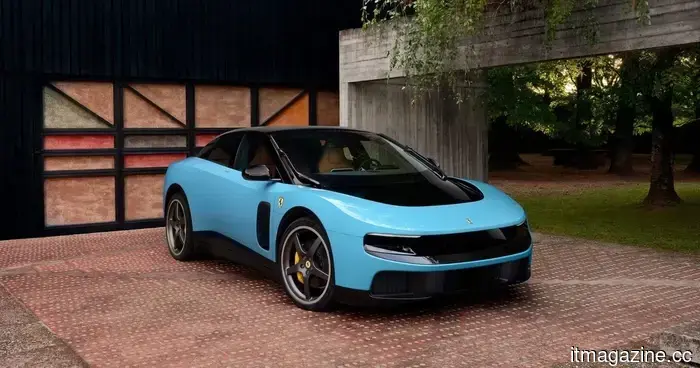
Samsung's OLED technology provides the Ferrari Luce with a dashboard that is unlike any seen in a vehicle before.
Samsung Display has showcased its top display technology not in a smartphone, but in a Ferrari.
Ferrari Luce
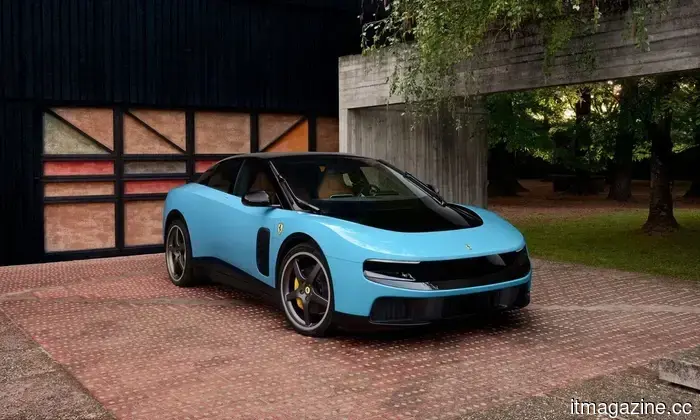
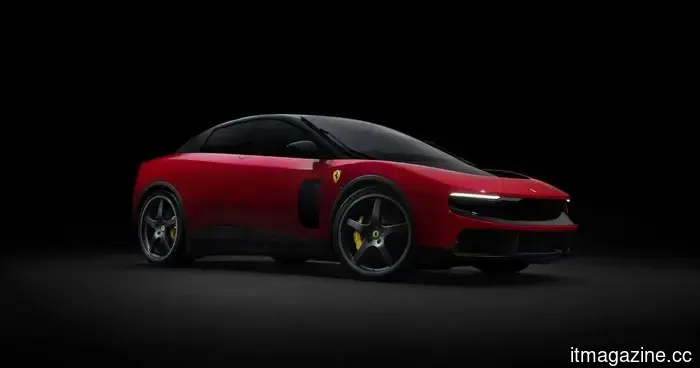
Ferrari has just introduced the Luce, its inaugural all-electric vehicle, and opinions on its design are quite mixed. Created by Jony Ive, the former design chief at Apple, the car is certainly eye-catching, though not necessarily for all the right reasons.
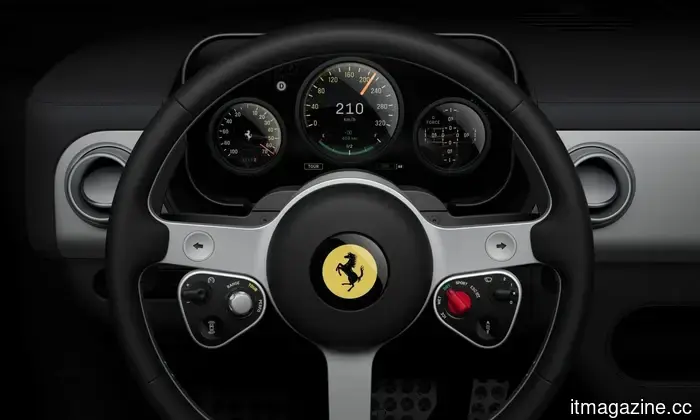
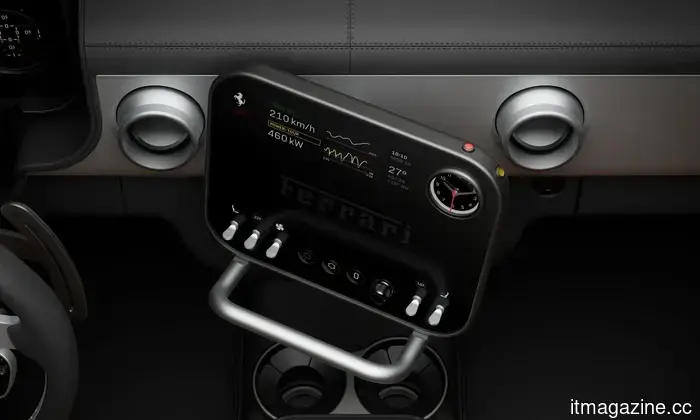
However, while the exterior design may provoke debate, few can argue that the interior of the car is truly unique. One of the first features that catches the eye is the futuristic display aesthetic.
The dashboard is certainly deserving of its own recognition. Samsung Display exclusively powers the interior of the Luce with four OLED panels, and what they have achieved is quite impressive.
So, what sets this dashboard apart?
The highlight is the driver's binnacle, the display located in front of the driver that shows speed and driving data. Ferrari and Samsung have layered two OLED panels, a 12-inch panel on the bottom and a 12.9-inch panel on top.
Samsung Display
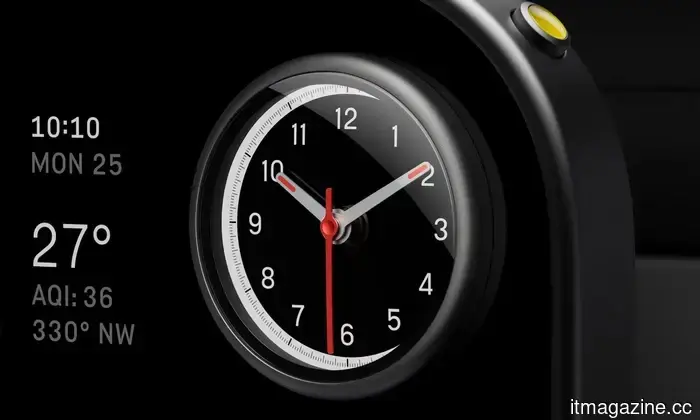
The upper panel features three circular cutouts that reveal the display beneath, while mechanical hands move within the space between the two panels. It presents a digital appearance but provides an analogue feel, which is the intended effect. I haven't encountered anything like this in any other car, and it’s truly remarkable.
The other two displays include a 10.1-inch panel in the central control area, which also features mechanical hands moving through small cutouts in real-time, and a 6.3-inch screen for rear passengers to manage climate controls and view driving information.
Samsung Display
I’m also impressed by the buttons on the secondary display for regulating fan speed, temperature, and seat heating. The interaction between these physical buttons and the digital interface is incredibly well-executed.
How did Samsung achieve this?
Creating large cutouts in an active display area while maintaining image quality is challenging. The opening in the Ferrari Luce's binnacle is approximately 100mm wide, which is about 20 times larger than the tiny front camera hole found in our smartphones. This makes it quite difficult to route signals around the gap without causing distortion or delay.
Samsung Display
Samsung’s HIAA (Hole in Active Area) technology addresses this issue by optimizing signal design for each element, ensuring that the image remains consistent and stable across the entire display, regardless of hole dimensions.
Whatever methods Samsung employed to accomplish this, they were clearly effective. I observed some demonstrations of the car's interior, and the displays appear crisp and clear. Who would have thought that one of the most exciting aspects of a brand-new Ferrari's design in 2026 would be the dashboard?
Rachit is an experienced tech journalist with over seven years of experience in the consumer technology sector.
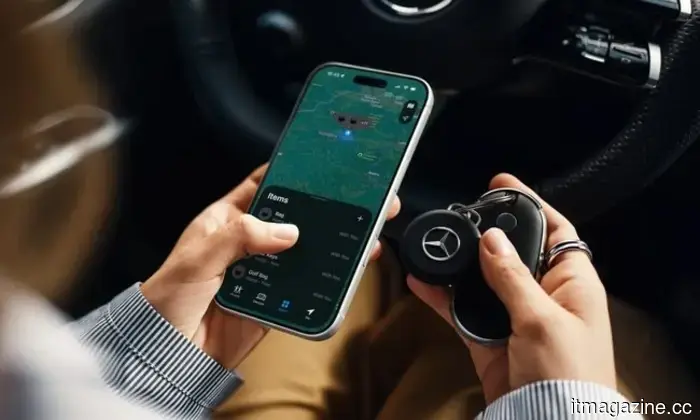
Mercedes-Benz and Chipolo have created a key tracker to complement your car fob
Chipolo’s Mercedes-Benz tracker is compatible with Apple Find My and Google Find Hub.
If you own a Mercedes-Benz or simply admire the brand enough to match your accessories, Chipolo’s latest Loop tracker is designed with you in mind. The two companies have collaborated on a new premium Bluetooth tracker specifically intended for Mercedes-Benz car keys. Featuring a black matte finish, a brushed metal key hook, and a chrome Mercedes-Benz logo on the front, this tracker is both stylish and functional.
In addition to car keys, you can also attach it to your handbag, backpack, suitcase, or travel pouch, allowing for general tracking usage.
Read more
Ferrari’s first EV has arrived, and the Luce may be its most contentious model yet
Ferrari steps into the electric era with the polarizing Luce.
Ferrari has officially joined the electric vehicle market with the debut of the all-new Ferrari Luce, the company's first fully electric production vehicle. Revealed in Rome, the Luce represents one of the most significant changes the Maranello-based automaker has made since its establishment in 1939.
For years, Ferrari resisted a complete transition to electric vehicles. The company consistently argued that emotion, sound, and driver engagement are fundamental aspects of the Ferrari experience, elements that enthusiasts believed could not be replicated without a combustion engine. Even as competitors like Porsche introduced electric vehicles such as the Taycan and brands like Lamborghini began discussing electrification, Ferrari remained primarily focused on hybrids and traditional performance cars.
Read more
Citroën is reviving the iconic 2CV as an electric vehicle priced below $18,000
The beloved Citroën 2CV is making a comeback as an electric car priced under $18,000.
Affordable electric vehicles have become surprisingly hard to come by. However, Citroën is digging deep into its past for a solution. The company recently confirmed the return of the cherished Citroën 2CV as a fully electric vehicle, more than thirty years after the original ceased production. Citroën CEO Xavier Chardon announced the revival during a Stellantis investor event in Michigan

Other articles
 Ferrari's inaugural electric vehicle has arrived, and the Luce could be the brand's most contentious model to date.
Ferrari has introduced the Luce, its inaugural all-electric vehicle, boasting 1,050HP, a futuristic aesthetic, cutting-edge aerodynamics, and a design that is already splitting opinions among enthusiasts.
Ferrari's inaugural electric vehicle has arrived, and the Luce could be the brand's most contentious model to date.
Ferrari has introduced the Luce, its inaugural all-electric vehicle, boasting 1,050HP, a futuristic aesthetic, cutting-edge aerodynamics, and a design that is already splitting opinions among enthusiasts.
 The innovative privacy display from the Samsung Galaxy S26 Ultra may be incorporated into the upcoming MacBook Pro.
Apple might incorporate the Privacy Display from the Samsung Galaxy S26 Ultra into the M6 Pro and M6 Max MacBook Pro models, potentially sooner than the initially estimated timeline of 2029.
The innovative privacy display from the Samsung Galaxy S26 Ultra may be incorporated into the upcoming MacBook Pro.
Apple might incorporate the Privacy Display from the Samsung Galaxy S26 Ultra into the M6 Pro and M6 Max MacBook Pro models, potentially sooner than the initially estimated timeline of 2029.
 SPARQ has launched an $8.5 million seed funding round for its AI-native game engine, with a16z's scout fund included in the capitalization table.
SPARQ, based in the UAE, has launched an $8.5 million seed funding round for its AI-focused game engine, with early involvement from the a16z Scout Fund.
SPARQ has launched an $8.5 million seed funding round for its AI-native game engine, with a16z's scout fund included in the capitalization table.
SPARQ, based in the UAE, has launched an $8.5 million seed funding round for its AI-focused game engine, with early involvement from the a16z Scout Fund.
 Xiaomi’s 240Hz gaming monitor features a Night Vision trick for intense gaming sessions.
The Xiaomi Gaming Monitor G25i 2026 is a 24.5-inch Full HD esports screen featuring a 240Hz refresh rate, 1ms GTG response time, FreeSync Premium support, and an integrated Night Vision mode.
Xiaomi’s 240Hz gaming monitor features a Night Vision trick for intense gaming sessions.
The Xiaomi Gaming Monitor G25i 2026 is a 24.5-inch Full HD esports screen featuring a 240Hz refresh rate, 1ms GTG response time, FreeSync Premium support, and an integrated Night Vision mode.
 Gotrax Mustang electric bike review: Sleek, comfy, and surprisingly functional
The Mustang by Gotrax is an unexpectedly practical option for both urban and off-road rides, featuring a sturdy suspension and wide tires that provide a comfortable experience along with notable mileage per charge.
Gotrax Mustang electric bike review: Sleek, comfy, and surprisingly functional
The Mustang by Gotrax is an unexpectedly practical option for both urban and off-road rides, featuring a sturdy suspension and wide tires that provide a comfortable experience along with notable mileage per charge.
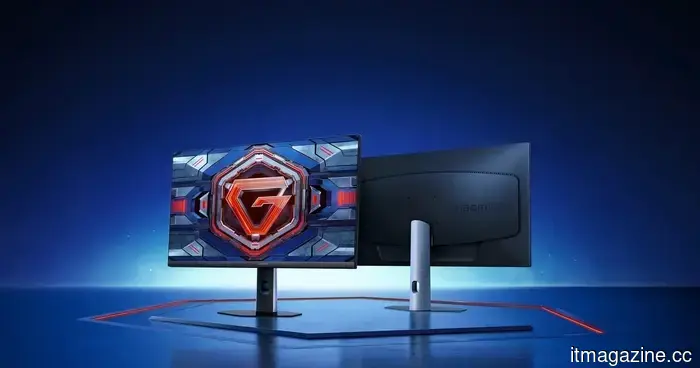 Xiaomi's 240Hz gaming monitor features a Night Vision mode for intense gaming sessions.
The Xiaomi Gaming Monitor G25i 2026 features a 24.5-inch Full HD esports screen, a 240Hz refresh rate, a 1ms GTG response time, FreeSync Premium support, and includes a Night Vision mode.
Xiaomi's 240Hz gaming monitor features a Night Vision mode for intense gaming sessions.
The Xiaomi Gaming Monitor G25i 2026 features a 24.5-inch Full HD esports screen, a 240Hz refresh rate, a 1ms GTG response time, FreeSync Premium support, and includes a Night Vision mode.
Samsung's OLED technology provides the Ferrari Luce with a dashboard that is unlike any seen in a vehicle before.
Samsung Display is solely equipping the interior of the Ferrari Luce with four OLED panels, featuring a unique layered display that incorporates real mechanical clock hands.