
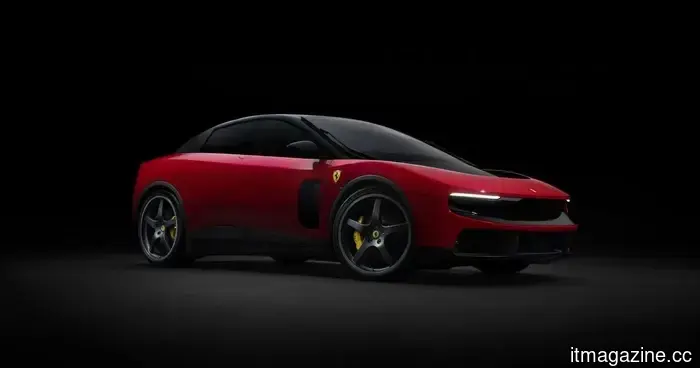
Ferrari's inaugural electric vehicle has arrived, and the Luce could be the brand's most divisive model to date.
Ferrari has officially embarked on the electric era with the debut of the all-new Ferrari Luce, marking the brand’s first fully electric production car in its history. Unveiled in Rome, the Luce signifies one of the most significant transitions for the Maranello-based manufacturer since its inception in 1939.
For many years, Ferrari was hesitant to fully embrace electric vehicles. The company consistently argued that emotion, sound, and driver engagement were central to the Ferrari experience, elements that enthusiasts believed were impossible without a combustion engine. Even as competitors like Porsche introduced electric vehicles such as the Porsche Taycan, and brands like Lamborghini began exploring electrification, Ferrari remained focused primarily on hybrids and traditional performance vehicles.
The situation evolved as global emissions regulations became stricter and electric vehicle technology advanced sufficiently to meet the high-performance expectations of Ferrari’s customers. In 2022, Ferrari outlined its “multi-energy strategy,” signaling that electrification would play a role in the brand’s future without wholly replacing combustion engines.
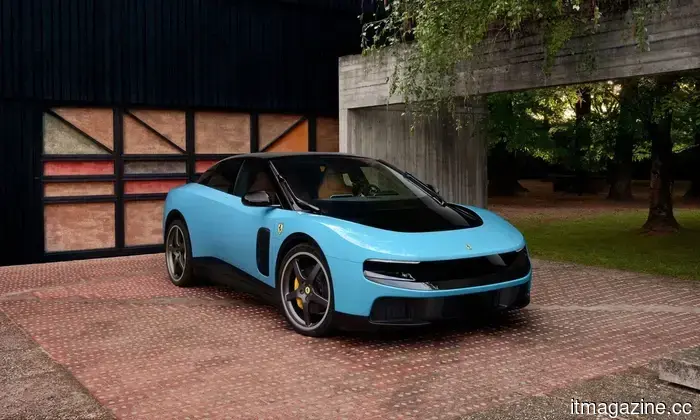
The outcome is the Ferrari Luce, which the company describes not just as “an electric Ferrari,” but as a completely new type of Ferrari based on an all-electric architecture. Designed in partnership with LoveFrom, the creative design firm established by former Apple Chief Design Officer Jony Ive and industrial designer Marc Newson, the Luce’s exterior and innovative interior were developed in conjunction with Ferrari's design head, Flavio Manzoni. The Luce boasts a minimalist design with extensive use of glass and aluminum, giving it a distinct appearance compared to the brand’s traditional models.
This design has already sparked debate.
In contrast to Ferrari’s typically aggressive and sculpted supercars, the Luce features a much sleeker, cleaner look, characterized by a prominent glasshouse design and floating aerodynamic wings. Ferrari describes the design as “shell-like,” while some critics have likened it more to a futuristic crossover than a classic Ferrari.
The proportions also diverge from what many may expect from the brand. The Luce is Ferrari’s second four-door model and its first to accommodate five seats. It rides on large 23-inch front and 24-inch rear wheels, making it one of the largest road-going Ferraris ever produced.
Beneath the contentious styling lies an exceptionally ambitious EV platform. The Ferrari Luce utilizes four independent electric motors—one for each wheel—generating a total of 1,050 horsepower (772kW). Ferrari claims it can accelerate from 0-100 km/h in just 2.5 seconds, reach 0-200 km/h in 6.8 seconds, and achieve a top speed exceeding 310 km/h.
Powering the Luce is a substantial 122 kWh battery pack developed in-house at Maranello, employing an 800V architecture. Ferrari states that the car can support charging speeds of up to 350 kW and recover approximately 70 kWh of charge in 20 minutes under optimal conditions. The estimated range exceeds 530 km.
The Luce also introduces several features never before seen in a Ferrari road car, including active aerodynamic grilles, independent four-wheel torque vectoring, active suspension derived from the Ferrari F80 hypercar, and Ferrari’s new “Torque Shift Engagement” system, designed to simulate a progressive acceleration feel through paddle-controlled torque distribution.
Ferrari claims it has achieved the lowest drag coefficient on one of its road cars thanks to its aerodynamic bodywork, active grilles, and an adaptive ride height system that lowers the front by 10 mm at higher speeds.
So, is the Luce living up to its expectations?
Not surprisingly, Ferrari has also made significant strides in addressing the emotional aspects of electric vehicle driving. Instead of artificial engine sounds, the Luce employs accelerometers within the drivetrain to capture actual vibrations and mechanical frequencies from the electric motors. Ferrari then enhances and refines these sounds both inside and outside the vehicle to create what it describes as an “authentic and functional” soundtrack.
Inside, the Luce resembles futuristic consumer electronics more than a conventional sports car. The cabin includes OLED displays developed with Samsung Display, a rotating central control panel, extensive usage of recycled aluminum and glass, and a 21-speaker, 3,000W audio system.
The electric platform also allows for a lower center of gravity and better weight distribution for improved handling. Ferrari’s new Vehicle Control Unit manages power delivery and dynamics in real-time, while the brand’s first electric all-wheel-drive system utilizes advanced torque vectoring for enhanced responsiveness.
Whether Ferrari fans will fully embrace the Luce remains to be seen. Nevertheless, it is evident that Ferrari is no longer viewing electrification as a mere side project. The Luce stands as the company’s clearest acknowledgment that the future of high-performance vehicles will undoubtedly include electric vehicles, even if that future diverges significantly from Ferrari’s traditional past.
Other articles
 The innovative privacy display from the Samsung Galaxy S26 Ultra may be incorporated into the upcoming MacBook Pro.
Apple might incorporate the Privacy Display from the Samsung Galaxy S26 Ultra into the M6 Pro and M6 Max MacBook Pro models, potentially sooner than the initially estimated timeline of 2029.
The innovative privacy display from the Samsung Galaxy S26 Ultra may be incorporated into the upcoming MacBook Pro.
Apple might incorporate the Privacy Display from the Samsung Galaxy S26 Ultra into the M6 Pro and M6 Max MacBook Pro models, potentially sooner than the initially estimated timeline of 2029.
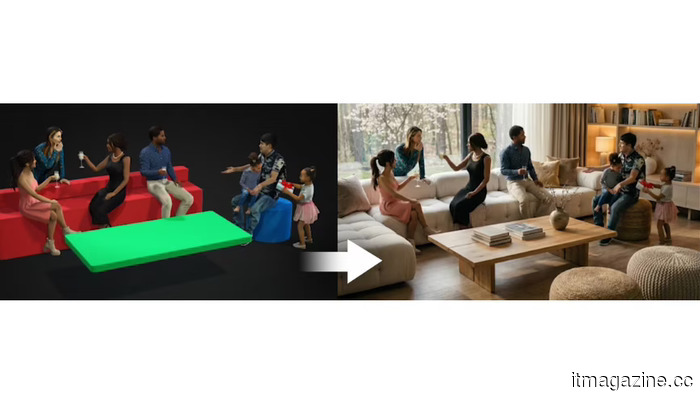 Reallusion combines 3D control with ByteDance's Seedance 2.0.
Reallusion introduced AI Studio, combining iClone 3D scene management with ByteDance's highly acclaimed Seedance 2.0, offering filmmakers a level of accuracy that text prompts cannot achieve on their own.
Reallusion combines 3D control with ByteDance's Seedance 2.0.
Reallusion introduced AI Studio, combining iClone 3D scene management with ByteDance's highly acclaimed Seedance 2.0, offering filmmakers a level of accuracy that text prompts cannot achieve on their own.
 Data from CAICT indicates that shipments of foreign-brand phones to China increased by 1.8% in April.
Shipments of foreign-brand smartphones to China increased by 1.8% year-on-year in April, reaching 3.59 million units. This marks a significant slowdown following a first quarter where iPhone sales surged over 40%.
Data from CAICT indicates that shipments of foreign-brand phones to China increased by 1.8% in April.
Shipments of foreign-brand smartphones to China increased by 1.8% year-on-year in April, reaching 3.59 million units. This marks a significant slowdown following a first quarter where iPhone sales surged over 40%.
 Spain halts Polymarket and Kalshi due to lack of gambling licenses.
Spain has put a temporary halt to Polymarket and Kalshi for operating without a gambling license, becoming part of a growing European effort to regulate US prediction markets.
Spain halts Polymarket and Kalshi due to lack of gambling licenses.
Spain has put a temporary halt to Polymarket and Kalshi for operating without a gambling license, becoming part of a growing European effort to regulate US prediction markets.
 Apple AirPods Pro 3 review: After eight months, still a great choice that continues to impress
With the AirPods Pro 3, Apple aimed to establish a new standard. The company came quite close to achieving this goal, but also secured some surprising victories along the journey.
Apple AirPods Pro 3 review: After eight months, still a great choice that continues to impress
With the AirPods Pro 3, Apple aimed to establish a new standard. The company came quite close to achieving this goal, but also secured some surprising victories along the journey.
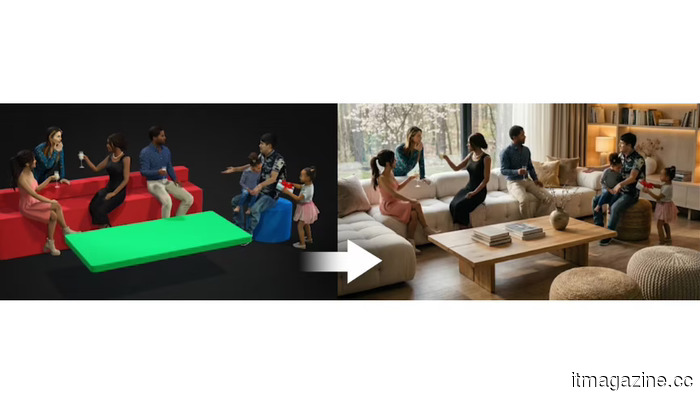 Reallusion combines 3D control with ByteDance's Seedance 2.0.
Reallusion introduced AI Studio, combining iClone 3D scene management with ByteDance's highly-rated Seedance 2.0, providing filmmakers with a level of precision that text prompts alone cannot achieve.
Reallusion combines 3D control with ByteDance's Seedance 2.0.
Reallusion introduced AI Studio, combining iClone 3D scene management with ByteDance's highly-rated Seedance 2.0, providing filmmakers with a level of precision that text prompts alone cannot achieve.
Ferrari's inaugural electric vehicle has arrived, and the Luce could be the brand's most divisive model to date.
Ferrari has introduced the Luce, its inaugural fully electric vehicle, boasting 1,050HP, cutting-edge design, sophisticated aerodynamics, and a look that is already splitting opinions among fans.