
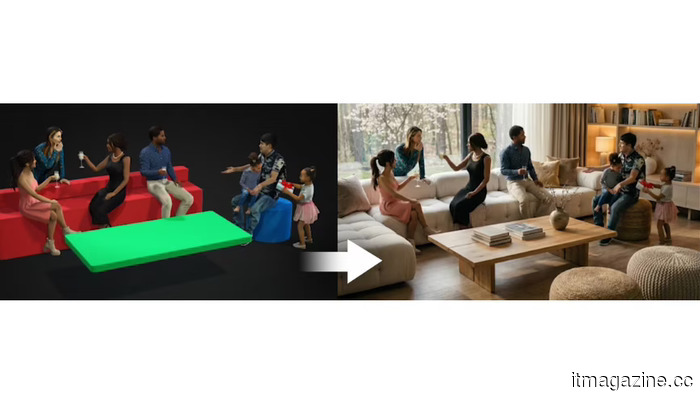
Reallusion combines 3D control with ByteDance's Seedance 2.0.
Reallusion has introduced AI Studio, a production platform that combines its iClone 3D animation tools with ByteDance’s Seedance 2.0, offering filmmakers a level of spatial accuracy unattainable by text-only AI video generators. This multi-model platform also integrates support for Veo 3, Kling AI, and others.
As the company behind iClone and Character Creator, Reallusion has created AI Studio to merge traditional 3D scene construction with generative AI video models. The key feature is its direct integration with ByteDance's Seedance 2.0, currently the leading AI video model according to the Artificial Analysis leaderboard.
The concept is simple: while AI video generators like Seedance, Google’s Veo 3, and Runway's Gen-4 can create notable footage from text input, they often lack precision. Complicated character movements, camera operations, and spatial consistency can falter when AI relies solely on language. Issues arise with warped objects, shifting perspectives, and limited control for directors over on-screen content.
Reallusion’s solution lies in a hybrid approach. Artists first create their scene in iClone, a real-time 3D animation tool, where they establish camera paths, character locations, skeletal motions, and lighting. This 3D information serves as a "precision control layer" for the AI model. Seedance 2.0 takes care of visual rendering, textures, and cinematic quality, while the 3D scene provides the necessary spatial framework. This allows the artist to maintain directorial oversight while the AI executes the rendering.
Seedance 2.0 has been tailored for this method, as ByteDance developed it with robust spatial capabilities, allowing it to comprehend precise scene arrangements and camera movements without the uncertainties present in other models. It produces clips up to 15 seconds long, featuring intentional camera choreography and motion dynamics. China's AI video sector has rapidly advanced beyond others in production tools, and Seedance illustrates that progress.
AI Studio is designed not to rely on a single engine; it functions as a multi-model platform, integrating Flux and Nano Banana for image generation alongside Kling AI, Veo 3, Wan, LTX, and Scail for video. Users can switch between models as needed, selecting one for photorealism or another for stylized animation, thereby allowing studios the flexibility to use whatever model is best suited for each scene.
The timing for such a launch is critical. OpenAI's recent shutdown of Sora after it reached one million users highlighted the risks tied to relying on a single AI platform, as it was reported to cost $1 million per day to maintain. This closure disrupted creators who had built their workflows around it and resulted in the animated film Critterz missing its debut at Cannes.
Reallusion aims to present AI Studio as a more reliable option. Since the 3D scene data is stored locally in iClone, the creative work remains intact even if a specific AI model is discontinued or changes pricing. The 3D assets, motion data, and camera configurations stay available; only the rendering layer is affected. This distinction is significant for studios focusing on long-term production pipelines.
Founded in 1993 and operating R&D centers in Taiwan with additional offices in Silicon Valley, Canada, Germany, and Japan, Reallusion has spent years developing tools for real-time 3D character animation. iClone and Character Creator are widely used in game development, film pre-visualization, and virtual production. AI Studio expands this ecosystem into generative video while preserving the 3D skills that current users have honed over the years.
Adobe has adopted a similar strategy with its Firefly AI Assistant and Project Graph, incorporating generative models into existing creative applications rather than replacing them. The trend across the industry is becoming clear: the most effective AI creative tools are not standalone generators but hybrid systems that enhance professional workflows.
The success of AI Studio will hinge on whether this hybrid model can fulfill its potential. While pure AI video generation continues to advance quickly, each new model reduces the gap between what can be achieved through text prompts and what a 3D-controlled system delivers. Reallusion is wagering that this gap will always remain, as professional filmmakers will consistently require spatial precision, repeatable camera setups, and frame-by-frame control that language-based generation cannot ensure.
In a rapidly changing AI video market where leading models can fluctuate and platforms may disappear, having a tool that prioritizes the creative decisions of the artist over the AI model itself represents a choice for stability over spectacle. Whether this choice will prove beneficial will depend on how many filmmakers value control over convenience.
Other articles
 Wall Street is offering $25,000 daily to AI trainers who were previously employed there.
Felipe Sinisterra and Dave Wang are charging $25,000 per day to train Wall Street banks on AI tools that they have already purchased. They are fully booked for the next two months.
Wall Street is offering $25,000 daily to AI trainers who were previously employed there.
Felipe Sinisterra and Dave Wang are charging $25,000 per day to train Wall Street banks on AI tools that they have already purchased. They are fully booked for the next two months.
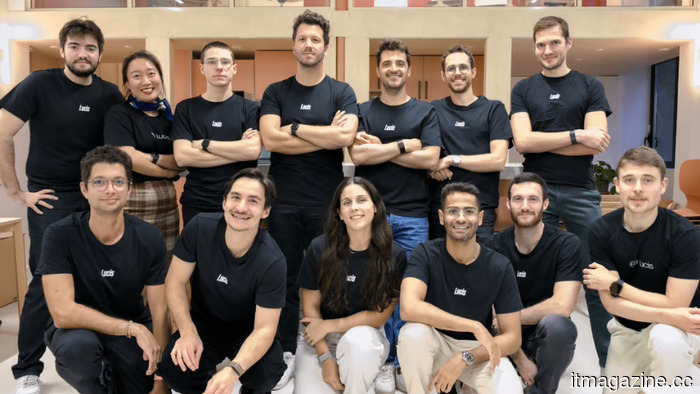 Paris-based preventive health startup Lucis secures $20 million in Series A funding just four months after its seed round.
Lucis, a preventive health startup based in Paris, has secured $20 million in Series A funding led by Singular, four months following its $8.5 million seed round, to facilitate its expansion into Spain, Germany, and Italy.
Paris-based preventive health startup Lucis secures $20 million in Series A funding just four months after its seed round.
Lucis, a preventive health startup based in Paris, has secured $20 million in Series A funding led by Singular, four months following its $8.5 million seed round, to facilitate its expansion into Spain, Germany, and Italy.
 Ferrari's inaugural electric vehicle has arrived, and the Luce could be the brand's most contentious model to date.
Ferrari has introduced the Luce, its inaugural all-electric vehicle, boasting 1,050HP, a futuristic aesthetic, cutting-edge aerodynamics, and a design that is already splitting opinions among enthusiasts.
Ferrari's inaugural electric vehicle has arrived, and the Luce could be the brand's most contentious model to date.
Ferrari has introduced the Luce, its inaugural all-electric vehicle, boasting 1,050HP, a futuristic aesthetic, cutting-edge aerodynamics, and a design that is already splitting opinions among enthusiasts.
 Pope Leo’s initial encyclical is viewed as addressing technology regulation as well as theological matters.
The day following the release of Magnifica Humanitas by Pope Leo XIV, his AI encyclical is being examined in policy centers as the most straightforward papal intervention in technology in many years.
Pope Leo’s initial encyclical is viewed as addressing technology regulation as well as theological matters.
The day following the release of Magnifica Humanitas by Pope Leo XIV, his AI encyclical is being examined in policy centers as the most straightforward papal intervention in technology in many years.
 Spain halts Polymarket and Kalshi due to lack of gambling licenses.
Spain has temporarily halted the operations of Polymarket and Kalshi for lacking a gambling license, participating in an increasing European effort to regulate US prediction markets.
Spain halts Polymarket and Kalshi due to lack of gambling licenses.
Spain has temporarily halted the operations of Polymarket and Kalshi for lacking a gambling license, participating in an increasing European effort to regulate US prediction markets.
 BNP Paribas collaborates with Mistral to provide a European solution to Anthropic's Mythos.
According to Bloomberg, BNP Paribas is assisting Mistral in developing a European sovereign alternative to Anthropic's limited Mythos cybersecurity AI.
BNP Paribas collaborates with Mistral to provide a European solution to Anthropic's Mythos.
According to Bloomberg, BNP Paribas is assisting Mistral in developing a European sovereign alternative to Anthropic's limited Mythos cybersecurity AI.
Reallusion combines 3D control with ByteDance's Seedance 2.0.
Reallusion introduced AI Studio, combining iClone 3D scene management with ByteDance's highly acclaimed Seedance 2.0, offering filmmakers a level of accuracy that text prompts cannot achieve on their own.