
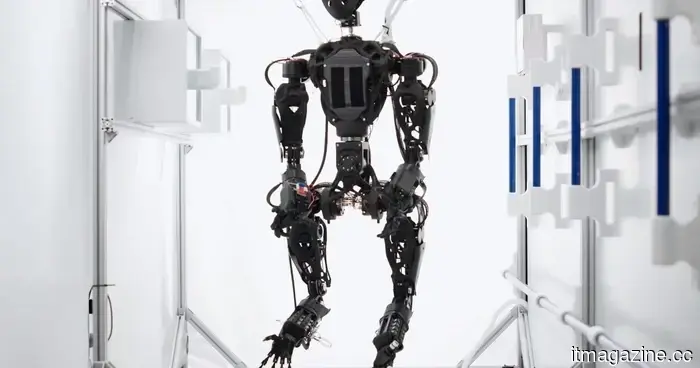
China plans to assign a unique identification code to humanoid robots, similar to how citizens are issued identification numbers.
China is treating its humanoid robots as if they were citizens, giving each a unique identification code from creation to recycling.
China has initiated a national program that will assign a distinct digital identity code to every humanoid robot produced in the country, akin to a citizen ID but for bipedal machines (robots that can balance and walk or run on two legs).
This initiative, named the Humanoid Full Lifecycle Management Service Platform, was revealed on Friday. It is overseen by the Humanoid Robotics and Embodied Intelligence Standardization Committee, which operates under China's Ministry of Industry and Information Technology (according to the South China Morning Post).
The robot identification codes comprise four parts. A two-digit national code monitors international shipments and sales, while a four-digit manufacturer code records the company that created the robot.
Additionally, there is a six-digit product model code that specifies the robot type, along with a 17-digit serial code that differentiates individual units. The goal is to track humanoid robots throughout their entire lifecycle, from production to recycling.
The guidelines apply to all participants in the supply chain, including manufacturers, service providers, retailers, end users, and recycling facilities. This new system aims to facilitate the regulated deployment of humanoid robots, ensuring that manufacturing firms are accountable for any issues that may arise.
Why is China implementing this system now?
Research from IDC in January indicated that the global humanoid robot market surged by 508% last year, with approximately 18,000 units shipped worldwide, making Chinese vendors the frontrunners in this growth.
China has over 100 manufacturers of humanoid robots, and more than 28,000 robots across 200 models have already received a digital ID prior to the public announcement of the Humanoid Full Lifecycle Management Service Platform.
Yu Xiuming, deputy head of the China Electronics Standardization Institute, mentioned that the system is aimed at tackling fundamental issues regarding safety, oversight, and governance. China’s humanoid industry is advancing more quickly than the regulatory framework, so the ID system is seen less as a means of surveillance and more as essential industrial infrastructure, representing the standardization needed for global expansion.


Other articles
 Microsoft will finally allow you to remove Copilot.
The April 2026 update for Windows 11 introduces an official option to uninstall Copilot, following the fact that only 3.3% of eligible users decided to pay for it and after requests from administrators for removal controls.
Microsoft will finally allow you to remove Copilot.
The April 2026 update for Windows 11 introduces an official option to uninstall Copilot, following the fact that only 3.3% of eligible users decided to pay for it and after requests from administrators for removal controls.
 The upcoming budget flagship from Samsung has just been revealed, and here's a glimpse of its design.
Case renders for the Galaxy S26 FE have emerged online, showcasing its design and potential color choices several months before its anticipated release in October.
The upcoming budget flagship from Samsung has just been revealed, and here's a glimpse of its design.
Case renders for the Galaxy S26 FE have emerged online, showcasing its design and potential color choices several months before its anticipated release in October.
 HP's latest ZBook workstations feature AI chips, Blackwell GPUs, and eye-popping price tags.
HP has introduced new ZBook workstation laptops that are equipped with Ryzen AI processors, high-quality displays, and top-tier configurations designed for creators and professional users.
HP's latest ZBook workstations feature AI chips, Blackwell GPUs, and eye-popping price tags.
HP has introduced new ZBook workstation laptops that are equipped with Ryzen AI processors, high-quality displays, and top-tier configurations designed for creators and professional users.
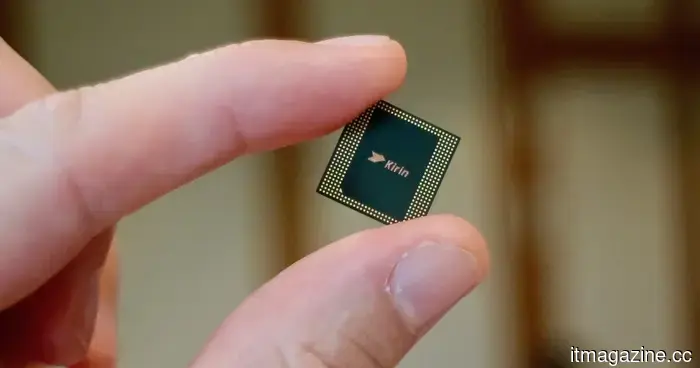 Huawei has introduced its alternative to Moore's Law as it targets the development of 1.4nm chips.
Huawei's Tau Scaling Law redirects the focus of the chip competition from merely reducing transistor size to enhancing signal speed, with the company confidently targeting a density equivalent to 1.4nm by 2031.
Huawei has introduced its alternative to Moore's Law as it targets the development of 1.4nm chips.
Huawei's Tau Scaling Law redirects the focus of the chip competition from merely reducing transistor size to enhancing signal speed, with the company confidently targeting a density equivalent to 1.4nm by 2031.
 China allocates identification codes to over 28,000 humanoid robots.
China has introduced a national robot identification system that assigns a 29-character code to each humanoid robot, allowing it to be tracked from the factory to the scrapyard, with 28,000 robots already registered.
China allocates identification codes to over 28,000 humanoid robots.
China has introduced a national robot identification system that assigns a 29-character code to each humanoid robot, allowing it to be tracked from the factory to the scrapyard, with 28,000 robots already registered.
 Microsoft will indeed allow you to remove Copilot.
The April 2026 update for Windows 11 introduces an official option to uninstall Copilot, following the fact that only 3.3% of eligible users subscribed to it and administrators requested the ability to remove it.
Microsoft will indeed allow you to remove Copilot.
The April 2026 update for Windows 11 introduces an official option to uninstall Copilot, following the fact that only 3.3% of eligible users subscribed to it and administrators requested the ability to remove it.
China plans to assign a unique identification code to humanoid robots, similar to how citizens are issued identification numbers.
China's new humanoid robot identification system functions similarly to a citizen identity code, assigning a distinct number that accompanies each bipedal robot throughout its entire lifecycle.