
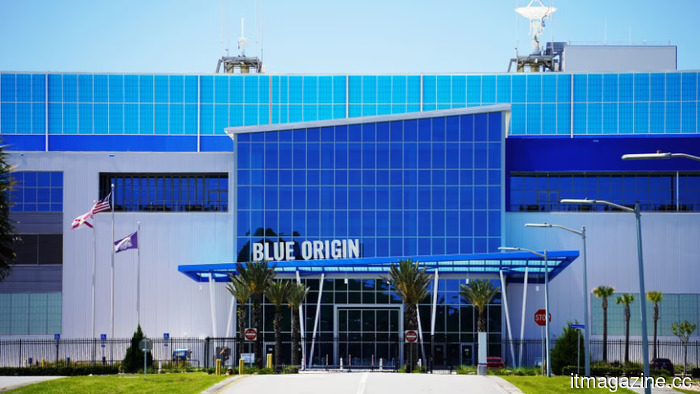
Blue Origin pledges an additional $600 million to its Florida facility.
Project Horizon will introduce an 830,000-square-foot upper-stage factory at Cape Canaveral, just weeks ahead of SpaceX's record IPO and a month following the New Glenn payload incident in April. Florida governor Ron DeSantis announced on Friday that Blue Origin will invest $600 million in the new upper-stage manufacturing facility located at its Rocket Park campus.
This facility, named Project Horizon, will encompass 830,000 square feet and create 500 aerospace jobs with an average salary exceeding $98,000. This represents the most significant single expansion Blue Origin has undertaken in the state during its ten-year presence there.
The timing of the announcement was intentional, coinciding with the Federal Aviation Administration's approval for New Glenn to resume flights following the April NG-3 mission, which resulted in the loss of an AST SpaceMobile satellite due to a thermal anomaly that reduced the thrust of one engine. The booster successfully landed on the droneship "Jacklyn." In essence, Project Horizon responds to the concerns raised by the April incident regarding Blue Origin's ability to manufacture necessary upper stages at the pace demanded by its growing order book.
Company CEO Dave Limp characterized the project as "the latest and most ambitious chapter in Blue Origin's decade-long commitment to Florida.” He highlighted that since 2015, the company has grown to nearly 4,000 employees and invested over $2.3 billion with 500 suppliers in Florida. The Spaceport Improvement Program, a collaboration between Space Florida and the state Department of Transportation, will support this initiative, similar to how it funded Blue Origin's new pad at Launch Complex 36.
The competitive landscape is clear, with Reuters noting unprompted that Elon Musk’s SpaceX is gearing up for what is expected to be the largest IPO in history, aiming for a $1.75 trillion valuation and a June listing. In contrast, Blue Origin has operated for twenty-five years as a privately funded venture for Jeff Bezos and has only recently begun seeking outside financing for its expansion. As they evolve, the two companies are no longer on the same footing, raising the question of whether Blue Origin can remain relevant based on industrial capacity rather than access to capital markets.
Florida is increasingly becoming the focal point for addressing this question. Currently, Blue Origin is noted as the only company that manufactures and launches rockets from the state, while SpaceX builds in Texas and California, and ULA assembles in Alabama.
The Project Horizon factory will centralize Blue Origin’s heavy-lift operations in the same county as the launch pad, effectively eliminating the transport challenges historically faced in moving large boosters and upper stages. The emphasis on upper-stage production is significant; the April failure highlighted issues in this area, which has consistently lagged behind the booster development in Blue Origin’s flight program. The new facility will focus on enhancing this component.
In Limp’s statement, he noted that the factory “will increase the volume and mass that can be delivered into orbit,” indicating that the limitation lies in the upper stage rather than the initial phase. DeSantis used this announcement to reiterate the state's emphasis on aerospace as a central element of Florida's industrial strategy, backing Blue Origin’s pad infrastructure, hypergolic fueling facility, and now the upper-stage factory through the Spaceport Improvement Program.
The next step rests with Blue Origin: how quickly the construction of the facility progresses and how rapidly the upper stages produced will begin flying.
Other articles
 UK venture funding increased to $10.5 billion in the first four months of 2026, driven by three major funding rounds.
According to GlobalData, UK firms secured $10.5 billion in venture capital during the initial four months of 2026, with over 40% of that amount originating from only three funding rounds.
UK venture funding increased to $10.5 billion in the first four months of 2026, driven by three major funding rounds.
According to GlobalData, UK firms secured $10.5 billion in venture capital during the initial four months of 2026, with over 40% of that amount originating from only three funding rounds.
 India’s aspirations in AI depend on transforming 200 million workers into 350 million.
Sandip Patel from IBM India believes that by 2030, India has the potential to become the global hub for AI skills. However, the calculations are more complex than the initial figure implies.
India’s aspirations in AI depend on transforming 200 million workers into 350 million.
Sandip Patel from IBM India believes that by 2030, India has the potential to become the global hub for AI skills. However, the calculations are more complex than the initial figure implies.
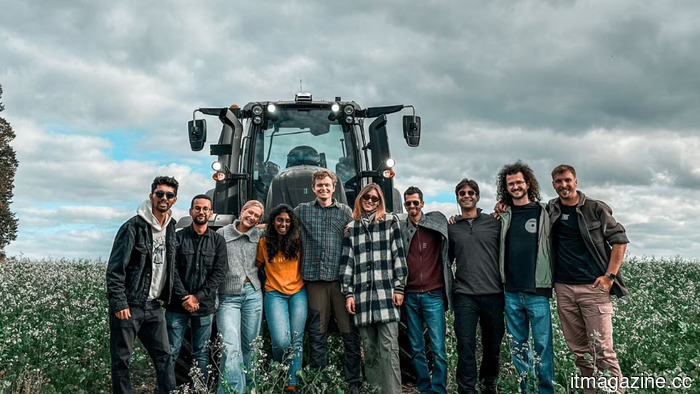 PerPlant secures €1M to equip tractors with AI cameras, managing 200,000 hectares in the process.
Copenhagen-based agtech company PerPlant has secured €1M to expand its AI precision-spraying system attached to tractors. New investors include Jytte Rosenmaj from Agreena and Kræn Østergaard Nielsen from Coop.
PerPlant secures €1M to equip tractors with AI cameras, managing 200,000 hectares in the process.
Copenhagen-based agtech company PerPlant has secured €1M to expand its AI precision-spraying system attached to tractors. New investors include Jytte Rosenmaj from Agreena and Kræn Østergaard Nielsen from Coop.
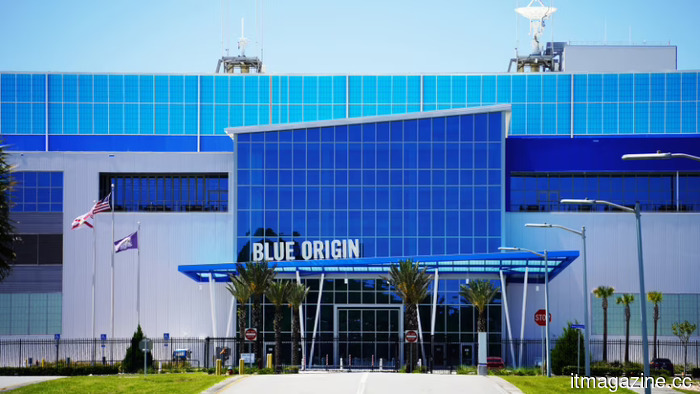 Blue Origin has allocated an additional $600 million to its facility in Florida.
Blue Origin plans to invest $600 million in a new 830,000-square-foot upper-stage facility in Cape Canaveral, shortly after the FAA approved New Glenn for flight once more.
Blue Origin has allocated an additional $600 million to its facility in Florida.
Blue Origin plans to invest $600 million in a new 830,000-square-foot upper-stage facility in Cape Canaveral, shortly after the FAA approved New Glenn for flight once more.
 From the Vatican platform, Anthropic's Chris Olah states that artificial intelligence cannot be directed solely by AI laboratories.
During the Vatican event for the release of Pope Leo XIV's inaugural encyclical, Chris Olah, co-founder of Anthropic, emphasized that AI cannot be guided solely by leading laboratories.
From the Vatican platform, Anthropic's Chris Olah states that artificial intelligence cannot be directed solely by AI laboratories.
During the Vatican event for the release of Pope Leo XIV's inaugural encyclical, Chris Olah, co-founder of Anthropic, emphasized that AI cannot be guided solely by leading laboratories.
 On the Vatican stage, Chris Olah from Anthropic states that AI cannot be guided solely by AI laboratories.
During the launch of Pope Leo XIV's first encyclical at the Vatican, Anthropic co-founder Chris Olah stated that AI cannot be directed solely by leading research labs.
On the Vatican stage, Chris Olah from Anthropic states that AI cannot be guided solely by AI laboratories.
During the launch of Pope Leo XIV's first encyclical at the Vatican, Anthropic co-founder Chris Olah stated that AI cannot be directed solely by leading research labs.
Blue Origin pledges an additional $600 million to its Florida facility.
Blue Origin is set to invest $600 million in a new 830,000-square-foot upper-stage facility located in Cape Canaveral, shortly after the FAA authorized New Glenn to resume flights.