
From the Vatican platform, Anthropic's Chris Olah states that artificial intelligence cannot be directed solely by AI laboratories.
At the unveiling of Magnifica humanitas, Pope Leo XIV's first encyclical, the head of interpretability at Anthropic, Christopher Olah, recognized that the incentives at frontier AI labs can divert researchers from ethical considerations. Olah, who is also a co-founder of Anthropic, used his platform at the Vatican on Monday to present a claim that no other major AI executive has previously voiced on such a prominent stage: the advancement of frontier AI cannot be solely entrusted to AI labs.
During the formal presentation at the Vatican Synod Hall, Olah stated, “Every frontier AI lab operates within a framework of incentives and constraints that can sometimes conflict with ethical practices.” He further noted that even researchers with the best intentions are influenced by these dynamics, leading him to emphasize the necessity for external oversight from religious figures, governments, and civil-society organizations.
The second part of his address focused on labor issues. Olah cautioned that there exists “a real possibility” of AI displacing human employment “on a very large scale,” and that, should this occur, it would be a moral obligation of considerable significance to support those affected. This statement represents the most explicit public acknowledgment by a frontier lab founder that the technology their company develops may, according to their own assessments, disrupt the job market more rapidly than it can adapt.
In recent weeks, Anthropic’s involvement at the Vatican has emerged as the most prominent strategic shift of the year for any AI company. They had previously hinted at this new direction by announcing an office in Milan, positioning themselves within the Catholic Church’s most impactful statement on technology since Leo XIII’s Rerum novarum addressed industrial capitalism in 1891.
Olah’s specific role in leading the company’s interpretability research is viewed by Anthropic as their strongest assertion of safety credibility, as he oversees efforts to deconstruct how frontier models function internally.
Conversely, the political context is troubled. During the spring, Anthropic confronted the US government on two fronts. In April, the Pentagon removed the company from its top secret AI projects due to Anthropic’s own usage limitations, subsequently signing contracts with Nvidia, Microsoft, and AWS instead. The Trump administration also halted an expansion of Mythos, an autonomous model capable of discovering vulnerabilities that has disrupted global bank cybersecurity policies. Olah’s call for external oversight, articulated alongside the pope, serves as a direct response to these events.
This moment is particularly pivotal commercially for Anthropic, as the company is in discussions to secure $30 billion at a valuation of $900 billion.
Olah did not downplay the contradiction within this situation. He remarked that “Companies like ours operate under significant commercial, geopolitical, and personal pressures that can clash with the wider interests of society.” His point was not that Anthropic exists beyond these pressures, but rather that the solution to them must come from outside the lab.
The encyclical outlines expectations for governments and civil society in concrete terms, but how Olah’s proposal will affect Anthropic’s dealings with US regulators remains uncertain. Magnifica humanitas frames the discussion without specifying policies, a stance reflected in Olah’s address. Both effectively refused to delegate the regulatory framework needed for the upcoming decade to the firms that have been developing the technologies that will be governed.
The choice of Olah as a spokesperson was also intentional. He is the founder of an AI lab addressing an audience that included cardinals, the pope, and representatives from the White House, asserting that AI labs cannot navigate these challenges independently. Whether this argument will influence actual policy remains to be seen, but the fact that a frontier-lab founder made this claim from within the Vatican is, in itself, noteworthy.
Other articles
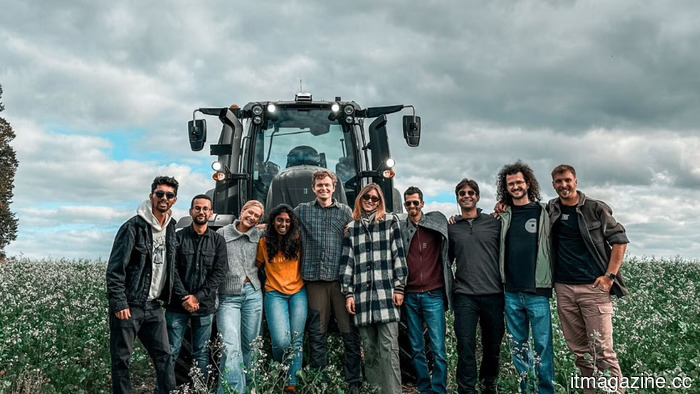 PerPlant secures €1M to implement AI cameras on tractors, with 200,000 hectares already secured.
Copenhagen-based agtech company PerPlant has secured €1M to expand its tractor-mounted AI precision-spraying technology. New investors include Agreena’s Jytte Rosenmaj and Coop’s Kræn Østergaard Nielsen.
PerPlant secures €1M to implement AI cameras on tractors, with 200,000 hectares already secured.
Copenhagen-based agtech company PerPlant has secured €1M to expand its tractor-mounted AI precision-spraying technology. New investors include Agreena’s Jytte Rosenmaj and Coop’s Kræn Østergaard Nielsen.
 UK venture capital funding increased to $10.5 billion in the first four months of 2026, driven by three significant funding rounds.
According to GlobalData, UK companies secured $10.5 billion in venture capital during the initial four months of 2026, with over 40% of that total originating from only three funding rounds.
UK venture capital funding increased to $10.5 billion in the first four months of 2026, driven by three significant funding rounds.
According to GlobalData, UK companies secured $10.5 billion in venture capital during the initial four months of 2026, with over 40% of that total originating from only three funding rounds.
 Microsoft’s discreet Claude Code retreat and the actual expenses associated with enterprise AI.
Microsoft is reducing Claude Code licenses within its primary product teams. This decision is not based on strategy but rather due to costs. Has the AI coding experiment come to an end?
Microsoft’s discreet Claude Code retreat and the actual expenses associated with enterprise AI.
Microsoft is reducing Claude Code licenses within its primary product teams. This decision is not based on strategy but rather due to costs. Has the AI coding experiment come to an end?
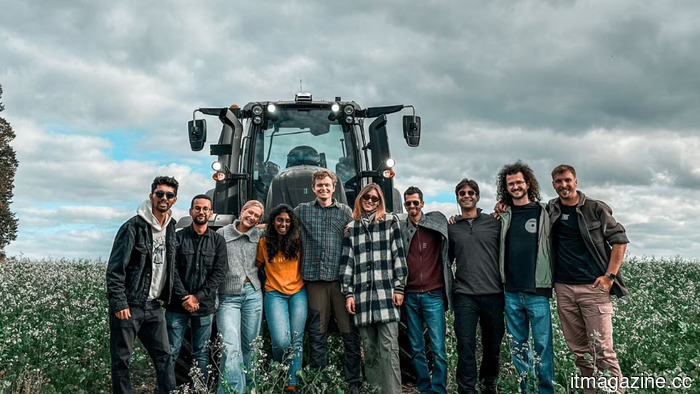 PerPlant secures €1M to equip tractors with AI cameras, managing 200,000 hectares in the process.
Copenhagen-based agtech company PerPlant has secured €1M to expand its AI precision-spraying system attached to tractors. New investors include Jytte Rosenmaj from Agreena and Kræn Østergaard Nielsen from Coop.
PerPlant secures €1M to equip tractors with AI cameras, managing 200,000 hectares in the process.
Copenhagen-based agtech company PerPlant has secured €1M to expand its AI precision-spraying system attached to tractors. New investors include Jytte Rosenmaj from Agreena and Kræn Østergaard Nielsen from Coop.
 Reasons for the increasing adoption of AI in EU businesses and the ongoing challenges in keeping pace.
The adoption of AI in EU enterprises reached 20% in 2025. However, this headline masks a more significant issue that predates the AI Act.
Reasons for the increasing adoption of AI in EU businesses and the ongoing challenges in keeping pace.
The adoption of AI in EU enterprises reached 20% in 2025. However, this headline masks a more significant issue that predates the AI Act.
 On the Vatican stage, Chris Olah from Anthropic states that AI cannot be guided solely by AI laboratories.
During the launch of Pope Leo XIV's first encyclical at the Vatican, Anthropic co-founder Chris Olah stated that AI cannot be directed solely by leading research labs.
On the Vatican stage, Chris Olah from Anthropic states that AI cannot be guided solely by AI laboratories.
During the launch of Pope Leo XIV's first encyclical at the Vatican, Anthropic co-founder Chris Olah stated that AI cannot be directed solely by leading research labs.
From the Vatican platform, Anthropic's Chris Olah states that artificial intelligence cannot be directed solely by AI laboratories.
During the Vatican event for the release of Pope Leo XIV's inaugural encyclical, Chris Olah, co-founder of Anthropic, emphasized that AI cannot be guided solely by leading laboratories.