
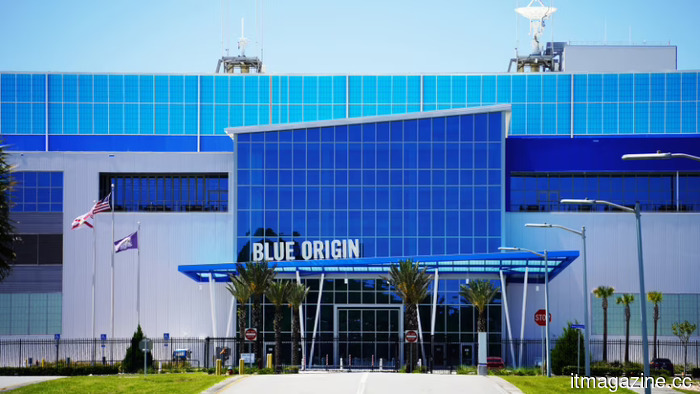
Blue Origin has allocated an additional $600 million to its facility in Florida.
Project Horizon introduces an 830,000-square-foot upper-stage factory at Cape Canaveral, just weeks ahead of SpaceX’s record-setting IPO and one month after the April mishap involving New Glenn's payload. Florida Governor Ron DeSantis announced on Friday that Blue Origin will invest $600 million in a new upper-stage manufacturing facility located at its Rocket Park campus in Cape Canaveral.
The Project Horizon facility will span 830,000 square feet and create 500 aerospace jobs, with an average salary exceeding $98,000. This marks the most significant expansion the company has undertaken in Florida during its ten years in the state. The timing of the announcement was deliberate, coinciding with the Federal Aviation Administration’s clearance for New Glenn to resume flights after an incident in April where an upper-stage thermal anomaly reduced one engine’s thrust, resulting in the loss of an AST SpaceMobile satellite.
Despite the setback, the booster successfully landed on the droneship "Jacklyn." Project Horizon is essentially the comprehensive response to the April incident, addressing whether Blue Origin can produce the upper stages it needs at the rate required by its order book.
In a statement, Dave Limp, the company’s CEO, described the project as “the latest and most ambitious chapter in Blue Origin’s decade-long commitment to Florida.” He noted that since 2015, the company has expanded to nearly 4,000 employees and invested over $2.3 billion into 500 suppliers in Florida. The project will receive support from Florida’s Spaceport Improvement Program, a collaborative effort by Space Florida and the state Department of Transportation, which also funded Blue Origin’s new pad at Launch Complex 36.
The competitive environment is clear, as highlighted by Reuters: Elon Musk’s SpaceX is gearing up for what could be the largest IPO in history, with a prospectus suggesting a valuation of $1.75 trillion and a listing in June. In contrast, Blue Origin has spent the last twenty-five years as a privately funded entity for Jeff Bezos, recently starting to seek outside funding for its development. The two companies are no longer in direct competition on equal footing; the challenge for Blue Origin is whether it can maintain relevance based on industrial capacity rather than financial backing.
Florida has become the critical location for addressing this challenge. As Blue Origin pointed out, it is currently the sole company that both manufactures and launches rockets in Florida, while SpaceX operates out of Texas and California, and ULA assembles in Alabama.
The new Project Horizon factory aligns the beginning of Blue Origin’s heavy-lift operations with the launch pad, eliminating the transport step that has historically posed a challenge for large boosters and upper stages. The focus on upper stages is particularly telling, especially since the April incident involved New Glenn’s upper stage, a component that has persistently lagged behind the booster in Blue Origin’s flight operations. This new facility will specialize in that aspect.
Limp’s statement indicated that the factory “will increase the volume and mass that can be delivered into orbit,” subtly acknowledging that the limitation lies with the upper stage rather than the first stage. DeSantis, meanwhile, reiterated the state's narrative that aerospace is central to Florida’s industrial strategy. Florida has now supported Blue Origin’s pad infrastructure, hypergolic fueling facility, and this new upper-stage factory through the Spaceport Improvement Program.
The next move rests with Blue Origin: determining the speed at which the factory will be constructed and how quickly the upper stages produced there will become operational.
Other articles
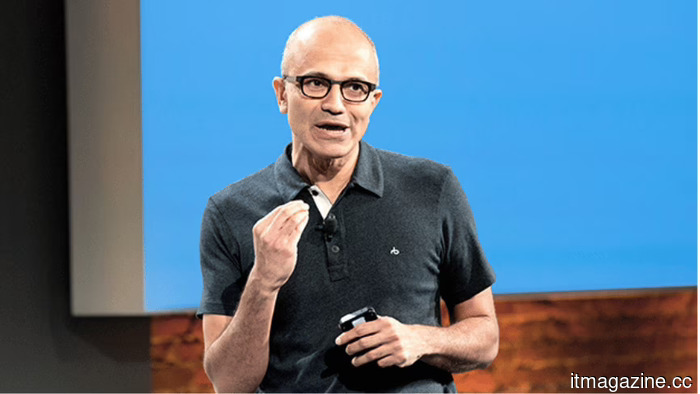 Microsoft’s discreet Claude Code retreat and the actual expenses associated with enterprise AI.
Microsoft is reducing Claude Code licenses within its primary product teams. This decision is not based on strategy but rather due to costs. Has the AI coding experiment come to an end?
Microsoft’s discreet Claude Code retreat and the actual expenses associated with enterprise AI.
Microsoft is reducing Claude Code licenses within its primary product teams. This decision is not based on strategy but rather due to costs. Has the AI coding experiment come to an end?
 Reasons for the increasing adoption of AI in EU businesses and the challenges preventing full integration are being examined.
The adoption of enterprise AI in the EU reached 20% in 2025. However, this headline masks a more significant issue that predates the AI Act.
Reasons for the increasing adoption of AI in EU businesses and the challenges preventing full integration are being examined.
The adoption of enterprise AI in the EU reached 20% in 2025. However, this headline masks a more significant issue that predates the AI Act.
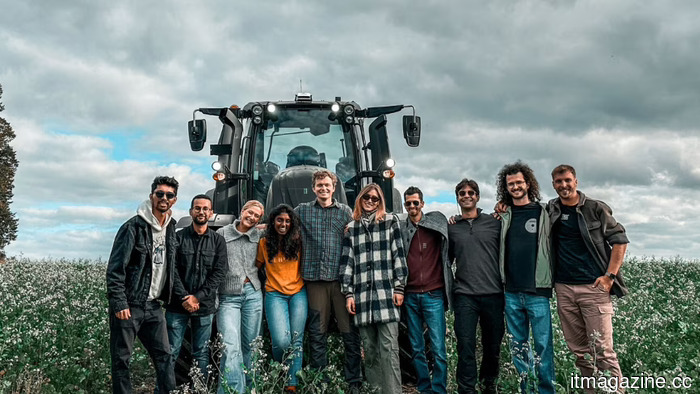 PerPlant secures €1 million to equip tractors with AI cameras, covering 200,000 hectares.
Copenhagen-based agtech company PerPlant has secured €1M to expand its AI precision-spraying system mounted on tractors. New investors include Jytte Rosenmaj from Agreena and Kræn Østergaard Nielsen from Coop.
PerPlant secures €1 million to equip tractors with AI cameras, covering 200,000 hectares.
Copenhagen-based agtech company PerPlant has secured €1M to expand its AI precision-spraying system mounted on tractors. New investors include Jytte Rosenmaj from Agreena and Kræn Østergaard Nielsen from Coop.
 India's aspirations in AI depend on transforming 200 million workers into 350 million.
Sandip Patel from IBM India states that by 2030, India has the potential to become the global hub for AI skills. However, the calculations involved are more complex than the initial figure implies.
India's aspirations in AI depend on transforming 200 million workers into 350 million.
Sandip Patel from IBM India states that by 2030, India has the potential to become the global hub for AI skills. However, the calculations involved are more complex than the initial figure implies.
 Reasons for the increasing adoption of AI in EU businesses and the ongoing challenges in keeping pace.
The adoption of AI in EU enterprises reached 20% in 2025. However, this headline masks a more significant issue that predates the AI Act.
Reasons for the increasing adoption of AI in EU businesses and the ongoing challenges in keeping pace.
The adoption of AI in EU enterprises reached 20% in 2025. However, this headline masks a more significant issue that predates the AI Act.
 India’s aspirations in AI depend on transforming 200 million workers into 350 million.
Sandip Patel from IBM India believes that by 2030, India has the potential to become the global hub for AI skills. However, the calculations are more complex than the initial figure implies.
India’s aspirations in AI depend on transforming 200 million workers into 350 million.
Sandip Patel from IBM India believes that by 2030, India has the potential to become the global hub for AI skills. However, the calculations are more complex than the initial figure implies.
Blue Origin has allocated an additional $600 million to its facility in Florida.
Blue Origin plans to invest $600 million in a new 830,000-square-foot upper-stage facility in Cape Canaveral, shortly after the FAA approved New Glenn for flight once more.