
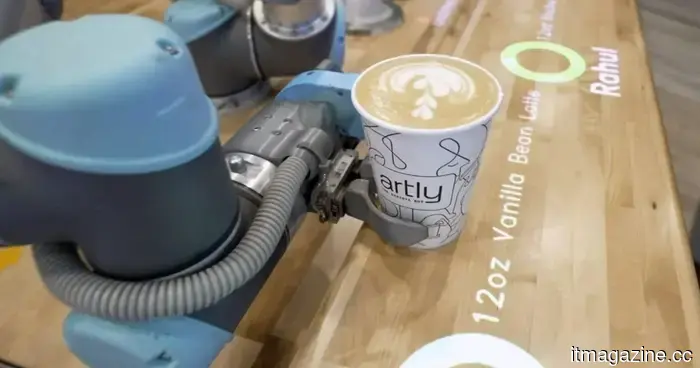
This robotic barista aims to transform award-winning coffee into a business that can grow.
Some concepts seem theoretical until they manifest in a setting as commonplace as your morning coffee. Artly aims to address this with the Barista Bot, its robotic barista system that is currently serving beverages at spots like Muji in Portland, Oregon. The company is working to take something that has traditionally relied on human skill, repetition, and intuition and convert it into a system that can consistently reproduce the same result on a larger scale.
What sets the Barista Bot apart from ordinary automation is that Artly isn't attempting to create a mere coffee vending machine. Its objective is to closely mimic the techniques, standards, and workflow of a top-tier barista so that the experience feels deliberate rather than mechanized. As noted by Digital Trends founder Dan Gaul, who sampled it at the Portland site, the coffee was surprisingly good.
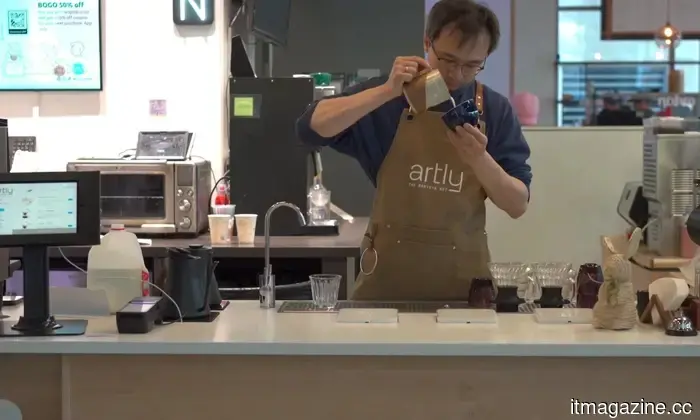
The concept originated with Joe Yang, who trained the Barista Bot using his skills as a latte artist, coffee roaster, and multiple U.S. competition champion, now serving as Artly’s Chief Coffee Officer. Yang’s journey into coffee was quite unconventional; he grew up in China and only began drinking coffee while attending university in Auckland, New Zealand, in 2007, where he ordered an espresso mainly because it was the cheapest option available.
Over time, his curiosity led him deeper into café work, specialty coffee culture, and professional competitions, ultimately leading him to win U.S. titles in the brewers cup, latte art, and roasting.
While Yang comes from a background rooted in specialty coffee, Artly’s founding team has expertise in computer vision and robotics. They previously developed facial recognition and computer vision technologies before selling their startup to Amazon. After spending several years there and amidst the pandemic slowdown, they returned to robotics, searching for sectors where automation could enhance consistency without sacrificing the experience.
Coffee was a clear choice due to its substantial market, the company's Seattle base, and the heavy reliance of café operations on timing, repetition, and quality control. Reportedly, the first prototype was created in a garage within six months and was then showcased at a coffee trade show, where the team connected with Yang.
An intriguing aspect of the Barista Bot is how it was trained. For the latte art, the Artly team fitted motion capture technology to Yang's arm to record his movements while pouring milk. The robotic arm learned to replicate these actions instead of depending on fixed animations or pre-programmed sequences.
The system employs computer vision throughout its operations. After preparing a drink, the Barista Bot takes a photo of the latte art with a camera on the robotic arm and assesses whether the outcome meets the expected criteria. If there's a discrepancy, the system adjusts future pours accordingly.
This feedback loop is a defining feature of the system. The Barista Bot is not designed to execute an identical movement endlessly. Rather, it is programmed to check, correct, and recalibrate itself against the standards set by Yang.
The biggest advantage may be its consistency, as the system measures ingredients with a variance of only 0.1 gram while also controlling extraction time, milk steaming, water levels, and other factors affecting the final drink. Yang himself fine-tuned aspects such as steam wand angles, extraction timing, and the roasting method used for the beans.
Precision becomes vital, especially in busy and unpredictable environments. A barista may be outstanding in ideal settings, but cafés are often noisy, crowded, and full of interruptions. Yang directly acknowledged this, stating that there are situations in which he trusts the system to produce drinks more consistently than he might during a hectic shift.
In practice, this may be the strongest argument for the Barista Bot. Most people don’t receive coffee every morning from a champion-level barista in perfect conditions. More commonly, coffee is dispensed in rushed environments with crowded counters and staff handling multiple tasks simultaneously. A system capable of consistently delivering the same quality starts to seem less like a novelty and more like a practical consumer product.
However, the system still requires human assistance. The Barista Bot is not fully autonomous as one might envision; staff must replenish beans, milk, cups, and syrup, while the system concentrates on drink preparation and self-cleaning tasks. Simultaneously, the Barista Bot continuously assesses its performance through cameras and sensors that verify tamping pressure, ingredient levels, cup placement, and milk quality during the process.
This distinction is crucial, as the Barista Bot does not function like a simple robotic arm performing a fixed motion between two points. Instead, the system continuously monitors, corrects, and recalibrates while preparing drinks.
Artly views the Barista Bot as just the beginning. The company is already testing robotic systems for cocktails, mocktails, smoothies, and even projects beyond food and beverage, such as robotic fish filleting in partnership with Virginia Tech.
This broader ambition makes the Barista Bot feel less like a gimmick and more like an initial example of how robotics could transition into other skilled professions.
If you do find
Other articles
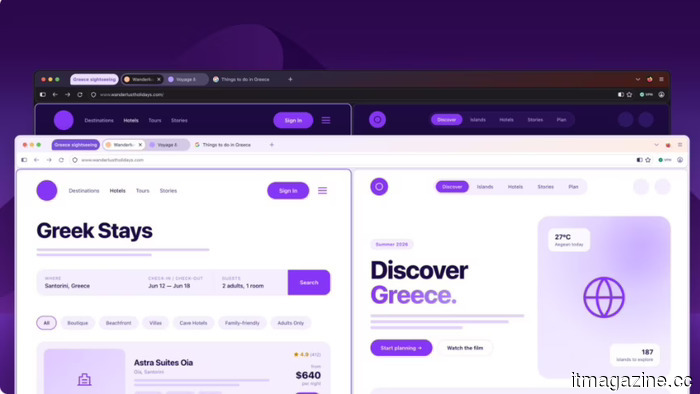 The Firefox Project Nova redesign features a compact mode and an updated appearance.
Mozilla's Project Nova is set to introduce softer tabs for Firefox, a color scheme inspired by fire, a compact mode, and more transparent privacy settings. The rollout is anticipated to occur later this year.
The Firefox Project Nova redesign features a compact mode and an updated appearance.
Mozilla's Project Nova is set to introduce softer tabs for Firefox, a color scheme inspired by fire, a compact mode, and more transparent privacy settings. The rollout is anticipated to occur later this year.
 SpaceX's bridge loan reduces Musk's debt expenses by 50% in preparation for the IPO.
SpaceX's IPO filing discloses a $20 billion bridge loan at a 4.58% interest rate, which has replaced high-interest junk debt from X and xAI, resulting in savings of nearly $1 billion annually.
SpaceX's bridge loan reduces Musk's debt expenses by 50% in preparation for the IPO.
SpaceX's IPO filing discloses a $20 billion bridge loan at a 4.58% interest rate, which has replaced high-interest junk debt from X and xAI, resulting in savings of nearly $1 billion annually.
 The Motorola Raze Fold brought back my appreciation for the phone stylus, and I realized how much I've missed using it.
I was surprised by the Moto Pen Ultra of the Razr Fold, as it doesn’t regard the stylus as just a nostalgic item but instead as a useful shortcut tool for a spacious foldable display.
The Motorola Raze Fold brought back my appreciation for the phone stylus, and I realized how much I've missed using it.
I was surprised by the Moto Pen Ultra of the Razr Fold, as it doesn’t regard the stylus as just a nostalgic item but instead as a useful shortcut tool for a spacious foldable display.
 ByteDance's Seedance 2.0 premieres at Cannes with the 95-minute AI film Hell Grind.
During the 79th Cannes Film Festival, renowned for its abundance of cinematic storytelling, one of the most unexpected highlights this year emerged from artificial intelligence.
ByteDance's Seedance 2.0 premieres at Cannes with the 95-minute AI film Hell Grind.
During the 79th Cannes Film Festival, renowned for its abundance of cinematic storytelling, one of the most unexpected highlights this year emerged from artificial intelligence.
 Research indicates that unhealthy screen habits significantly contribute to the poor sleep and mental health of young people.
Recent studies reveal how habits related to screens, inadequate sleep, feelings of loneliness, and depression interconnect in self-reinforcing cycles among young adults between the ages of 18 and 40.
Research indicates that unhealthy screen habits significantly contribute to the poor sleep and mental health of young people.
Recent studies reveal how habits related to screens, inadequate sleep, feelings of loneliness, and depression interconnect in self-reinforcing cycles among young adults between the ages of 18 and 40.
 Ubisoft aims for a resurgence with Assassin’s Creed, Far Cry, Ghost Recon, and an AI experiment that has players concerned.
Ubisoft's plan for a comeback features new titles in the Assassin's Creed, Far Cry, and Ghost Recon franchises, along with a playable generative AI project named Teammates.
Ubisoft aims for a resurgence with Assassin’s Creed, Far Cry, Ghost Recon, and an AI experiment that has players concerned.
Ubisoft's plan for a comeback features new titles in the Assassin's Creed, Far Cry, and Ghost Recon franchises, along with a playable generative AI project named Teammates.
This robotic barista aims to transform award-winning coffee into a business that can grow.
Artly's robotic barista system, named Jarvis, is currently serving coffee in Portland and employs computer vision and motion capture technology that has been honed using champion barista Joe Yang's expertise. The company is confident that automation can enhance craftsmanship instead of eliminating it.