
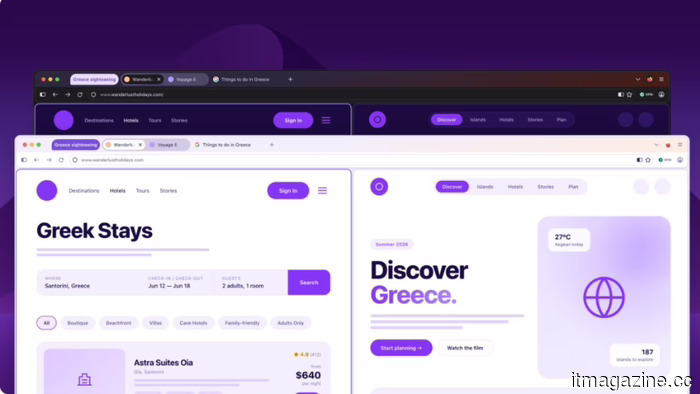
The Firefox Project Nova redesign introduces a compact mode and a fresh appearance.
TL;DR Mozilla has introduced Project Nova, the most significant redesign of Firefox in six years. It features softer tabs, a fire-inspired colour scheme, a compact mode, and improved privacy settings, with the full rollout anticipated later this year.
Mozilla has officially revealed Project Nova, marking the largest visual revamp of Firefox since 2020. This redesign affects tabs, icons, spacing, the colour palette, and settings, aiming to create a warmer and faster browsing experience while maintaining its identity as the only major browser not based on Chromium.
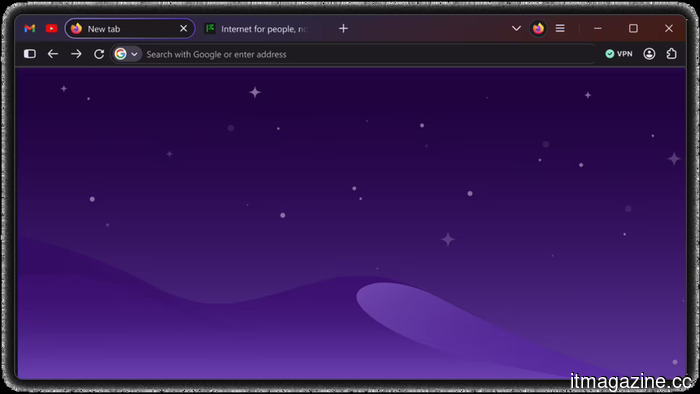
The tab design has changed, becoming softer with a more rounded shape and a subtle gradient that enhances the visual prominence of the active tab. The overall interface follows suit, with consistent curves and spacing in panels, menus, and browser controls. Icons have been updated for improved balance in both light and dark themes.
The colour palette has also been refreshed, inspired by fire, featuring deep smoky purples and lighter warm shades to replace the flatter tones of the previous design. The active tab features a glow effect that unifies the entire interface.
Compact mode is making a comeback after being removed years ago, responding to user demand. This mode will condense browser controls to save vertical screen space, catering to the power users who represent a significant portion of Firefox's audience.
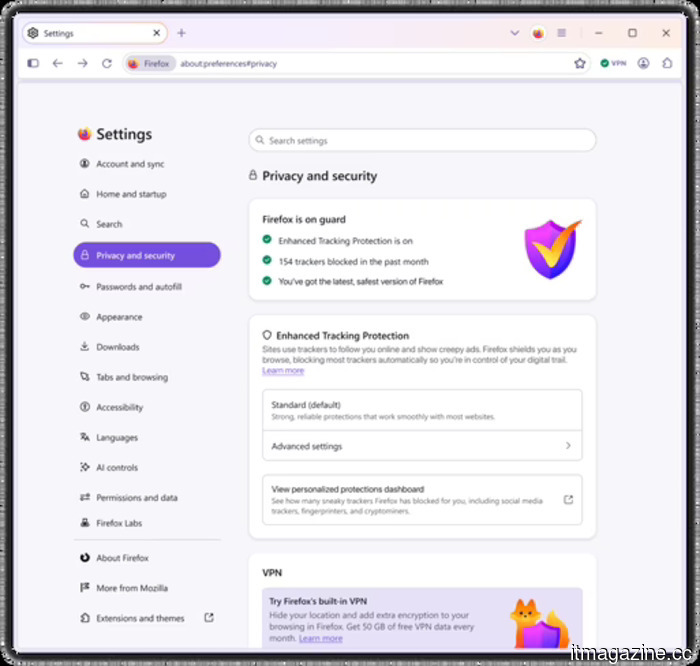
In addition to the aesthetic changes, Nova enhances the visibility of privacy tools. The built-in VPN, initially launched as a free feature with a monthly data limit of 50 gigabytes, will be more prominently displayed. Settings will be revised to use clearer language, providing more straightforward controls for Enhanced Tracking Protection and an option to disable AI features entirely.
Mozilla asserts that Firefox has improved load times for essential page content by 9 percent over the past year, partly due to tracker blocking that lessens the third-party code a page needs to load. The browser now prioritizes loading key page elements before peripheral content.
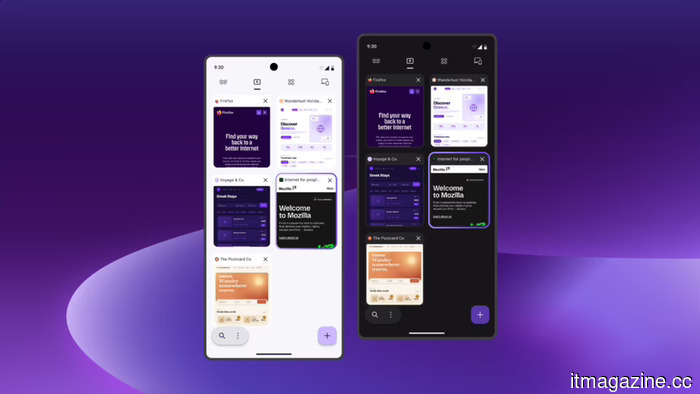
This redesign will also extend to mobile, with consistent colours, icons, and design tokens ensuring a unified experience across desktop and mobile. Mozilla plans to introduce new themes and wallpapers, with future customization options for the shape of interface elements like tabs and components.
On a structural level, Nova introduces a shared design system built on reusable tokens and components, facilitating the integration of future features into a cohesive visual style. Although such infrastructure changes may not excite users, they are vital for the browser’s evolution.
The timing is crucial, as Firefox's market share stands at about 2.3 percent globally, down from double digits a decade ago. Google is transforming Chrome into an AI-centric platform while facing scrutiny over tracking practices, and Apple’s Safari holds around 15 percent of the market. Firefox's focus on user-centric design must be matched by a modern interface.
Mozilla is also investing in AI on its own terms, incorporating 271 vulnerability fixes from Anthropic’s Claude in Firefox 150, and providing optional AI features with an opt-out option. This strategy, prioritizing user choice over defaults, aligns with Nova's overarching philosophy.
Project Nova is currently available for testing in Firefox Nightly builds, with the complete rollout expected later this year. Mozilla is gathering feedback via its Connect forum, staying true to its open-source heritage of collaborative development.
Other articles
 Spotify will allow you to use AI to create covers and remixes of your favorite tracks, for an additional charge.
Spotify and Universal Music Group revealed an agreement that allows Premium subscribers to utilize AI for creating covers and remixes of their favorite tracks.
Spotify will allow you to use AI to create covers and remixes of your favorite tracks, for an additional charge.
Spotify and Universal Music Group revealed an agreement that allows Premium subscribers to utilize AI for creating covers and remixes of their favorite tracks.
 PDF Primetime: The Transition of Document Workflow to the Web
How simplicity and accessibility are transforming the way users manage daily digital tasks. Over the past ten years, the modern workplace has undergone significant changes, characterized by remote access and widely dispersed teams. Nevertheless, many administrative tasks still retain a surprising level of complexity. You can now work together on a group project with individuals from across the globe, […]
PDF Primetime: The Transition of Document Workflow to the Web
How simplicity and accessibility are transforming the way users manage daily digital tasks. Over the past ten years, the modern workplace has undergone significant changes, characterized by remote access and widely dispersed teams. Nevertheless, many administrative tasks still retain a surprising level of complexity. You can now work together on a group project with individuals from across the globe, […]
 Research indicates that unhealthy screen habits significantly contribute to the poor sleep and mental health of young people.
Recent studies reveal how habits related to screens, inadequate sleep, feelings of loneliness, and depression interconnect in self-reinforcing cycles among young adults between the ages of 18 and 40.
Research indicates that unhealthy screen habits significantly contribute to the poor sleep and mental health of young people.
Recent studies reveal how habits related to screens, inadequate sleep, feelings of loneliness, and depression interconnect in self-reinforcing cycles among young adults between the ages of 18 and 40.
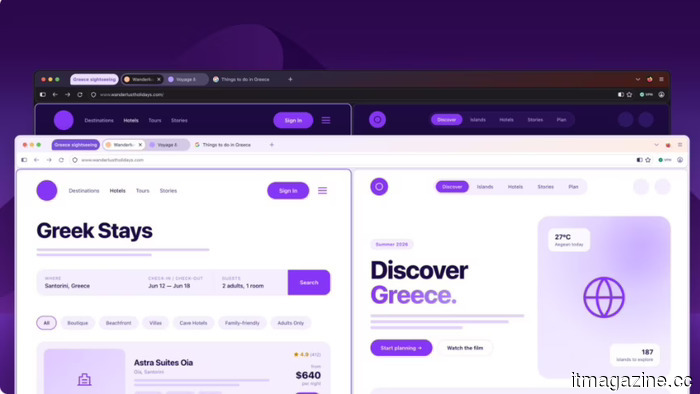 The Firefox Project Nova redesign features a compact mode and an updated appearance.
Mozilla's Project Nova is set to introduce softer tabs for Firefox, a color scheme inspired by fire, a compact mode, and more transparent privacy settings. The rollout is anticipated to occur later this year.
The Firefox Project Nova redesign features a compact mode and an updated appearance.
Mozilla's Project Nova is set to introduce softer tabs for Firefox, a color scheme inspired by fire, a compact mode, and more transparent privacy settings. The rollout is anticipated to occur later this year.
 PDF Primetime: The Shift of Document Workflow to the Web
How simplicity and accessibility are transforming the way users manage daily digital activities. The contemporary workplace has undergone significant changes in the past ten years, now defined by remote access and geographically dispersed teams. However, many administrative processes continue to be surprisingly cumbersome. You can now work on a group project with individuals from around the globe, […]
PDF Primetime: The Shift of Document Workflow to the Web
How simplicity and accessibility are transforming the way users manage daily digital activities. The contemporary workplace has undergone significant changes in the past ten years, now defined by remote access and geographically dispersed teams. However, many administrative processes continue to be surprisingly cumbersome. You can now work on a group project with individuals from around the globe, […]
 SpaceX bridge loan reduces Musk's debt expenses by 50% prior to the IPO.
SpaceX's IPO filing discloses a $20 billion bridge loan at a rate of 4.58%, which has substituted higher-interest junk debt from X and xAI, leading to annual savings of almost $1 billion.
SpaceX bridge loan reduces Musk's debt expenses by 50% prior to the IPO.
SpaceX's IPO filing discloses a $20 billion bridge loan at a rate of 4.58%, which has substituted higher-interest junk debt from X and xAI, leading to annual savings of almost $1 billion.
The Firefox Project Nova redesign introduces a compact mode and a fresh appearance.
Mozilla's Project Nova will introduce softer tabs for Firefox, a fire-themed color palette, a compact mode, and more transparent privacy settings. The update is anticipated to be released later this year.