
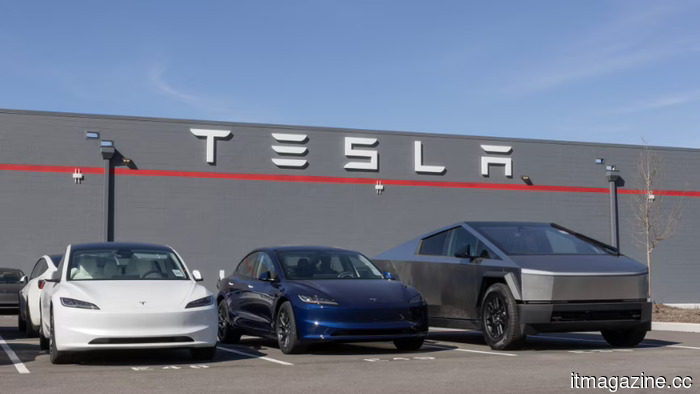
Tesla FSD debuts in Lithuania as the rollout across Europe speeds up.
**Summary**
Tesla’s Full Self-Driving (FSD) software has launched in Lithuania, making it the second European country to do so, following the Netherlands. Greece and Belgium are expected to approve it soon, but Scandinavian regulators are expressing concerns, and there’s no set date for EU-wide approval, which will require a qualified majority vote.
Tesla's Full Self-Driving software is now available in Lithuania, marking the second approval within the EU after the Netherlands' recent endorsement. Greece and Belgium are anticipated to follow suit. The Lithuanian transport safety authority opted to accept the Dutch RDW’s prior certification instead of conducting its own tests. According to EU regulations, member states are allowed to recognize another country’s type approval, facilitating the system's access to their roads.
Tesla Europe announced the launch on X, informing Lithuanian users that FSD (Supervised) is now operational. The Greek transport ministry indicated that a forthcoming bill would secure approval, as reported by Reuters, while Belgium is expected to take a similar approach with RDW recognition.
This expansion is crucial for Tesla’s overall strategy. CEO Elon Musk's $1 trillion compensation package is linked to achieving specific product milestones, including reaching 10 million active FSD subscriptions by 2035. Currently, Tesla has about 1.3 million FSD users worldwide—comprising 824,000 outright purchases and 476,000 active monthly subscribers.
The subscriber count is increasing rapidly, with Tesla adding 180,000 new FSD subscribers in the first quarter of 2026, reflecting a 51 percent rise from the previous quarter. In February, Tesla removed the one-time purchase option, making FSD solely available through a $99 monthly subscription, which eliminated the $15,000 upfront cost and is generating an estimated $546 million in annual recurring revenue.
However, the rollout in Europe is encountering challenges. The RDW is advocating for formal EU-wide recognition through the European Commission’s Technical Committee on Motor Vehicles, which requires a qualified majority—that is, 55 percent of member states representing 65 percent of the EU’s population. No vote has been scheduled yet, with upcoming committee meetings planned for July and October.
Emails obtained by Reuters indicate considerable skepticism from Scandinavian regulators. Officials from Sweden, Finland, Denmark, and Norway expressed concerns regarding FSD’s tendency to exceed speed limits and its effectiveness on icy roads. Tesla’s goal of achieving EU-wide availability by summer 2026 now appears increasingly ambitious.
For the time being, the rollout continues on a country-by-country basis. Outside of Europe, FSD (Supervised) is also offered in Australia, Canada, China, Mexico, New Zealand, Puerto Rico, South Korea, and the United States. The system still necessitates active supervision by the driver, managing steering, lane changes, and parking, while expecting the human driver to take control when necessary.
The version of FSD that drives without human intervention, known as FSD Unsupervised, is currently limited to Tesla's robotaxi fleet operating in Austin, Dallas, and Houston. Musk has indicated that unsupervised capabilities might begin to roll out to qualified customers by the fourth quarter of 2026, although he has made similar statements in the past without delivering.
The disparity between FSD's ambitions in Europe and the regulatory landscape remains significant. With two countries approved and 25 left to go, the ones voicing objections are among the most influential in terms of road safety policy on the continent. While Tesla is making gradual progress in Europe, the pace is dictated by Brussels rather than Musk’s deadlines.
Other articles
 The PlayStation State of Play is back on June 2, featuring Marvel’s Wolverine as the highlight of the event.
Sony has officially revealed a new PlayStation State of Play showcase scheduled for June 2, which will include more than 60 minutes of PS5 game announcements and an exclusive preview of Marvel’s Wolverine.
The PlayStation State of Play is back on June 2, featuring Marvel’s Wolverine as the highlight of the event.
Sony has officially revealed a new PlayStation State of Play showcase scheduled for June 2, which will include more than 60 minutes of PS5 game announcements and an exclusive preview of Marvel’s Wolverine.
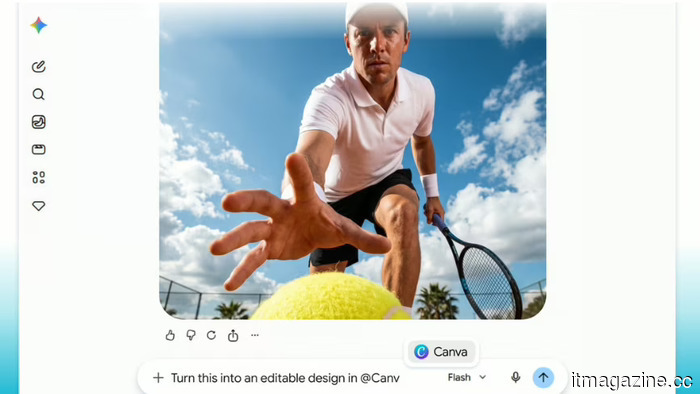 Canva has been introduced in Gemini, making it available on all four leading AI assistants.
Canva's newly introduced Connected App for Google Gemini enables users to create customizable, on-brand designs from text inputs, while Magic Layers transform AI-generated images into layered files.
Canva has been introduced in Gemini, making it available on all four leading AI assistants.
Canva's newly introduced Connected App for Google Gemini enables users to create customizable, on-brand designs from text inputs, while Magic Layers transform AI-generated images into layered files.
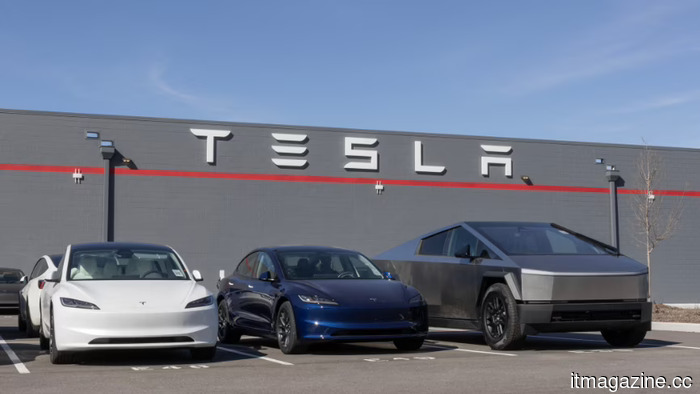 Tesla's Full Self-Driving (FSD) system is now available in Lithuania as the rollout across Europe speeds up.
Lithuania has become the second European nation to authorize Tesla's FSD software, with Greece and Belgium following suit. However, the approval across the EU encounters resistance from Scandinavian countries.
Tesla's Full Self-Driving (FSD) system is now available in Lithuania as the rollout across Europe speeds up.
Lithuania has become the second European nation to authorize Tesla's FSD software, with Greece and Belgium following suit. However, the approval across the EU encounters resistance from Scandinavian countries.
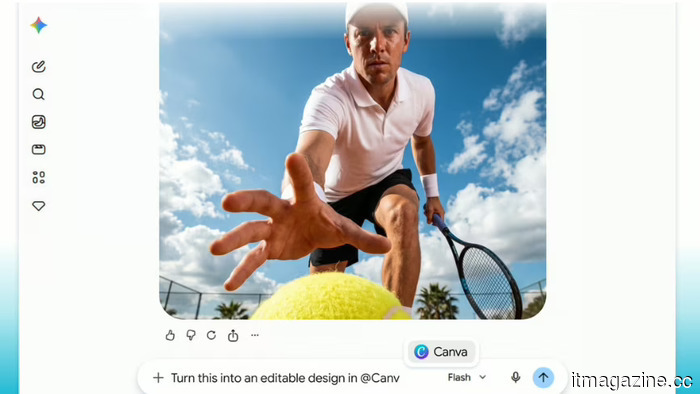 Canva has been introduced in Gemini, now available across all four primary AI assistants.
Canva's newly released Connected App for Google Gemini enables users to create editable designs that align with their brand using text prompts, while Magic Layers converts AI-generated images into layered files.
Canva has been introduced in Gemini, now available across all four primary AI assistants.
Canva's newly released Connected App for Google Gemini enables users to create editable designs that align with their brand using text prompts, while Magic Layers converts AI-generated images into layered files.
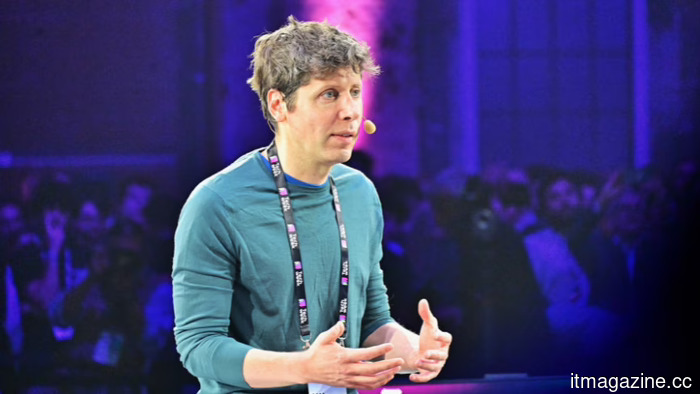 OpenAI plans to submit its IPO application this week, aiming for a $1 trillion launch.
OpenAI is working on a private IPO filing with Goldman Sachs and Morgan Stanley, aiming for a September listing that might value the company at over $1 trillion.
OpenAI plans to submit its IPO application this week, aiming for a $1 trillion launch.
OpenAI is working on a private IPO filing with Goldman Sachs and Morgan Stanley, aiming for a September listing that might value the company at over $1 trillion.
 Stellantis signs agreement that may advantage Jaguar-Land Rover purchasers in the US.
Stellantis and Jaguar Land Rover are considering a partnership in the US that may lower tariffs, enhance local manufacturing, and change the way luxury vehicles are delivered to American consumers.
Stellantis signs agreement that may advantage Jaguar-Land Rover purchasers in the US.
Stellantis and Jaguar Land Rover are considering a partnership in the US that may lower tariffs, enhance local manufacturing, and change the way luxury vehicles are delivered to American consumers.
Tesla FSD debuts in Lithuania as the rollout across Europe speeds up.
Lithuania has become the second European nation to authorize Tesla's FSD software, with Greece and Belgium expected to follow. However, approval across the EU is encountering resistance from Scandinavian countries.