
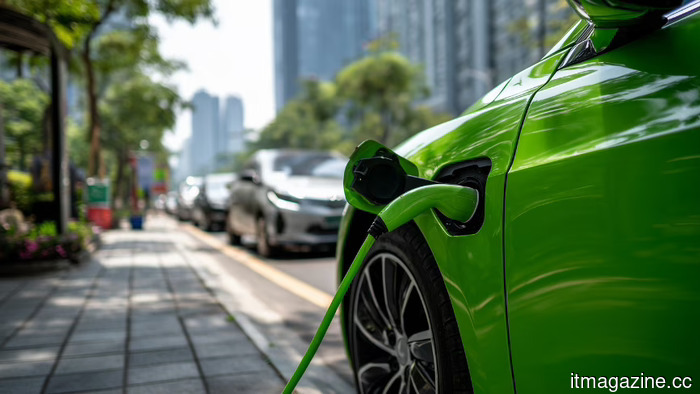
European electric vehicle sales increase by 51% as the conflict in Iran pushes oil prices above $100.
European electric vehicle registrations soared by 51 percent in March 2026 as oil prices exceeded $100 a barrel due to the war in Iran. Chinese automakers are experiencing the largest increases, with inquiries for BYD rising by an astonishing 25,000 percent on Carwow.
Conflicts can swiftly alter consumer behavior. Following US and Israeli airstrikes on Iran in late February, crude oil prices surged past $100 a barrel for the first time since Russia invaded Ukraine in 2022. This has led to immediate and painful repercussions at petrol stations across Europe.
Conversely, electric vehicle dealerships have witnessed a boom. Registrations of battery-electric vehicles in March jumped by 51 percent across 14 significant EU and EFTA markets, resulting in more than 224,000 new EVs registered in just one month. This brought the total share of EVs to 22 percent of all new car sales in these regions.
In total, EU countries recorded over 500,000 new electric vehicles in the first quarter, marking a 33.5 percent increase compared to the same period last year. This surge represents the fastest quarterly growth in European EV adoption since subsidies during the pandemic encouraged consumers to switch to battery power.
The conflict in Iran has effectively closed shipping routes through the Strait of Hormuz, jeopardizing around one-fifth of global oil supply. The International Energy Agency termed this the greatest global energy security challenge in history. For European motorists already burdened by years of rising living expenses, the spike in fuel prices was the final catalyst.
Chinese brands have emerged as the primary benefactors. Purchase inquiries for BYD on Carwow increased dramatically by 25,000 percent in Q1, while Leapmotor and Xpeng saw jumps of 436 percent and 153 percent, respectively.
While these figures indicate online interest rather than actual deliveries, the trend is translating into tangible sales. BYD’s registrations in Germany soared by 327 percent in March, earning it a 1.2 percent market share in Europe’s largest automotive market. This growth contrasts with the significant decline in Tesla’s European registrations, which have suffered due to boycotts related to Elon Musk’s political stance, creating opportunities for Chinese manufacturers.
Established carmakers are also feeling the impact of this shift. Renault reported that 50 percent of its UK registrations in April were electric vehicles, and its Renault 5 became the best-selling electric car in Britain that month. Since the onset of the war, EV-related inquiries on Renault’s UK website surged by 48 percent.
Volvo Cars noted an uptick in orders, particularly for its entry-level EX30 compact SUV, with chief commercial officer Erik Severinson stating that “customers are most sensitive to increases in oil prices” for lower-priced models. The EX30 starts at approximately £31,500 in Britain, positioning it as one of the more affordable premium electric vehicles available.
In the used car market, OLX reported an 80 percent increase in EV inquiries on its French platform since hostilities began. CEO Christian Gisy remarked that the conflict has “fundamentally reshaped how people think about energy security in their daily lives.”
The key question remains whether this momentum will continue. Previous oil surges, including the spike after Russia's 2022 invasion of Ukraine, led to brief increases in EV interest that diminished as fuel prices stabilized. However, the current charging infrastructure is more developed, Chinese competitors have reduced EV costs significantly, and EU emissions regulations are set to tighten further by 2027.
For European automakers, the timing is bittersweet. The EV demand they invested billions in to establish manufacturing facilities has finally emerged, but the brands that are enjoying the most significant growth are BYD, Leapmotor, and Xpeng, not Volkswagen, Stellantis, or BMW.
Other articles
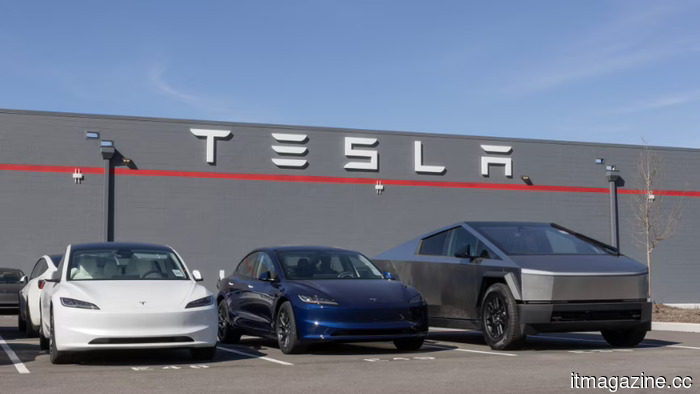 Tesla FSD debuts in Lithuania as the rollout across Europe speeds up.
Lithuania has become the second European nation to authorize Tesla's FSD software, with Greece and Belgium expected to follow. However, approval across the EU is encountering resistance from Scandinavian countries.
Tesla FSD debuts in Lithuania as the rollout across Europe speeds up.
Lithuania has become the second European nation to authorize Tesla's FSD software, with Greece and Belgium expected to follow. However, approval across the EU is encountering resistance from Scandinavian countries.
 Canva has been introduced in Gemini, making it available on all four leading AI assistants.
Canva's newly introduced Connected App for Google Gemini enables users to create customizable, on-brand designs from text inputs, while Magic Layers transform AI-generated images into layered files.
Canva has been introduced in Gemini, making it available on all four leading AI assistants.
Canva's newly introduced Connected App for Google Gemini enables users to create customizable, on-brand designs from text inputs, while Magic Layers transform AI-generated images into layered files.
 Canva has been introduced in Gemini, now available across all four primary AI assistants.
Canva's newly released Connected App for Google Gemini enables users to create editable designs that align with their brand using text prompts, while Magic Layers converts AI-generated images into layered files.
Canva has been introduced in Gemini, now available across all four primary AI assistants.
Canva's newly released Connected App for Google Gemini enables users to create editable designs that align with their brand using text prompts, while Magic Layers converts AI-generated images into layered files.
 Airbnb introduces hotels, car rentals, and AI assistance in its summer update.
Airbnb's summer 2026 launch introduces boutique hotels in 20 cities, along with car rentals, luggage storage, and an AI bot that manages 40% of customer inquiries worldwide.
Airbnb introduces hotels, car rentals, and AI assistance in its summer update.
Airbnb's summer 2026 launch introduces boutique hotels in 20 cities, along with car rentals, luggage storage, and an AI bot that manages 40% of customer inquiries worldwide.
 OpenAI plans to submit its IPO application this week, aiming for a $1 trillion launch.
OpenAI is working on a private IPO filing with Goldman Sachs and Morgan Stanley, aiming for a September listing that might value the company at over $1 trillion.
OpenAI plans to submit its IPO application this week, aiming for a $1 trillion launch.
OpenAI is working on a private IPO filing with Goldman Sachs and Morgan Stanley, aiming for a September listing that might value the company at over $1 trillion.
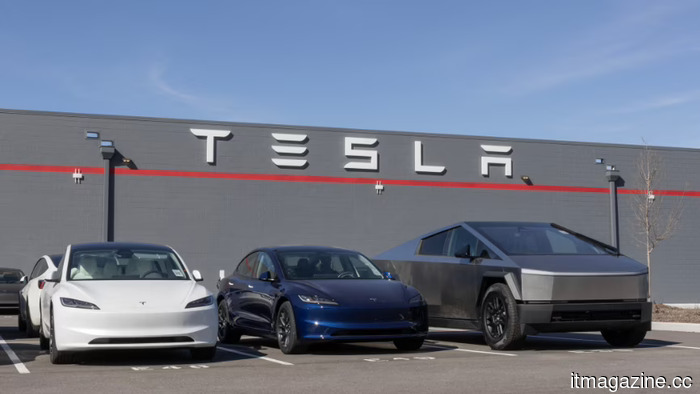 Tesla's Full Self-Driving (FSD) system is now available in Lithuania as the rollout across Europe speeds up.
Lithuania has become the second European nation to authorize Tesla's FSD software, with Greece and Belgium following suit. However, the approval across the EU encounters resistance from Scandinavian countries.
Tesla's Full Self-Driving (FSD) system is now available in Lithuania as the rollout across Europe speeds up.
Lithuania has become the second European nation to authorize Tesla's FSD software, with Greece and Belgium following suit. However, the approval across the EU encounters resistance from Scandinavian countries.
European electric vehicle sales increase by 51% as the conflict in Iran pushes oil prices above $100.
In March, registrations of battery-electric vehicles surged by 51% as oil prices exceeded $100 per barrel. Chinese manufacturers BYD, Leapmotor, and Xpeng are experiencing the most significant growth.