

OpenAI establishes its inaugural international applied-AI lab in Singapore, backed by a $235 million investment.
The company plans to expand to approximately 200 employees in the city-state and align the lab’s activities with Singapore's priorities in public sector, finance, healthcare, and digital infrastructure. On Wednesday, OpenAI announced it will establish its first applied-AI lab outside the U.S. in Singapore, with a commitment of S$300 million (around $235 million) alongside plans to increase its workforce to roughly 200 people in the city-state over the next few years. Singapore’s Ministry of Digital Development and Information confirmed this partnership at the ATxSG summit.
It’s important to closely examine the concept of the ‘Applied AI Lab.’ According to the available materials, OpenAI is not launching a frontier research lab in Singapore. Instead, the new facility will function as a deployment and partnerships unit, tailored to Singapore’s outlined AI Mission priorities concerning public service, finance, healthcare, and digital infrastructure.
The objective is to implement OpenAI’s existing suite of models within a defined national policy framework, with the Singapore government being the primary customer and collaborator. This lab will operate alongside the regional commercial office OpenAI plans to open in the city in 2024.
Pay attention to the strategic geographical implications. Over the past five years, Singapore has sought to establish itself as the premier Western-aligned hub in Southeast Asia for AI infrastructure and the deployment of frontier models. The Monetary Authority of Singapore has been an active player among Asian regulators on the Anthropic Mythos cybersecurity front, and Singapore’s public-sector AI commitments exceeding $7 billion since 2024 have created what appears to be the most efficient single-jurisdiction procurement pipeline in the region.
OpenAI’s decision to choose Singapore instead of Tokyo, Seoul, Sydney, or Bangalore for its first international applied lab reflects readiness for procurement as much as it does any technological factors.
The geopolitical context, not directly addressed in the announcements, adds significant weight to this development. The recent Trump-Xi summit in Beijing underscored that U.S.-China AI policy is now being discussed at the highest levels, with chip export controls and AI regulations on the agenda. In this context, Singapore emerges as a diplomatically neutral ground where Western frontier-AI firms can operate on a large scale without the political risks associated with launching in Tokyo or Seoul.
The competitive landscape in the Asia-Pacific region has become more intense over the past eighteen months, with rivals like DeepSeek, Moonshot’s Kimi, and Alibaba’s Qwen entering the scene. OpenAI's lab in Singapore serves as a strategic response to this increased competition.
At the same ATxSG event, Singapore also announced a parallel AI partnership with Google. The simultaneous announcements signify a strategic move by Singapore to establish concurrent partnerships with the two largest Western frontier labs, ensuring that the city-state is not overly reliant on either one.
This approach mirrors that of Australia’s largest pension funds within the agentic-AI cycle, as AustralianSuper has openly indicated a multi-vendor engagement strategy to mitigate risks tied to working with a single vendor.
There is a subtle strategic point to highlight. Singapore, in isolation, does not have a large enough domestic market to justify a 200-person applied frontier-AI lab based purely on commercial rationale. The lab’s economic viability hinges on Singapore's potential to serve as the regional hub for OpenAI’s presence in Southeast Asia and the wider APAC region, with Singapore-based engineers addressing customers in countries like Indonesia, Vietnam, the Philippines, Malaysia, Thailand, and more sensitive markets such as Hong Kong, where establishing a direct U.S.-AI company presence is structurally challenging.
The success of this hub-and-spoke model will depend on how quickly a regional customer base develops around the Singapore office.
OpenAI has not revealed the specific neighborhoods or facilities in Singapore where the lab will be located, nor the construction and hiring timeline beyond the next few years, or the breakdown of the S$300 million commitment between operating expenses and capital expenditures. Singapore’s Ministry of Digital Development and Information has also not provided a project-level outline of how the lab's work will integrate with the country’s existing Smart Nation initiatives.
The next tangible indicator will be the announcement of the first named Singaporean government projects initiated by the new lab, which, according to the press release, are expected to commence shortly after staffing increases.
Other articles
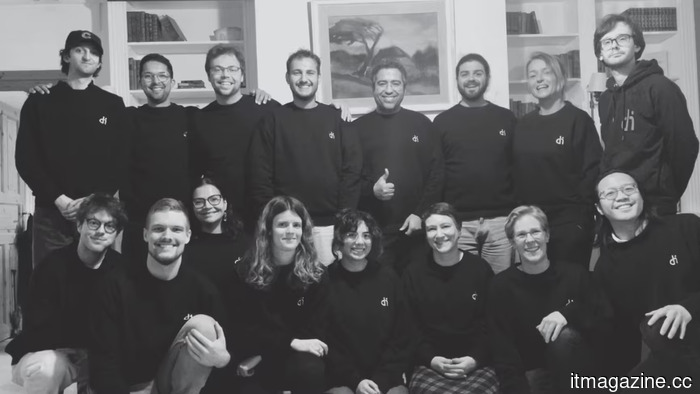 Dunia Innovations in Berlin invests €280M in a GigaLab focused on autonomous AI materials.
Dunia Innovations in Berlin has announced its intentions to build a €280 million GigaLab, covering 6,000 square meters, to validate AI-generated materials on an industrial scale.
Dunia Innovations in Berlin invests €280M in a GigaLab focused on autonomous AI materials.
Dunia Innovations in Berlin has announced its intentions to build a €280 million GigaLab, covering 6,000 square meters, to validate AI-generated materials on an industrial scale.
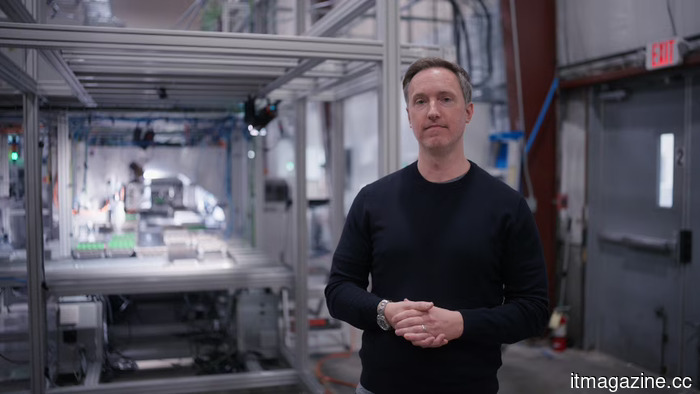 CircuitHub secures $28 million from Plural to produce PCBs in the same way that clouds deliver computing resources.
CircuitHub has secured $28 million in funding, led by Plural, to enhance its automated PCB-manufacturing 'Grid' factories in Europe and the United States.
CircuitHub secures $28 million from Plural to produce PCBs in the same way that clouds deliver computing resources.
CircuitHub has secured $28 million in funding, led by Plural, to enhance its automated PCB-manufacturing 'Grid' factories in Europe and the United States.
 Gen Z isn't criticizing AI; they're expressing discontent with their own job market.
Eric Schmidt faced booing at the University of Arizona, while Gloria Caulfield experienced the same at UCF. The narrative labeled it as generational confusion, but the statistics indicate it was a matter of generational accuracy.
Gen Z isn't criticizing AI; they're expressing discontent with their own job market.
Eric Schmidt faced booing at the University of Arizona, while Gloria Caulfield experienced the same at UCF. The narrative labeled it as generational confusion, but the statistics indicate it was a matter of generational accuracy.
 Gen Z isn't criticizing AI; they're expressing discontent with their own job market.
Eric Schmidt faced boos at the University of Arizona, while Gloria Caulfield was met with hostility at UCF. This framing referred to it as generational confusion, but the data suggests it was actually generational accuracy.
Gen Z isn't criticizing AI; they're expressing discontent with their own job market.
Eric Schmidt faced boos at the University of Arizona, while Gloria Caulfield was met with hostility at UCF. This framing referred to it as generational confusion, but the data suggests it was actually generational accuracy.
 Meta initiates the 10% reduction, with the Singapore office receiving the notification at 4 am first.
On Wednesday, Meta started informing numerous employees about layoffs, beginning with its Singapore staff at 4 am local time. These reductions fulfill a commitment made in April to decrease the workforce by approximately 8,000 positions.
Meta initiates the 10% reduction, with the Singapore office receiving the notification at 4 am first.
On Wednesday, Meta started informing numerous employees about layoffs, beginning with its Singapore staff at 4 am local time. These reductions fulfill a commitment made in April to decrease the workforce by approximately 8,000 positions.
 Alibaba introduces the Zhenwu M890 as China intensifies its efforts to create an alternative to NVIDIA.
Alibaba's T-Head chip division has introduced the Zhenwu M890, its most advanced AI accelerator to date, and announced that the chip is currently in 'scaled mass production' as China speeds up its efforts to create a domestic alternative to NVIDIA.
Alibaba introduces the Zhenwu M890 as China intensifies its efforts to create an alternative to NVIDIA.
Alibaba's T-Head chip division has introduced the Zhenwu M890, its most advanced AI accelerator to date, and announced that the chip is currently in 'scaled mass production' as China speeds up its efforts to create a domestic alternative to NVIDIA.
OpenAI establishes its inaugural international applied-AI lab in Singapore, backed by a $235 million investment.
OpenAI is establishing its inaugural applied-AI lab beyond the United States in Singapore, backed by a commitment of S$300 million ($235 million) and plans to increase its staff to approximately 200 individuals in the coming years.