
Meta initiates the 10% reduction, with the Singapore office receiving the notification at 4 am first.
Meta Platforms started informing thousands of employees on Wednesday about their layoffs, according to Bloomberg, beginning with their Singapore office, where notifications were sent out at 4 am local time. Employees in Europe and the US were alerted early in their respective time zones on the same day.
These layoffs are part of Meta's commitment to reduce its workforce by 10%, a plan initially announced on April 23 as part of what CEO Mark Zuckerberg has termed the company’s restructuring aimed at efficiency and AI improvements.
The number of layoffs aligns with what Meta promised in April, with approximately 8,000 employees—about 10% of the total workforce—losing their jobs. Additionally, 6,000 job openings that the company had expected to fill will remain unfilled. Together, these adjustments are reflected in Wall Street’s operating-leverage forecasts for the second half of the year; CNBC's April report juxtaposed the 10% reduction with $72.2 billion of capital expenditures (capex) for 2025 and a minimum of $115 billion in capex guidance for 2026, both directly associated with AI infrastructure.
These layoffs are coupled with a redeployment of talent; on Monday, Meta shifted 7,000 employees into AI-focused roles before the 8,000 layoffs were announced on Wednesday.
The two announcements represent the same restructuring seen from different perspectives. The 7,000 redeployments reflect the roles that Meta intends to retain, focused on AI agents, applications, and infrastructure, while the 8,000 cuts pertain to positions that the new structure deems unnecessary across various corporate functions.
This trend mirrors developments seen in other sectors recently. Standard Chartered informed investors on Tuesday that it plans to eliminate over 15% of its back-office positions by 2030 in areas like HR, risk, and compliance, with CEO Bill Winters noting the move as a replacement of "lower-value human capital" with AI. JPMorgan, Citi, HSBC, and Wells Fargo have all indicated during earnings calls over the last two quarters that they are pursuing AI-driven workforce efficiencies. The Meta layoffs represent the most significant single-day instance of this trend within the tech sector.
It's also noteworthy to consider a generational perspective on the cuts. Students in the class of 2026 expressed discontent during commencement speeches that portrayed AI's impact on the labor market as positive, and the recent Meta-Standard Chartered layoffs serve as a striking data point that might validate their concerns about job availability.
In April, Goldman Sachs estimated that AI-related job losses in the US could reach around 16,000 monthly; the notices at Meta this week would account for half of that figure in just one week within a single firm.
From a corporate finance perspective, Meta has consistently communicated that AI-related capital expenditures are its top strategic priority, implying that operating expenses, primarily payroll, need to be reduced to support this capex strategy. Meta’s planned capex for 2025 has risen from $72.2 billion to an expected run-rate above $115 billion for 2026, with most of this increase attributed to investments in Nvidia chips, data-center power, and cooling infrastructure necessary for GPU procurement. The 10% workforce reduction is a crucial aspect of addressing this financial balance.
However, the Bloomberg report did not detail which specific departments will bear the brunt of the layoffs. The April announcement suggested that most cuts would affect corporate functions (HR, marketing, communications, recruiting) rather than engineering and AI research; the current notifications appear to align with that assessment.
There is also no indication from available information that Meta has retracted its commitment to hiring in core engineering positions, including the recruitment offers that led to well-documented poaching of talent for its superintelligence teams during April and May.
Meta has not commented on severance packages, internal mobility options for those affected, or whether these layoffs will occur all at once or in stages over several weeks. The decision to start in Singapore implies a coordinated approach rather than a phased layoff process.
The next concrete indication of the impact of these cuts will come with the Q2 financial reporting, where the reduction in operating expenses will be reflected in the company's financial statements.
Other articles
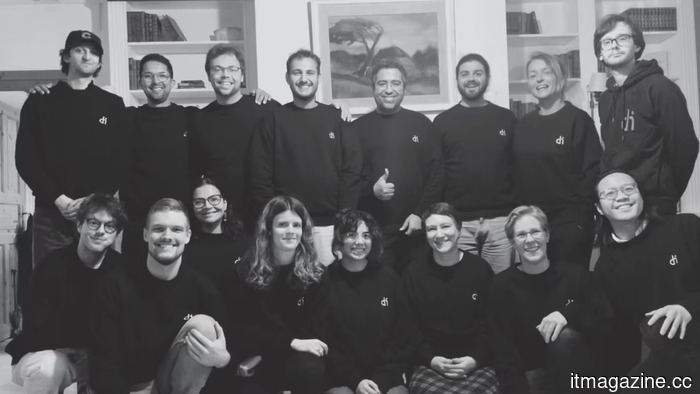 Dunia Innovations in Berlin has pledged €280 million to establish a GigaLab focused on autonomous AI materials.
Dunia Innovations in Berlin has announced its intention to establish a €280 million GigaLab, covering 6,000 square meters, meant to validate AI-designed materials on an industrial scale.
Dunia Innovations in Berlin has pledged €280 million to establish a GigaLab focused on autonomous AI materials.
Dunia Innovations in Berlin has announced its intention to establish a €280 million GigaLab, covering 6,000 square meters, meant to validate AI-designed materials on an industrial scale.
 Viktor secures $75 million from Accel to integrate an AI coworker into Slack and Teams.
Viktor, the AI coworking company located in Warsaw and Munich and founded by former Meta engineers, has secured $75 million in Series A funding, with Accel leading the round.
Viktor secures $75 million from Accel to integrate an AI coworker into Slack and Teams.
Viktor, the AI coworking company located in Warsaw and Munich and founded by former Meta engineers, has secured $75 million in Series A funding, with Accel leading the round.
 Alibaba introduces the Zhenwu M890 as a strong competitor to NVIDIA in China's market.
Alibaba's T-Head chip division has introduced the Zhenwu M890, its most advanced AI accelerator to date, and announced that the chip has entered 'scaled mass production' as China intensifies its efforts to develop a domestic alternative to NVIDIA.
Alibaba introduces the Zhenwu M890 as a strong competitor to NVIDIA in China's market.
Alibaba's T-Head chip division has introduced the Zhenwu M890, its most advanced AI accelerator to date, and announced that the chip has entered 'scaled mass production' as China intensifies its efforts to develop a domestic alternative to NVIDIA.
 Google has revealed Pics, an AI image creator integrated into Workspace, aimed at competing with Canva in the realm of precise editing.
Google has unveiled Pics, an AI image generator native to Workspace, which is powered by Nano Banana 2 and features precise editing controls along with integration for Slides and Drive.
Google has revealed Pics, an AI image creator integrated into Workspace, aimed at competing with Canva in the realm of precise editing.
Google has unveiled Pics, an AI image generator native to Workspace, which is powered by Nano Banana 2 and features precise editing controls along with integration for Slides and Drive.
 Google reveals Pics, an AI image generator integrated into Workspace, aimed at competing with Canva in precise editing.
Google has introduced Pics, an AI image generator integrated into Workspace, powered by Nano Banana 2. It features precision-editing controls and integrates with Slides and Drive.
Google reveals Pics, an AI image generator integrated into Workspace, aimed at competing with Canva in precise editing.
Google has introduced Pics, an AI image generator integrated into Workspace, powered by Nano Banana 2. It features precision-editing controls and integrates with Slides and Drive.
 Google has introduced Pics, an AI image generator integrated within Workspace, aimed at competing with Canva in the realm of precise editing.
Google has unveiled Pics, an AI image generator native to Workspace that utilizes Nano Banana 2, featuring precise editing controls and integration with Slides and Drive.
Google has introduced Pics, an AI image generator integrated within Workspace, aimed at competing with Canva in the realm of precise editing.
Google has unveiled Pics, an AI image generator native to Workspace that utilizes Nano Banana 2, featuring precise editing controls and integration with Slides and Drive.
Meta initiates the 10% reduction, with the Singapore office receiving the notification at 4 am first.
On Wednesday, Meta started informing numerous employees about layoffs, beginning with its Singapore staff at 4 am local time. These reductions fulfill a commitment made in April to decrease the workforce by approximately 8,000 positions.