
Google Antigravity 2.0 has been released, featuring a Command Line Interface (CLI), Software Development Kit (SDK), and AI agents.
**TL;DR:** Google launched Antigravity 2.0 at I/O 2026, evolving its agentic coding tool into a comprehensive developer platform that includes an upgraded desktop application, a new Go-based CLI, and an SDK for custom agents. Additionally, a new $100/month AI Ultra plan has been introduced, and Gemini CLI will be discontinued for consumer users.
Google has taken a bold step in the fast-changing agentic coding market. During I/O 2026 on Monday, the company presented Antigravity 2.0, which has expanded from its initial role as a competitor to Cursor into a vast developer platform featuring a redesigned desktop app, a new command-line interface, and an SDK for developing custom agents.
Initially launched in November 2025 alongside Gemini 3 as a free, agent-centric IDE, Antigravity 2.0 represents a significant evolution. The centerpiece is the updated desktop application that emphasizes multi-agent orchestration. Developers can now deploy multiple agents to tackle issues concurrently, create custom sub-agent workflows, and automate background tasks.
The integrations are extensive. Antigravity 2.0 seamlessly connects with Google AI Studio, Firebase, and Android, allowing developers to transfer projects from AI Studio directly to their local Antigravity setups while maintaining full context. For terminal users, Google has introduced a new Antigravity CLI built with Go, which the company claims is quicker and more efficient than its predecessor.
The previous version, Gemini CLI, will be discontinued. Google announced that consumer access to Gemini CLI and Gemini Code Assist IDE extensions will end on June 18, 2026, for users on AI Pro, AI Ultra, and the free tier. However, enterprise users with Gemini Code Assist Standard or Enterprise licenses will still have access, signaling that Antigravity is the way forward.
Completing the platform, the Antigravity SDK provides developers with tools to create custom agents using Google's coding framework. Google Cloud users can interface directly with Antigravity, and enterprise-focused custom agent templates are available in AI Studio. The company has already utilized Antigravity internally to develop features for consumers, including generating custom UIs for Google Search.
At the heart of this new platform is the Gemini 3.5 Flash model, which Google asserts surpasses the coding and agentic benchmarks of Gemini 3.1 Pro while operating four times faster than competing models. Notably, Google has mentioned that Gemini 3.5 Flash was co-developed using Antigravity. The desktop app also features native voice command capabilities, enabling developers to communicate with their agents verbally.
Regarding pricing, Google is rolling out a new AI Ultra tier costing $100 per month, offering five times the usage limits of the AI Pro plan. The existing top-tier AI Ultra subscription has been reduced from $250 to $200 per month, providing 20 times the Pro limits. This $100 tier positions Google directly against OpenAI's newly launched ChatGPT Pro tier and Anthropic's Claude Max, both also priced at $100 per month for advanced coding tools access. The premium $200 tier aligns with Anthropic's leading Claude Max plan.
The launch timing is strategic. The agentic coding tools market is rapidly growing, and all major AI labs are vying for developer allegiance. GitHub has recently halted new Copilot sign-ups as agentic workloads change the dynamics of AI-assisted development, while GitLab is realigning for what it describes as the "agentic era." With Antigravity 2.0, Google is betting that the future of coding will be dominated by those who can efficiently orchestrate the most agents across various platforms.
Other articles
 The Design Trade-Offs Influencing Contemporary UV Printing Systems
UV printing depends on precisely regulated chemical reactions, with even minor changes in ink behavior impacting the output, maintenance, and long-term reliability. As this technology is adopted by smaller studios and home environments, the discussion surrounding open versus closed ink systems increasingly revolves around finding a balance between flexibility, stability, and user-friendliness.
The Design Trade-Offs Influencing Contemporary UV Printing Systems
UV printing depends on precisely regulated chemical reactions, with even minor changes in ink behavior impacting the output, maintenance, and long-term reliability. As this technology is adopted by smaller studios and home environments, the discussion surrounding open versus closed ink systems increasingly revolves around finding a balance between flexibility, stability, and user-friendliness.
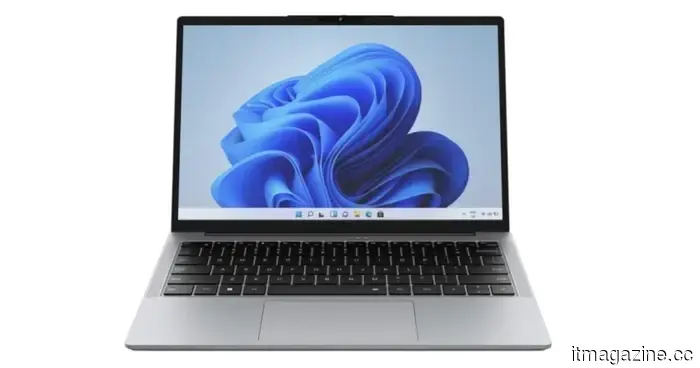 Chuwi's UniBook is a $449 laptop that aims to rival the MacBook Neo by offering impressive features.
Chuwi’s UniBook combines Intel’s latest Wildcat Lake Core 3 processor with a 14-inch display that covers 100% of the sRGB color space, offers ample port options, and is expected to be priced at around $449.
Chuwi's UniBook is a $449 laptop that aims to rival the MacBook Neo by offering impressive features.
Chuwi’s UniBook combines Intel’s latest Wildcat Lake Core 3 processor with a 14-inch display that covers 100% of the sRGB color space, offers ample port options, and is expected to be priced at around $449.
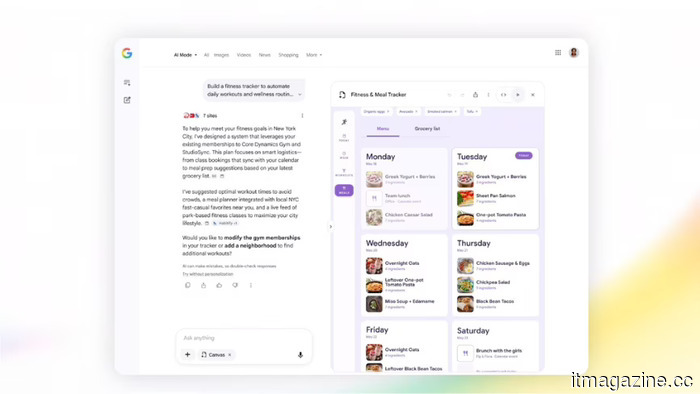 Google introduces always-on information agents in Search during I/O 2026.
Google's updated information agents operate around the clock in AI Mode, consolidating news, monitoring prices, and sending alerts, thereby replacing the previous Google Alerts system with intelligent AI.
At I/O 2026, Google introduces voice prompting features for Docs, Keep, and Gmail.
At I/O 2026, Google introduced voice-enabled AI capabilities for Docs, Keep, and Gmail, allowing users to generate documents and search their emails through voice commands rather than typing.
Google introduces always-on information agents in Search during I/O 2026.
Google's updated information agents operate around the clock in AI Mode, consolidating news, monitoring prices, and sending alerts, thereby replacing the previous Google Alerts system with intelligent AI.
At I/O 2026, Google introduces voice prompting features for Docs, Keep, and Gmail.
At I/O 2026, Google introduced voice-enabled AI capabilities for Docs, Keep, and Gmail, allowing users to generate documents and search their emails through voice commands rather than typing.
 You can now explore AI-created versions of actual locations with Google’s Project Genie.
Google's experimental Project Genie is moving beyond creating worlds solely from imagination. With the inclusion of Street View, the distinction between actual locations and AI-generated environments is beginning to blend in intriguing ways.
You can now explore AI-created versions of actual locations with Google’s Project Genie.
Google's experimental Project Genie is moving beyond creating worlds solely from imagination. With the inclusion of Street View, the distinction between actual locations and AI-generated environments is beginning to blend in intriguing ways.
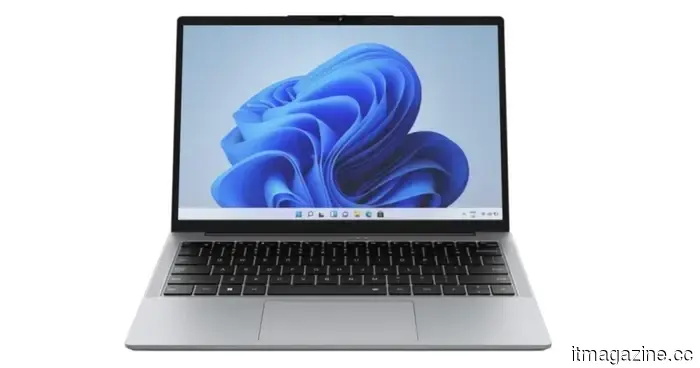 Chuwi's UniBook is a $449 laptop that aims to compete with the MacBook Neo by offering solid features.
Chuwi's UniBook combines Intel's latest Wildcat Lake Core 3 processor with a 14-inch display that covers 100% of the sRGB color gamut, offers ample ports, and is expected to be priced around $449.
Chuwi's UniBook is a $449 laptop that aims to compete with the MacBook Neo by offering solid features.
Chuwi's UniBook combines Intel's latest Wildcat Lake Core 3 processor with a 14-inch display that covers 100% of the sRGB color gamut, offers ample ports, and is expected to be priced around $449.
Google Antigravity 2.0 has been released, featuring a Command Line Interface (CLI), Software Development Kit (SDK), and AI agents.
At I/O 2026, Google introduced Antigravity 2.0, featuring multi-agent orchestration, a new command-line interface tool, a software development kit for custom agents, and a $100/month AI Ultra plan.