
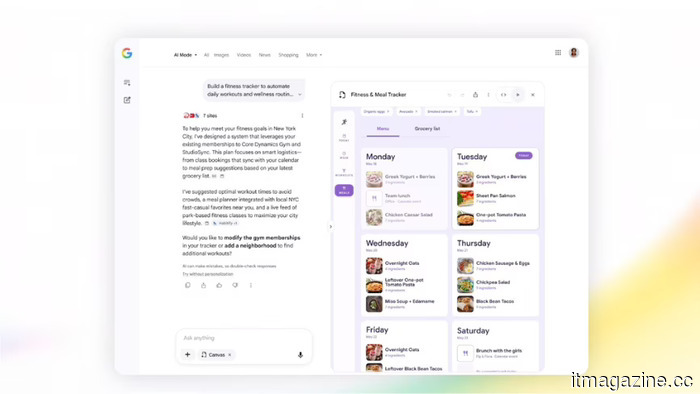
Google introduces always-on information agents in Search during I/O 2026.
Google introduced "information agents" during I/O 2026, a new AI Mode feature designed to operate continuously in the background, monitoring topics and sending synthesized updates through push notifications. This represents an advancement of Google Alerts, and the agents will be available this summer for US subscribers of Google AI Pro and Ultra, alongside the most significant redesign of the search box in over 25 years.
For more than 20 years, Google has developed a product based on a straightforward concept: you pose a question, and it provides a list of links. However, at I/O 2026, the company indicated that this basic approach is no longer sufficient. A key announcement was the introduction of information agents, which function as persistent processes that monitor the web for users and offer relevant insights automatically.
This feature, integrated into AI Mode within Google Search, marks what the company calls the next generation of Google Alerts, the email notification service established in 2003. While Alerts notified users of new web results matching their search terms, information agents can gather data from multiple sources, clarify the significance of developments, contrast various viewpoints, and provide actionable insights without any user input.
The conceptual change is as significant as the technical one. Traditional search is reactive; it waits for users to pose a question. In contrast, information agents are designed to work continually in the background, evaluating information to find what users need at the optimal time. Google has been positioning Search as an “agent manager” for months, with this being the clearest example directed at consumers.
To utilize the feature, users access AI Mode in the Google Search app and enter a natural language query. For example, a user might say: “keep me updated on nearby movie tickets for The Mandalorian and Grogu.” The agent then operates independently, monitoring the web and sending push notifications through the Google app whenever relevant information is discovered. All tracked topics are visible in the user's AI Mode history, ensuring that nothing is missed.
Google envisions information agents as beneficial for a variety of everyday situations. For example, a stock-market agent could observe trading activity, follow breaking financial news, summarize quarterly earnings reports, and notify users of significant price changes. Other proposed scenarios involve monitoring flight prices, keeping up with live sports and entertainment events, tracking breaking news, observing housing and job market trends, and checking weather and traffic conditions.
These examples highlight a goal that exceeds anything Google Alerts aimed to achieve. Instead of a basic keyword-match-and-email approach, information agents are intended to act like an always-on research assistant, one that not only detects changes but comprehends their implications.
Information agents were among several Search updates presented at I/O 2026. Google also introduced what it called the biggest modification to its search box in more than 25 years, featuring an “intelligent” redesign that dynamically adjusts to accommodate longer and more conversational queries. The search box now boasts an AI-driven suggestion system that surpasses traditional autocomplete, striving to predict user intent and assist in forming clearer questions. It also accepts various input types, including text, images, files, videos, and Chrome tabs.
These announcements collectively illustrate a company that perceives traditional search – the ten blue links and keyword-heavy query bar – as a transitional technology. Google I/O 2026 showcased Gemini-powered features across nearly every product line, with Search included. The new default model for AI Mode is Gemini 3.5 Flash, now available worldwide.
Information agents will debut this summer, starting with Google AI Pro and Ultra subscribers in the United States, with plans for additional markets to follow, although a specific timeline has yet to be disclosed. Meanwhile, the intelligent search box is beginning to roll out in all countries and languages where AI Mode is currently accessible.
This subscriber-first approach is noteworthy, suggesting that Google views these agents as a premium feature for the time being and is using its paid tiers as a trial before broader distribution. This strategy is similar to the company’s recent tactics with agent capabilities in Chrome Enterprise, where AI-driven browsing features were initially released behind a paywall before wider availability.
Google is not the only technology leader investing in agentic AI. OpenAI, Anthropic, and Microsoft have all introduced autonomous agent features recently. However, Google's advantage, at least theoretically, lies in its distribution capabilities. With over one billion monthly users in AI Mode and 750 million Gemini app users by late 2025, it has a vast user base to promote these tools and an established search infrastructure to support them.
The key question remains whether users genuinely desire their search engine to take initiative. Google Alerts, despite its longevity, never became widely popular; most people still search on demand as needed. Information agents represent a gamble that, with a more intelligent and capable tool, users will change their habits, allowing an AI to handle monitoring tasks they often forget or neglect.
The success of this gamble will depend on the agents' performance in real-world settings, the usefulness and frequency of their notifications, and whether the pay
Other articles
 Android Halo might serve as the crucial connection between Android and AI agents.
Google's new Android Halo feature suggests a future where AI seamlessly supports you without requiring constant interaction. The most intriguing aspect is how minimally it interferes with your activities.
Android Halo might serve as the crucial connection between Android and AI agents.
Google's new Android Halo feature suggests a future where AI seamlessly supports you without requiring constant interaction. The most intriguing aspect is how minimally it interferes with your activities.
 Google Antigravity 2.0 has been released, featuring a Command Line Interface (CLI), Software Development Kit (SDK), and AI agents.
At I/O 2026, Google introduced Antigravity 2.0, featuring multi-agent orchestration, a new command-line interface tool, a software development kit for custom agents, and a $100/month AI Ultra plan.
Google Antigravity 2.0 has been released, featuring a Command Line Interface (CLI), Software Development Kit (SDK), and AI agents.
At I/O 2026, Google introduced Antigravity 2.0, featuring multi-agent orchestration, a new command-line interface tool, a software development kit for custom agents, and a $100/month AI Ultra plan.
 Chuwi's UniBook is a $449 laptop that aims to rival the MacBook Neo by offering impressive features.
Chuwi’s UniBook combines Intel’s latest Wildcat Lake Core 3 processor with a 14-inch display that covers 100% of the sRGB color space, offers ample port options, and is expected to be priced at around $449.
Chuwi's UniBook is a $449 laptop that aims to rival the MacBook Neo by offering impressive features.
Chuwi’s UniBook combines Intel’s latest Wildcat Lake Core 3 processor with a 14-inch display that covers 100% of the sRGB color space, offers ample port options, and is expected to be priced at around $449.
 Google introduced the Gemini Spark agentic AI assistant during I/O 2026.
At I/O 2026, Google introduced Gemini Spark, a persistent AI agent that handles tasks through Gmail, navigates Chrome, and operates continuously on cloud VMs for AI Ultra subscribers.
Google introduced the Gemini Spark agentic AI assistant during I/O 2026.
At I/O 2026, Google introduced Gemini Spark, a persistent AI agent that handles tasks through Gmail, navigates Chrome, and operates continuously on cloud VMs for AI Ultra subscribers.
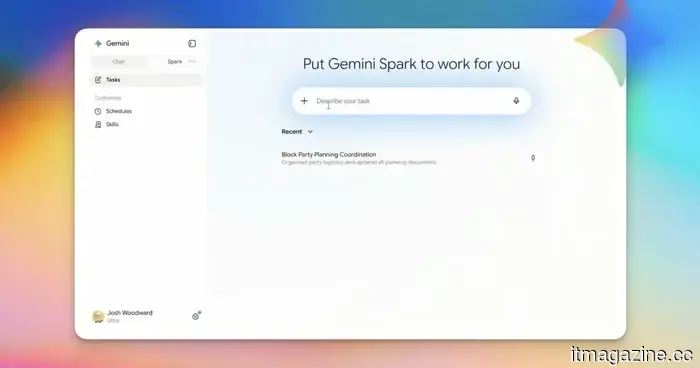 Google's latest Gemini Spark AI agent can handle your tasks while you manage your life.
Google's Gemini Spark is an innovative AI assistant that manages multi-step tasks in the background, operates across various Google applications, and continues its work even after you shut your laptop.
Google's latest Gemini Spark AI agent can handle your tasks while you manage your life.
Google's Gemini Spark is an innovative AI assistant that manages multi-step tasks in the background, operates across various Google applications, and continues its work even after you shut your laptop.
 Google introduces Android CLI 1.0 for AI coding agents.
Google's stable Android CLI 1.0 provides AI agents such as Claude Code, Codex, and Antigravity with direct command line access to the Android Studio toolchain.
Google introduces Android CLI 1.0 for AI coding agents.
Google's stable Android CLI 1.0 provides AI agents such as Claude Code, Codex, and Antigravity with direct command line access to the Android Studio toolchain.
Google introduces always-on information agents in Search during I/O 2026.
Google's updated information agents operate around the clock in AI Mode, consolidating news, monitoring prices, and sending alerts, thereby replacing the previous Google Alerts system with intelligent AI.