
The RAM crisis is set to worsen, and your new devices might bear the cost.
Nvidia’s upcoming AI powerhouse may further strain the RAM market
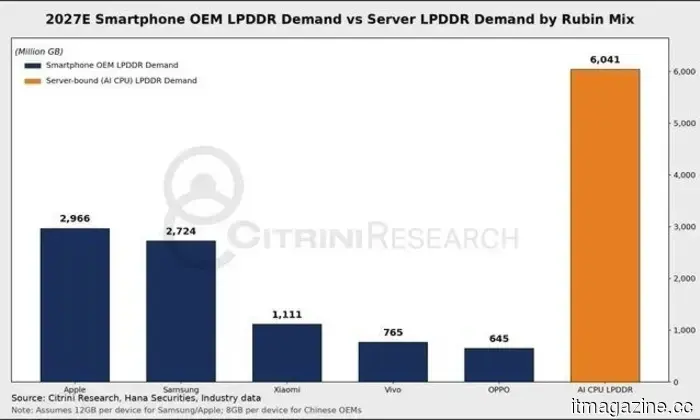
The memory market is already facing significant difficulties, and Nvidia’s new Rubin platform might exacerbate the situation. A report from Fast Company, citing a forecast by Citrini Research, suggests that the forthcoming AI platform could demand over 6 billion GB of LPDDR memory by 2027. As LPDDR (low-powered memory) is mainly utilized in smartphones, tablets, and other portable devices, price increases could intensify.
If this report holds true, Nvidia may use more memory than both Apple and Samsung combined.
Citrini Research
How Rubin impacts consumer memory supplies
Nvidia’s Rubin platform represents the company’s significant advancement in AI hardware following Blackwell. It is designed to meet the rising need for generative AI tasks and real-time reasoning, with the upcoming platform expected to be twice as fast as Blackwell. However, this growth raises concerns about scalability.
Nvidia
According to Citrini's forecast, Nvidia's LPDDR demand is projected at 6.041 billion GB by 2027, compared to 2.966 billion GB for Apple and 2.724 billion GB for Samsung. Nvidia is anticipated to exceed the memory consumption of each company individually this year and to surpass their total LPDDR demand next year. This immense demand could put additional stress on an already tight memory supply, especially as Google, AMD, and other AI competitors continue to increase their LPDDR requirements.
Your next smartphone or laptop could be affected
As the memory shortage leads to noticeable price increases across consumer electronics, new devices are feeling the impact. Many gadgets from the pandemic era, such as TVs, PCs, and other items, are now due for updates, making replacements for smartphones and smart TVs significantly more expensive.
Nvidia
Concurrently, memory prices have reportedly surged by 150% to over 200% in the past year, with storage prices following a similar trend. The RAM crisis has reached such levels that even expandable storage might make a comeback in smartphones. While Rubin could be a major success for Nvidia, consumers might face noticeably higher prices when making their next tech purchases.






Other articles
 LG has just revealed a 1000Hz gaming monitor that may provide a significant advantage in FPS games.
LG has introduced the UltraGear 25G590B, the first Full HD gaming monitor in the world to support a native 1000Hz refresh rate. Designed for competitive FPS gaming, this 24.5-inch display achieves a native refresh rate of 1000Hz at FHD resolution.
LG has just revealed a 1000Hz gaming monitor that may provide a significant advantage in FPS games.
LG has introduced the UltraGear 25G590B, the first Full HD gaming monitor in the world to support a native 1000Hz refresh rate. Designed for competitive FPS gaming, this 24.5-inch display achieves a native refresh rate of 1000Hz at FHD resolution.
 The RAM crisis is poised to worsen, and your new devices may bear the cost.
A recent prediction indicates that Nvidia’s Rubin AI platform may use more than 6 billion GB of LPDDR memory by 2027, straining supply chains for gadgets.
The RAM crisis is poised to worsen, and your new devices may bear the cost.
A recent prediction indicates that Nvidia’s Rubin AI platform may use more than 6 billion GB of LPDDR memory by 2027, straining supply chains for gadgets.
 Apple is selling you faulty chips, and you’re willingly purchasing them.
Apple's more affordable devices might utilize chips that fell short of the top performance benchmarks, but this approach is less underhanded than it appears and significantly more intelligent than many consumers understand.
Apple is selling you faulty chips, and you’re willingly purchasing them.
Apple's more affordable devices might utilize chips that fell short of the top performance benchmarks, but this approach is less underhanded than it appears and significantly more intelligent than many consumers understand.
 Alexa+ can now generate AI podcasts on any subject, if you prefer not to listen to human-hosted podcasts.
Alexa+ can now generate personalized podcast-style episodes in just a few minutes, utilizing AI host voices and content from news publishers and various other sources.
Alexa+ can now generate AI podcasts on any subject, if you prefer not to listen to human-hosted podcasts.
Alexa+ can now generate personalized podcast-style episodes in just a few minutes, utilizing AI host voices and content from news publishers and various other sources.
 ICE is planning GPU compute futures in collaboration with its partner Ornn Index.
Intercontinental Exchange collaborates with Ornn to introduce cash-settled futures that monitor GPU computing expenses, shortly after CME Group revealed competing compute contracts.
ICE is planning GPU compute futures in collaboration with its partner Ornn Index.
Intercontinental Exchange collaborates with Ornn to introduce cash-settled futures that monitor GPU computing expenses, shortly after CME Group revealed competing compute contracts.
 I’m not sure that Googlebook will be Google's next major success, or if it even warrants that title.
Google aims for Googlebook to be the MacBook alternative for Android users, but untested AI, diverse silicon options, and the absence of confirmed pricing present significant challenges.
I’m not sure that Googlebook will be Google's next major success, or if it even warrants that title.
Google aims for Googlebook to be the MacBook alternative for Android users, but untested AI, diverse silicon options, and the absence of confirmed pricing present significant challenges.
The RAM crisis is set to worsen, and your new devices might bear the cost.
A recent forecast indicates that Nvidia’s Rubin AI platform might use more than 6 billion GB of LPDDR memory by 2027, which could strain supply chains for gadgets.