
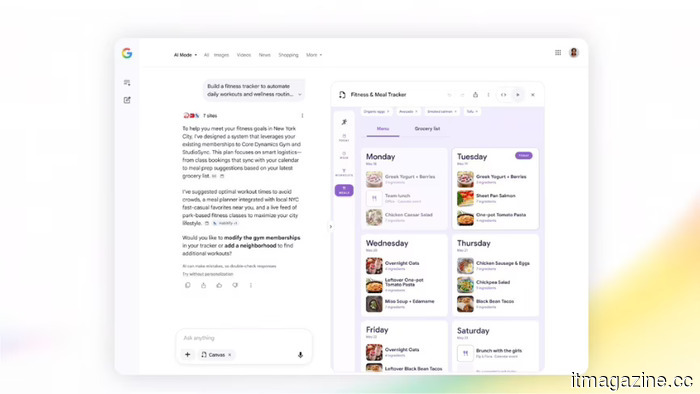
Google introduces always-on information agents in Search at I/O 2026.
Google revealed "information agents" at I/O 2026, a new AI Mode feature that operates continuously in the background to track various topics and provides synthesized updates through push notifications. This feature is seen as an evolution of Google Alerts and will be available this summer to subscribers of Google AI Pro and Ultra in the US, coinciding with the most significant redesign of the search box in over 25 years.
For more than 20 years, Google has developed a product based on a straightforward concept: you ask a question, and it returns a list of links. However, during I/O 2026 on Monday, the company indicated that this model is no longer sufficient. A key announcement was the introduction of information agents, which are continuous background processes that monitor the web for users, providing relevant findings proactively.
This feature, incorporated into AI Mode within Google Search, represents what Google terms the next iteration of Google Alerts, which began in 2003. While Alerts would inform users of new web results matching their search terms, information agents can gather data from various sources, clarify the significance of developments, compare different viewpoints, and deliver actionable insights without user intervention.
The change is as much about concept as it is about technology. Traditional search is reactive, awaiting user queries. Information agents are designed to function continually in the background, analyzing information to provide what users need at opportune moments. Google has been framing Search as an "agent manager" for months, and this marks the clearest public manifestation of that idea.
To initiate this feature, users access AI Mode in the Google Search app and enter a natural language request. For example, one might say, "keep me informed about nearby movie tickets for The Mandalorian and Grogu." The agent then autonomously monitors the web and sends push notifications through the Google app whenever it identifies relevant information. Users can also reference all monitored topics in their AI Mode history, ensuring nothing is overlooked.
Google is promoting information agents as beneficial in various everyday situations. For instance, a stock-market agent could observe trading patterns, track crucial financial news, summarize quarterly earnings, and notify users of significant price changes. Other proposed uses include monitoring flight prices, following live sports and entertainment, keeping up with breaking news, watching real estate and job market trends, and checking on weather and traffic updates.
These examples indicate an ambition that surpasses what Google Alerts offered. Rather than a basic keyword match and email notification system, information agents are envisioned as continuous research assistants that not only detect changes but also interpret their implications.
Additionally, information agents were not the sole focus at I/O 2026. Google also introduced what it described as the most substantial update to its search box in over 25 years, featuring an "intelligent" redesign that dynamically expands for longer, conversational queries. This enhanced search box now incorporates an AI-driven suggestion system that extends beyond traditional autocomplete, aiming to predict user intent and aid in crafting more precise questions. It can also handle multimodal inputs, including text, images, files, videos, and Chrome tabs.
Together, these announcements depict a company that considers traditional search—featuring ten blue links and a query input box—as a transitional phase. Google I/O 2026 was prominently driven by Gemini-powered features across nearly all product lines, and Search is no exception, with the new AI Mode default model being Gemini 3.5 Flash, now available worldwide.
Information agents will debut this summer for Google AI Pro and Ultra subscribers in the United States, with plans to expand to additional markets at a later date, though Google has not specified when. The intelligent search box is already beginning to appear in all countries and languages where AI Mode is accessible.
This subscriber-first rollout indicates that Google perceives these agents as a premium feature, at least initially, and is utilizing its paid tiers as a testing ground before broader distribution. This strategy reflects the company's recent trend of introducing agent-based capabilities in Chrome Enterprise, where AI-enhanced browsing features were launched as paid offerings before expanding access.
On a larger scale, Google isn't alone in pursuing agentic AI; OpenAI, Anthropic, and Microsoft have also released autonomous agent functionalities recently. However, Google's advantage lies in its distribution capabilities. With over one billion monthly AI Mode users and 750 million Gemini app users as of late 2025, it has a vast audience for these tools and the search infrastructure to support them.
The key question is whether users actually desire their search engine to take the initiative. While Google Alerts has been around for years, it was never widely embraced. Most people still prefer searching on demand, as needed. Information agents aim to change that behavior, encouraging users to delegate the monitoring tasks they often neglect to a continuously operating AI.
The success of this approach will depend on the agents' practical performance, the value of their notifications, and whether the paywall limits adoption before the feature can demonstrate its worth. For now, Google has clarified its vision: the future of search is not solely
Other articles
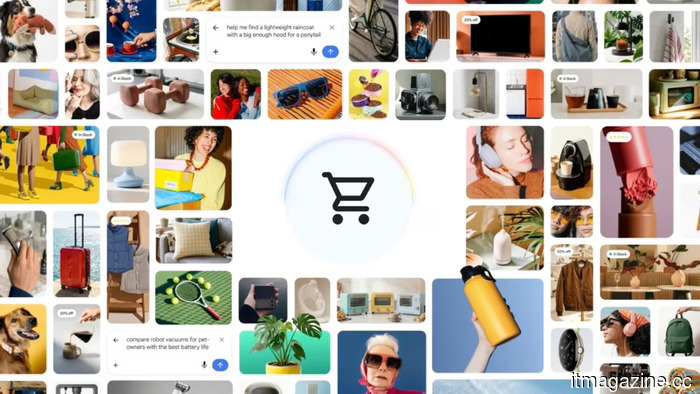 Google introduces Universal Cart and enhances AP2 at I/O 2026.
Google introduced Universal Cart, an AI shopping center that integrates Search, Gemini, YouTube, and Gmail, while also updating its Agent Payments Protocol for automated purchases.
Google introduces Universal Cart and enhances AP2 at I/O 2026.
Google introduced Universal Cart, an AI shopping center that integrates Search, Gemini, YouTube, and Gmail, while also updating its Agent Payments Protocol for automated purchases.
 Google Antigravity 2.0 has been released, featuring a Command Line Interface (CLI), Software Development Kit (SDK), and AI agents.
At I/O 2026, Google introduced Antigravity 2.0, featuring multi-agent orchestration, a new command-line interface tool, a software development kit for custom agents, and a $100/month AI Ultra plan.
Google Antigravity 2.0 has been released, featuring a Command Line Interface (CLI), Software Development Kit (SDK), and AI agents.
At I/O 2026, Google introduced Antigravity 2.0, featuring multi-agent orchestration, a new command-line interface tool, a software development kit for custom agents, and a $100/month AI Ultra plan.
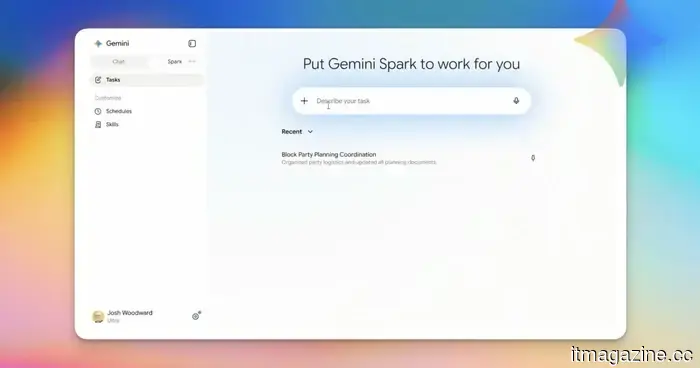 Google's latest Gemini Spark AI assistant is capable of handling your tasks while you manage your life.
Google's Gemini Spark is an innovative AI agent designed to manage multi-step tasks in the background, operate across Google's applications, and continue functioning even when you shut your laptop.
At I/O 2026, Google introduces voice prompting features for Docs, Keep, and Gmail.
At I/O 2026, Google introduced voice-enabled AI capabilities for Docs, Keep, and Gmail, allowing users to generate documents and search their emails through voice commands rather than typing.
Google's latest Gemini Spark AI assistant is capable of handling your tasks while you manage your life.
Google's Gemini Spark is an innovative AI agent designed to manage multi-step tasks in the background, operate across Google's applications, and continue functioning even when you shut your laptop.
At I/O 2026, Google introduces voice prompting features for Docs, Keep, and Gmail.
At I/O 2026, Google introduced voice-enabled AI capabilities for Docs, Keep, and Gmail, allowing users to generate documents and search their emails through voice commands rather than typing.
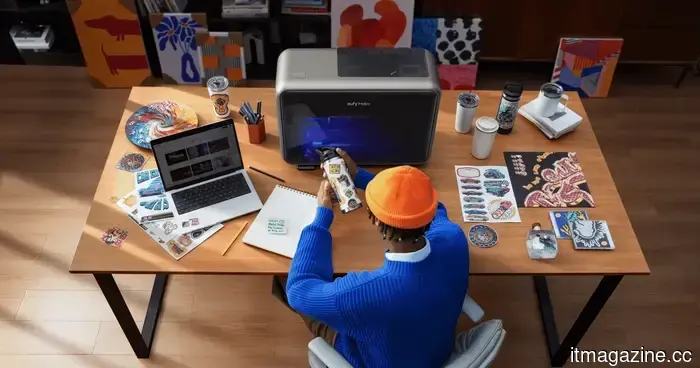 The Design Trade-Offs Influencing Contemporary UV Printing Systems
UV printing depends on precisely regulated chemical reactions, with even minor changes in ink behavior impacting the output, maintenance, and long-term reliability. As this technology is adopted by smaller studios and home environments, the discussion surrounding open versus closed ink systems increasingly revolves around finding a balance between flexibility, stability, and user-friendliness.
At I/O 2026, Google introduces voice prompts for Docs, Keep, and Gmail.
At I/O 2026, Google introduced voice-activated AI functionalities for Docs, Keep, and Gmail, enabling users to generate documents and search their inboxes through speech rather than typing.
The Design Trade-Offs Influencing Contemporary UV Printing Systems
UV printing depends on precisely regulated chemical reactions, with even minor changes in ink behavior impacting the output, maintenance, and long-term reliability. As this technology is adopted by smaller studios and home environments, the discussion surrounding open versus closed ink systems increasingly revolves around finding a balance between flexibility, stability, and user-friendliness.
At I/O 2026, Google introduces voice prompts for Docs, Keep, and Gmail.
At I/O 2026, Google introduced voice-activated AI functionalities for Docs, Keep, and Gmail, enabling users to generate documents and search their inboxes through speech rather than typing.
Google introduces always-on information agents in Search at I/O 2026.
Google's updated information agents operate continuously in AI Mode, compiling news, monitoring prices, and sending alerts, transforming the previous Google Alerts system into an agent-driven AI model.