
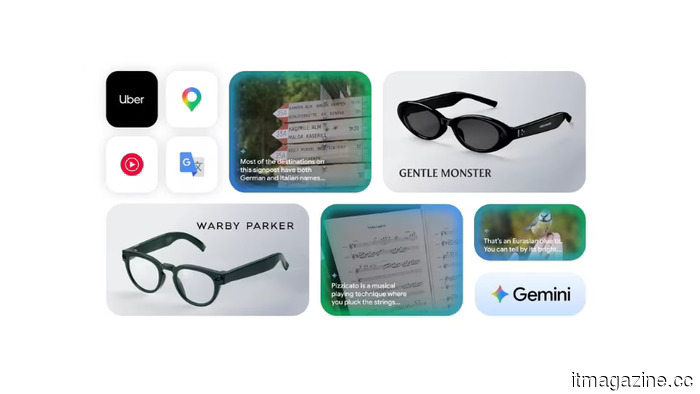
Google reveals Gemini-enhanced smart glasses at I/O 2026.
TL;DR: At I/O 2026, Google unveiled AI-powered audio glasses in partnership with Warby Parker, Gentle Monster, and Samsung. Featuring Gemini 2.5 Pro and Android XR, the glasses will launch this fall to compete with Meta's leading Ray-Ban smart glasses.
Google is venturing into smart glasses once again, this time collaborating with fashionable partners. During Google I/O 2026, the company introduced a partnership with Warby Parker and Gentle Monster to create AI-powered "audio glasses" in collaboration with Samsung. Utilizing Gemini 2.5 Pro and operating on Android XR, these glasses are set to be released this autumn and will work with both Android and iOS devices.
What Google announced:
The concept is simple: wear the glasses, give a command, and let Google's system manage everything. In a live demonstration, a Google representative ordered coffee through the frames, a mundane example intended to showcase practicality rather than futuristic aspirations. Users can trigger the assistant by saying "Hey Google" or tapping the frame's side.
Google plans to offer two levels of products. The first, the audio glasses launching this autumn, will perform voice-driven tasks such as managing calls, sending text messages, providing message summaries powered by Gemini, and facilitating real-time translation that mimics the speaker's voice. The second, a Display Edition anticipated later, will enhance the experience with a monocular microLED heads-up display to show navigation, notifications, and AI-generated responses directly in the user's line of sight.
Additionally, there is Project Aura, a developer-focused toolkit created with XREAL that includes full binocular displays and a 70-degree field of view, designed to encourage third-party development on the Android XR platform.
Under the hood: Each pair of glasses includes a camera, speaker, and built-in microphone. A Snapdragon processor manages local processing, though Google has not specified the chip. The features leverage Gemini's multimodal capabilities, allowing users to ask visual questions about what they encounter, whether it's a restaurant, cloud formation, or a confusing parking sign. Real-time translation will apply not only to audio but also to text displayed within the wearer's view. Pricing details have not been provided.
The Meta-shaped elephant in the room:
Google is entering a market that Meta has already dominated effectively. In 2025, Meta sold around seven million pairs of Ray-Ban smart glasses, controlling approximately 82% of the emerging smart glasses industry. Meta shows no signs of slowing down, with new prescription models named Scriber and Blazer on the horizon.
Google's strategy seems to rely on two main aspects: fashion credibility and platform scalability. Collaborating with Warby Parker allows access to a brand that appeals to younger, style-aware consumers in North America, while Gentle Monster opens avenues into Asian markets. Samsung's role in the design adds production strength, and the company's own Galaxy Glasses, which also run on Android XR, are expected by the end of the year.
Google will likely face the same privacy concerns that have troubled other smart glasses manufacturers. The presence of cameras on individuals in public will remain a controversial issue, and Google must navigate this carefully given its previous experiences with the category.
The ghost of Google Glass:
Discussing Google's smart glasses ambitions necessitates addressing the significant cultural failure of Google Glass. Launched over a decade ago, the original product became a symbol of tech arrogance, coining the term "glassholes" for its early adopters. The device was ultimately removed from the consumer market and shifted to enterprise uses before being quietly phased out.
This time, Google seems to have adopted at least one lesson: avoid making unattractive devices. The collaborations with Warby Parker and Gentle Monster indicate an understanding that smart glasses should prioritize aesthetic appeal first, while functionality follows. Whether this focus on design can overcome the persistent negative perceptions of the category remains uncertain.
The platform play:
Perhaps the most crucial element of the announcement is not the glasses themselves, but rather the Android XR operating system that powers them. Google's strategy reflects its past success with smartphones: create an open platform, partner with hardware manufacturers, and let the ecosystem provide the necessary support. If Android XR gains popularity, Google won't have to dominate the hardware aspect; it only needs enough manufacturers building on its platform to achieve market leadership by default.
The rising interest from startups in holographic and advanced display technologies indicates that the broader smart glasses market is drawing substantial investment. Google believes that, similarly to the smartphone era, the victor will be the company that overshadows the software layer rather than any individual piece of hardware. Given Meta's strong market presence and Apple's rumored interest, this is a high-stakes wager, but it is one that Google has successfully navigated before.
Другие статьи
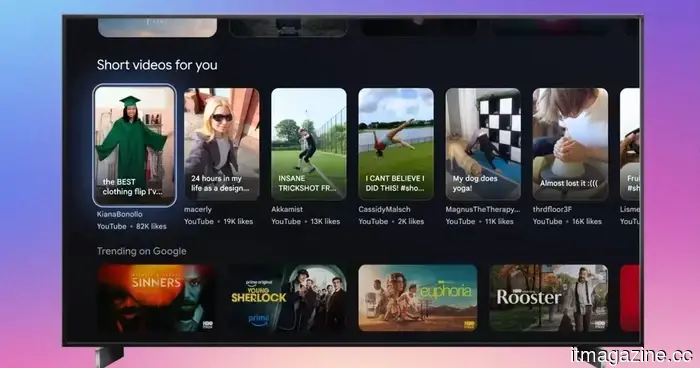 Google aims to transform your TV remote with Gemini and pointer controls.
Google is transforming the future of televisions with Gemini-enhanced discovery and a new method for navigating applications. Nonetheless, the most significant shift might not be on the display itself, but rather in your remote control.
Google aims to transform your TV remote with Gemini and pointer controls.
Google is transforming the future of televisions with Gemini-enhanced discovery and a new method for navigating applications. Nonetheless, the most significant shift might not be on the display itself, but rather in your remote control.
 Apple introduces new AI-driven accessibility features for iPhone, Mac, and Vision Pro.
Apple has unveiled new accessibility features driven by AI, which include enhanced VoiceOver tools, automatic subtitles, better reading assistance, and eye-controlled wheelchair support for Vision Pro.
Apple introduces new AI-driven accessibility features for iPhone, Mac, and Vision Pro.
Apple has unveiled new accessibility features driven by AI, which include enhanced VoiceOver tools, automatic subtitles, better reading assistance, and eye-controlled wheelchair support for Vision Pro.
 X restricts the number of posts and replies you can make for free. You need to pay Musk for additional access.
X, the platform once referred to as Twitter, seems to have implemented tighter posting restrictions for users lacking paid verification, further encouraging subscriptions to X Premium. As per the latest details from X's Help Center and various user reports, unverified accounts are now constrained to 50 original posts and 200 replies per […]
X restricts the number of posts and replies you can make for free. You need to pay Musk for additional access.
X, the platform once referred to as Twitter, seems to have implemented tighter posting restrictions for users lacking paid verification, further encouraging subscriptions to X Premium. As per the latest details from X's Help Center and various user reports, unverified accounts are now constrained to 50 original posts and 200 replies per […]
 Google DeepMind links Street View to Project Genie world model | TNW
Google DeepMind has connected two decades of Street View images to its Genie world model, enabling AI Ultra subscribers to navigate AI-generated simulations of actual streets.
Google DeepMind links Street View to Project Genie world model | TNW
Google DeepMind has connected two decades of Street View images to its Genie world model, enabling AI Ultra subscribers to navigate AI-generated simulations of actual streets.
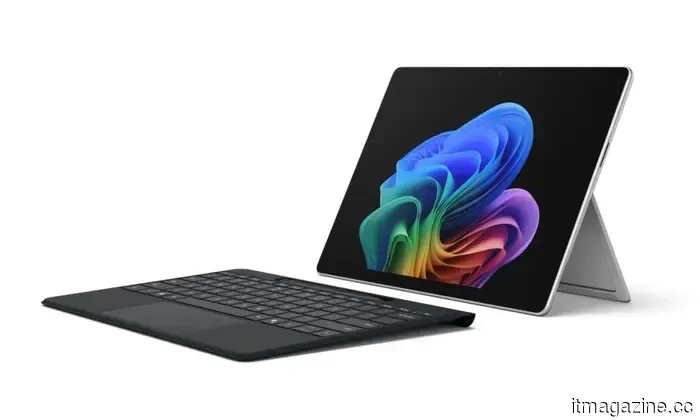 Microsoft's latest Surface PCs are becoming more intelligent, more expensive, and surprisingly adept at maintaining confidentiality.
Microsoft has recently unveiled its newest generation of Surface series laptops, specifically designed for the business sector. The updated Surface Pro and Surface Laptop for Business models come equipped with Intel’s latest Core Ultra Series 3 processors, on-device AI capabilities, enhanced security features, and various other enhancements tailored for a business environment. What are the features, and how substantial […]
Microsoft's latest Surface PCs are becoming more intelligent, more expensive, and surprisingly adept at maintaining confidentiality.
Microsoft has recently unveiled its newest generation of Surface series laptops, specifically designed for the business sector. The updated Surface Pro and Surface Laptop for Business models come equipped with Intel’s latest Core Ultra Series 3 processors, on-device AI capabilities, enhanced security features, and various other enhancements tailored for a business environment. What are the features, and how substantial […]
 Microsoft has announced that new Surface laptops featuring Snapdragon X2 chips will be released later this year.
Microsoft introduced Intel Surface models today and announced that Snapdragon X2 variants will be released later in 2026, featuring faster AI inferencing, improved battery life, and a potential OLED display option.
Microsoft has announced that new Surface laptops featuring Snapdragon X2 chips will be released later this year.
Microsoft introduced Intel Surface models today and announced that Snapdragon X2 variants will be released later in 2026, featuring faster AI inferencing, improved battery life, and a potential OLED display option.
Google reveals Gemini-enhanced smart glasses at I/O 2026.
Google introduced AI audio glasses at I/O 2026 in collaboration with Warby Parker and Gentle Monster. Equipped with Gemini 2.5 Pro, they are set to be released this autumn.