
Starlink price hike: SpaceX increases residential and Roam plans by $5 to $10 and raises Standby Mode fees to $10.
**TL;DR** SpaceX has increased prices for all consumer Starlink plans by $5 to $10 per month and has doubled the cost of Standby Mode from $5 to $10. These changes take effect immediately for new customers and from June 18 for existing users. This price hike comes as Starlink surpasses 10 million users and SpaceX gears up for its IPO.
SpaceX has raised the prices of every consumer Starlink plan in the U.S., increasing fees by $5 to $10 monthly across both residential and mobile tiers, while the cost of its budget Standby Mode has been doubled from $5 to $10. The new rates are effective immediately for new customers and will apply to existing subscribers starting their next billing cycle on or after June 18, coinciding with SpaceX's preparations for what could be the largest initial public offering of all time and as its main rival, Amazon's satellite internet service, is set for commercial launch.
**What changed**
The updated pricing affects all consumer tiers except for the recently launched Roam 300GB plan, which remains at $80 per month. Residential plans for fixed-use locations have increased: the 100 Mbps tier has gone from $50 to $55, the 200 Mbps tier from $80 to $85, and the MAX tier, which provides the highest speeds, from $120 to $130. Roam plans, which enable mobile connectivity at speeds up to 100 mph and function across borders, have also seen price hikes: Roam 100GB increased from $50 to $55, and Roam Unlimited from $165 to $175.
A significant change is the pricing of Standby Mode, a feature introduced in 2025 that allows subscribers to pause active service while retaining a minimal 500 Kbps connection for emergency use, firmware updates, and basic connectivity. At $5 monthly, Standby was an appealing option for seasonal users, RV owners, and those wanting to keep their hardware functional without full service costs. The new price of $10 alters this affordability: the doubled cost, combined with recent restrictions such as the removal of in-motion use from Standby in March and the elimination of demand surcharge protection in April, makes this feature considerably less attractive compared to its initial launch.
SpaceX provided a brief justification for the price hike, informing customers via email that the adjustment “supports ongoing improvements and investment in affordable, high-performance products and services as global operating costs continue to rise.”
**The business context**
The timing of these price increases coincides with a peak for SpaceX's satellite internet operations. Starlink reached over 10 million subscribers worldwide by February 2026, effectively doubling its user base in a year. The satellite constellation now comprises more than 10,000 satellites in low Earth orbit, accounting for around 65% of all active satellites and covering approximately 125 to 155 countries and regions. In 2025, revenue reached $11.4 billion with EBITDA margins of 63%.
SpaceX's IPO filing aims for a valuation of around $1.75 trillion, raising $75 billion, which would mark the largest public offering ever. A February 2026 all-stock merger with Elon Musk's AI venture, xAI, valued the combined entity at $1.25 trillion but also brought xAI's financial losses onto SpaceX's balance sheet, with the merged company reporting a net loss of $4.94 billion in 2025 despite $18.67 billion in combined revenue.
The new pricing applied to over 10 million accounts could yield hundreds of millions of dollars in extra annual revenue, bolstering the financial story SpaceX will present to public investors. Interestingly, earlier this month, SpaceX decreased prices for its business-focused Local Priority plans, indicating a strategic move to test consumer price sensitivity while maintaining competitive enterprise rates.
**The competition question**
Historically, Starlink has faced minimal competition in the consumer satellite broadband sector, but this is about to change. Amazon's satellite internet service, recently renamed from Project Kuiper to Amazon Leo, began enterprise beta testing in April 2026, with commercial availability expected by mid-2026. Amazon has approval to deploy over 3,000 broadband satellites and has secured beta partnerships with entities including Verizon, AT&T, Vodafone, JetBlue, and NASA.
European rivals like Eutelsat are also developing competing constellations, but none have yet achieved the scale or coverage that Starlink offers. The timing of SpaceX's price increases, occurring just months prior to the commercial launch of Amazon Leo, suggests either a confidence in the durability of its first-mover advantage or a strategy to maximize revenue before competitive pressures influence pricing.
Initial analyses of the satellite broadband market projected that low-earth-orbit internet could save American consumers $30 billion annually by increasing competition in markets dominated by single terrestrial providers. This projection was based on competitive pricing among satellite operators. If Starlink raises prices without
Other articles
 Step aside gigabytes, AI tokens are now the latest currency on your phone bill.
China's telecommunications firms are beginning to approach AI usage similarly to mobile data, indicating a future for technology that may be more unconventional than many anticipated.
Step aside gigabytes, AI tokens are now the latest currency on your phone bill.
China's telecommunications firms are beginning to approach AI usage similarly to mobile data, indicating a future for technology that may be more unconventional than many anticipated.
 The breach at NYC Health and Hospitals has revealed the medical records, fingerprints, and geolocation information of 1.8 million individuals.
The hackers were able to access the network for over two months before being discovered, taking biometric data that individuals cannot replace. The security incident started through an unnamed third-party vendor.
The breach at NYC Health and Hospitals has revealed the medical records, fingerprints, and geolocation information of 1.8 million individuals.
The hackers were able to access the network for over two months before being discovered, taking biometric data that individuals cannot replace. The security incident started through an unnamed third-party vendor.
 Researchers have recently set a new record for wireless speed that may influence the future of 6G technology.
Researchers achieved 112Gbps through a 560GHz wireless connection, demonstrating how terahertz technology powered by microcombs could accelerate data transmission for future 6G networks.
Researchers have recently set a new record for wireless speed that may influence the future of 6G technology.
Researchers achieved 112Gbps through a 560GHz wireless connection, demonstrating how terahertz technology powered by microcombs could accelerate data transmission for future 6G networks.
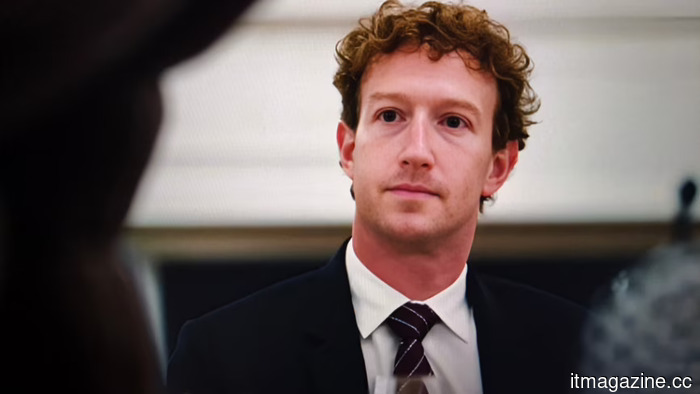 Meta eliminates 8,000 positions while reporting a record $56 billion in quarterly revenue, as Zuckerberg invests $145 billion in AI infrastructure.
Employee morale has plummeted following Meta's announcement of record profits while cutting 10 percent of its workforce. Additional layoffs are anticipated in August and fall 2026 as the company shifts payroll into AI capital expenditures.
Meta eliminates 8,000 positions while reporting a record $56 billion in quarterly revenue, as Zuckerberg invests $145 billion in AI infrastructure.
Employee morale has plummeted following Meta's announcement of record profits while cutting 10 percent of its workforce. Additional layoffs are anticipated in August and fall 2026 as the company shifts payroll into AI capital expenditures.
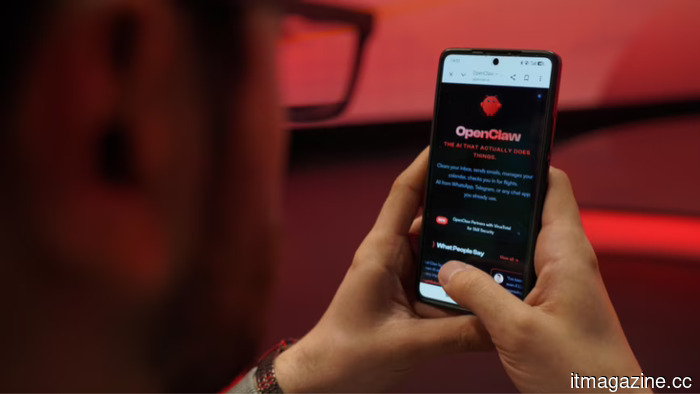 Peter Steinberger's 100 AI agents amassed $1.3 million in OpenAI tokens over the course of 30 days while creating OpenClaw.
The bill amounted to 603 billion tokens from 7.6 million requests generated by 100 Codex instances operating on GPT-5.5. Turning off Fast Mode would reduce the cost to $300,000, but this figure highlights the actual economics involved in autonomous AI development.
Peter Steinberger's 100 AI agents amassed $1.3 million in OpenAI tokens over the course of 30 days while creating OpenClaw.
The bill amounted to 603 billion tokens from 7.6 million requests generated by 100 Codex instances operating on GPT-5.5. Turning off Fast Mode would reduce the cost to $300,000, but this figure highlights the actual economics involved in autonomous AI development.
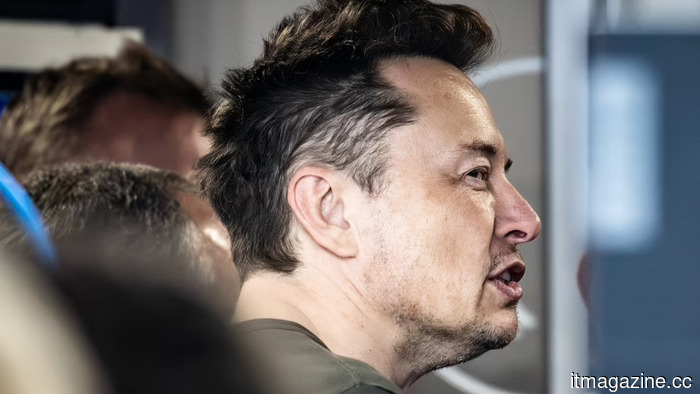 Elon Musk's lawsuit against Sam Altman and OpenAI was dismissed as the jury determined that the claims were submitted past the deadline.
Nine jurors unanimously dismissed Musk's claim that the statute of limitations should begin from his later realization of OpenAI's shift from its nonprofit goals. The advisory verdict essentially concludes his efforts to oust Altman and reverse the $852 billion restructuring.
Elon Musk's lawsuit against Sam Altman and OpenAI was dismissed as the jury determined that the claims were submitted past the deadline.
Nine jurors unanimously dismissed Musk's claim that the statute of limitations should begin from his later realization of OpenAI's shift from its nonprofit goals. The advisory verdict essentially concludes his efforts to oust Altman and reverse the $852 billion restructuring.
Starlink price hike: SpaceX increases residential and Roam plans by $5 to $10 and raises Standby Mode fees to $10.
All consumer Starlink tiers, with the exception of the new Roam 300GB plan, are impacted. The price hikes come as SpaceX prepares for the largest IPO ever and Amazon's Leo nears its commercial launch.