

The breach at NYC Health and Hospitals has revealed the medical records, fingerprints, and geolocation information of 1.8 million individuals.
TL;DR NYC Health and Hospitals revealed that hackers accessed and stole medical records, personal information, and biometric data, including fingerprints, from over 1.8 million individuals. The breach occurred between November 2025 and February 2026 and was linked to a compromised third-party vendor.
New York City Health and Hospitals, the largest public healthcare system in the U.S., reported that hackers stole personal data, medical records, and biometric information from at least 1.8 million people. This information was shared with the U.S. Department of Health and Human Services, making it one of the largest healthcare data breaches in 2026.
On February 2, 2026, NYCHHC identified the cyberattack and secured its network, noting that the hackers had accessed the system since approximately November 25, 2025, resulting in over two months of undetected access. During this time, they copied sensitive data, including health insurance details, comprehensive medical records, billing information, Social Security numbers, and biometric data like fingerprints and palm prints.
The biometric data theft is significant as it differentiates this breach from typical healthcare data incidents. Unlike replaceable Social Security numbers or passwords, stolen biometric data presents a lifelong security risk for individuals, as there is no way to revoke or change it once compromised.
The reason for NYCHHC storing biometric data was not provided, though it is likely related to employee onboarding processes that require fingerprints for background checks. Whether patient biometric data was also impacted remains unconfirmed. The collection of biometric data has raised concerns in various contexts due to the long-term vulnerabilities it introduces, as demonstrated by incidents in both military and commercial settings.
Additionally, the breach notice indicated that "precise geolocation data" was also stolen, implying that user-uploaded identification documents might have included location metadata showing when and where the documents were taken.
Regarding the breach method, NYCHHC stated that hackers accessed their systems through a third-party vendor, which has not been named. This approach is common in healthcare cybersecurity, where attackers often compromise suppliers or service providers rather than the target organization directly, taking advantage of the established trust and network access of these vendors.
The largest educational data breach followed a similar pattern when attackers exploited a vendor of a learning management system, affecting millions of students across numerous institutions. In healthcare, where systems are interconnected through billing, electronic health records, and insurance networks, the vendor attack surface is extensive and largely unmonitored. The 2024 Change Healthcare ransomware attack, compromising the medical and billing information of over 190 million Americans, serves as a stark example, highlighting the vulnerability of public health systems that cater to at-risk populations.
NYCHHC serves more than one million New Yorkers annually, most of whom are either uninsured or rely on state healthcare benefits like Medicaid. The reported figure of 1.8 million likely includes current and former patients, employees, and others whose data was stored in the affected systems. The organization operates 11 acute care hospitals, five skilled nursing facilities, and over 70 community-based clinics across New York City's five boroughs.
The population served by NYCHHC is primarily low-income, immigrant, and medically underserved, making them particularly vulnerable to the impacts of identity theft and fraud. Unlike patients at private healthcare facilities who might access identity protection services through their employers, many NYCHHC patients may have to rely on limited credit monitoring and support provided by the organization post-breach, a standard not consistently upheld by healthcare organizations even in the case of data breaches.
This incident occurs amidst ongoing cyberattacks targeting American healthcare systems. According to the FBI’s 2025 cybercrime report, healthcare continues to be a prime target for ransomware groups, who steal data while encrypting the victim’s systems and demand payment to avoid releasing the data. Stolen medical information is especially valuable to criminals for insurance fraud, identity theft, and phishing schemes impersonating healthcare providers.
Healthcare data breaches are also notoriously costly to mitigate. Industry statistics reveal that the average cost of a healthcare data breach soared to $7.42 million in 2025, the highest across any sector, with detection and containment taking about 279 days on average. Although NYCHHC's breach involved hackers being in the network for about 70 days before detection, this timeframe is still alarming. While AI-driven cybersecurity tools are intended to help shorten detection times, the NYCHHC breach indicates that public health systems, which often operate on tighter budgets and older technologies than their private counterparts, may not yet have reaped the benefits of these advancements.
On Monday morning, NYCHHC’s website experienced a brief outage. A representative did not respond to inquiries regarding the delay in identifying the breach, whether a ransom was demanded, or what remediation steps will be taken for those affected. This incident is reported to be separate from a smaller breach earlier this year at the National Association on Drug Abuse Problems that affected over 5,000 NYCHHC patients. For the 1.8 million individuals
Other articles
 Meta reduces its workforce by 8,000 positions while reporting a record quarterly revenue of $56 billion, as Zuckerberg invests $145 billion in AI infrastructure.
Employee morale has plummeted, as Meta announces unprecedented profits while cutting 10 percent of its workforce. Additional layoffs are anticipated in August and fall 2026, as the company shifts payroll expenditures towards AI investments.
Meta reduces its workforce by 8,000 positions while reporting a record quarterly revenue of $56 billion, as Zuckerberg invests $145 billion in AI infrastructure.
Employee morale has plummeted, as Meta announces unprecedented profits while cutting 10 percent of its workforce. Additional layoffs are anticipated in August and fall 2026, as the company shifts payroll expenditures towards AI investments.
 Researchers have set a new record for wireless speed that may influence the future of 6G technology.
Researchers achieved a speed of 112Gbps through a 560GHz wireless connection, demonstrating how terahertz technology driven by microcombs could enhance data transfer rates in future 6G networks behind the scenes.
Researchers have set a new record for wireless speed that may influence the future of 6G technology.
Researchers achieved a speed of 112Gbps through a 560GHz wireless connection, demonstrating how terahertz technology driven by microcombs could enhance data transfer rates in future 6G networks behind the scenes.
 Peter Steinberger's 100 AI agents accumulated $1.3 million in OpenAI tokens within 30 days by developing OpenClaw.
The total amounted to 603 billion tokens through 7.6 million requests from 100 Codex instances utilizing GPT-5.5. If Fast Mode were turned off, the expense would decrease to $300,000, but this number highlights the actual financial implications of developing autonomous AI.
Peter Steinberger's 100 AI agents accumulated $1.3 million in OpenAI tokens within 30 days by developing OpenClaw.
The total amounted to 603 billion tokens through 7.6 million requests from 100 Codex instances utilizing GPT-5.5. If Fast Mode were turned off, the expense would decrease to $300,000, but this number highlights the actual financial implications of developing autonomous AI.
 Peter Steinberger's 100 AI agents accumulated $1.3 million in OpenAI tokens within 30 days by developing OpenClaw.
The bill totaled 603 billion tokens from 7.6 million requests across 100 Codex instances utilizing GPT-5.5. Turning off Fast Mode would reduce the expense to $300,000, underscoring the actual financial aspects of developing autonomous AI.
Starlink has announced a price increase: SpaceX will raise the cost of its residential and Roam plans by $5 to $10, and has doubled the fee for Standby Mode to $10.
Every consumer Starlink tier, with the exception of the new Roam 300GB plan, is impacted. The price hikes come as SpaceX prepares for the largest IPO ever and as Amazon Leo nears its commercial launch.
Peter Steinberger's 100 AI agents accumulated $1.3 million in OpenAI tokens within 30 days by developing OpenClaw.
The bill totaled 603 billion tokens from 7.6 million requests across 100 Codex instances utilizing GPT-5.5. Turning off Fast Mode would reduce the expense to $300,000, underscoring the actual financial aspects of developing autonomous AI.
Starlink has announced a price increase: SpaceX will raise the cost of its residential and Roam plans by $5 to $10, and has doubled the fee for Standby Mode to $10.
Every consumer Starlink tier, with the exception of the new Roam 300GB plan, is impacted. The price hikes come as SpaceX prepares for the largest IPO ever and as Amazon Leo nears its commercial launch.
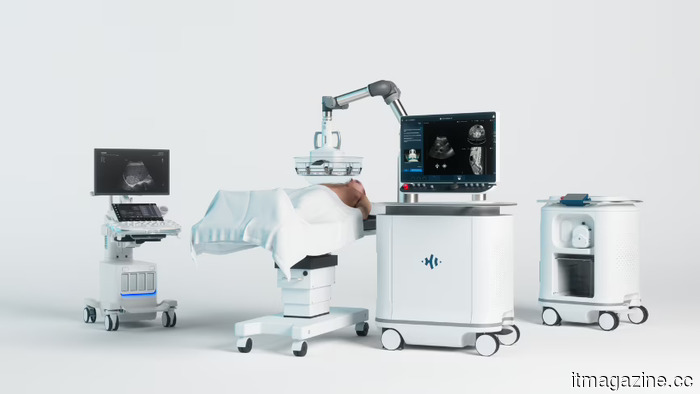 HistoSonics has obtained TFDA approval in Taiwan for the Edison Histotripsy System, expediting its expansion in Asia.
The non-invasive focused ultrasound technology eliminates liver tumors without the need for surgery or radiation. Supported by Bezos Expeditions and estimated at a value of $2.25 billion, HistoSonics also filed a submission to the FDA for treating kidney tumors on May 11.
HistoSonics has obtained TFDA approval in Taiwan for the Edison Histotripsy System, expediting its expansion in Asia.
The non-invasive focused ultrasound technology eliminates liver tumors without the need for surgery or radiation. Supported by Bezos Expeditions and estimated at a value of $2.25 billion, HistoSonics also filed a submission to the FDA for treating kidney tumors on May 11.
The breach at NYC Health and Hospitals has revealed the medical records, fingerprints, and geolocation information of 1.8 million individuals.
The hackers were able to access the network for over two months before being discovered, taking biometric data that individuals cannot replace. The security incident started through an unnamed third-party vendor.