
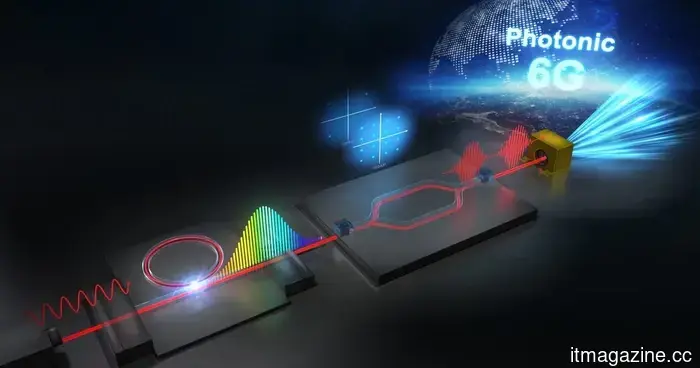
Researchers have just set a new wireless speed record that may influence the future of 6G technology.
Researchers have achieved a wireless speed of 112Gbps using a 560GHz connection, which current mobile networks cannot match. A team from Tokushima University demonstrated this using soliton microcombs to create a more stable terahertz signal, paving the way for future 6G systems.
The immediate benefit isn’t a faster smartphone; it's the underlying infrastructure that manages data traffic between network locations. The backhaul capacity will determine whether future 6G speeds are realized or hindered by congested network lines. Hence, this 6G speed advancement is significant, even if it won’t be reflected in consumer specifications anytime soon.
What makes this achievement noteworthy?
The 112Gbps result benefits from the 560GHz frequency. The team transmitted a single-channel wireless signal far beyond the point where traditional electronic hardware experiences weaker output power and increased signal noise.
This frequency lies in the terahertz range, which researchers are investigating to expand data channels for 6G. Previous communications at similar frequencies typically operated within a few to several dozen gigabits per second. This experiment surpassed the 100Gbps mark at frequencies exceeding 420GHz, placing it in a more advanced category.
How was the signal maintained?
At these frequencies, achieving high speed relies on control as much as on bandwidth. Phase noise and limited output power make it challenging to maintain stable wireless transmission, especially when attempting to transmit more data through a single channel without signal degradation.
Tokushima University’s approach involves a compact fiber-coupled microresonator, minimizing the need for precise optical alignment. It also incorporates temperature control to enhance the repeatability of optical resonance behavior. While these details may seem small, they represent critical engineering efforts that differentiate impressive lab results from practical, sustained applications.
When will real networks become available?
This breakthrough does not imply that a phone upgrade is imminent. The researchers still aim to reduce phase noise, support higher-order modulation, enhance terahertz output power, and extend transmission range with better antenna designs.
The first practical application of this technology may likely be in mobile backhaul or photonic-wireless network links. While less visible than a new 6G smartphone, this is crucial for the network's functionality. For 6G to deliver high speeds to everyday devices, the supporting infrastructure needs a more efficient way to transfer data.
---
Paulo Vargas is a former English major who has transitioned from reporting to technical writing, always circling back to his passion for technology.
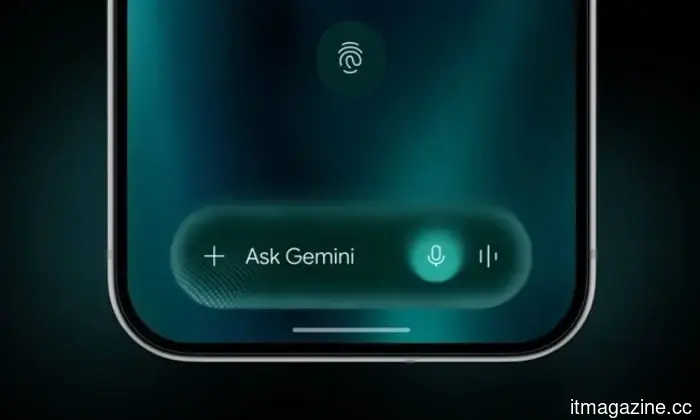
Google's Gemini may be testing weekly usage limits, disappointing free users. Most AI chatbots are designed to draw in users with a capable free tier before suggesting a subscription as they become reliant on the service. For many, these free versions suffice, allowing users to ask questions, generate images, summarize documents, and brainstorm ideas without constantly facing paywalls. Recently, a change spotted in Google’s Gemini app raises interest.
A user on X shared a screenshot indicating that Google might be testing stricter usage tracking and potential weekly limits within Gemini. The screenshot reveals a new section stating, “Plan limits determine how much you can use Gemini over time,” suggesting that Google may develop a more stringent system to monitor how often free users engage with Gemini, especially when employing more intensive AI models.
Google Gemini's new "Thinking Level" feature allows users to adjust the extent of analysis before receiving responses. As Google I/O 2026 approaches, leaks regarding Gemini have been frequent. Reports from 9to5Google indicate that some users are discovering a new option within the Gemini app for adjusting the “Thinking Level,” which appears in the existing model selection area where users choose between options like Fast, Thinking, Pro, or Google AI Plus.
Japan has developed robotic wolves to deter bear attacks, and their popularity has surged. Reports indicate that orders for the "Monster Wolf" have tripled in response to increasing wildlife encounters. Headlines about Japan deploying glowing robot wolves to scare away bears sound both like a technological breakthrough and a plot from a low-budget sci-fi horror movie. The country's unusual robotic creations are experiencing a significant demand boost amid the rise in bear attacks and sightings across Japan.



Other articles
 Peter Steinberger's 100 AI agents accumulated $1.3 million in OpenAI tokens within 30 days by developing OpenClaw.
The bill totaled 603 billion tokens from 7.6 million requests across 100 Codex instances utilizing GPT-5.5. Turning off Fast Mode would reduce the expense to $300,000, underscoring the actual financial aspects of developing autonomous AI.
Peter Steinberger's 100 AI agents accumulated $1.3 million in OpenAI tokens within 30 days by developing OpenClaw.
The bill totaled 603 billion tokens from 7.6 million requests across 100 Codex instances utilizing GPT-5.5. Turning off Fast Mode would reduce the expense to $300,000, underscoring the actual financial aspects of developing autonomous AI.
 Meta eliminates 8,000 positions while reporting a record $56 billion in quarterly revenue, as Zuckerberg invests $145 billion in AI infrastructure.
Employee morale has plummeted following Meta's announcement of record profits while cutting 10 percent of its workforce. Additional layoffs are anticipated in August and fall 2026 as the company shifts payroll into AI capital expenditures.
Meta eliminates 8,000 positions while reporting a record $56 billion in quarterly revenue, as Zuckerberg invests $145 billion in AI infrastructure.
Employee morale has plummeted following Meta's announcement of record profits while cutting 10 percent of its workforce. Additional layoffs are anticipated in August and fall 2026 as the company shifts payroll into AI capital expenditures.
 Elon Musk suffers defeat in lawsuit against Sam Altman and OpenAI, as the jury concludes that the claims were submitted beyond the allowable time frame.
Nine jurors unanimously dismissed Musk's claim that the statute of limitations should begin from when he later realized OpenAI had strayed from its nonprofit goals. The advisory verdict essentially concludes his attempt to oust Altman and reverse the $852 billion restructuring.
Elon Musk suffers defeat in lawsuit against Sam Altman and OpenAI, as the jury concludes that the claims were submitted beyond the allowable time frame.
Nine jurors unanimously dismissed Musk's claim that the statute of limitations should begin from when he later realized OpenAI had strayed from its nonprofit goals. The advisory verdict essentially concludes his attempt to oust Altman and reverse the $852 billion restructuring.
 Do you long for the classic PC days? This website allows you to navigate Wikipedia as if you’re using Windows XP.
A new web project transforms Wikipedia into a Windows XP-style desktop, allowing categories, articles, and Wikimedia Commons to resemble folders that can be browsed instead of just pages to search through.
Do you long for the classic PC days? This website allows you to navigate Wikipedia as if you’re using Windows XP.
A new web project transforms Wikipedia into a Windows XP-style desktop, allowing categories, articles, and Wikimedia Commons to resemble folders that can be browsed instead of just pages to search through.
 The breach at NYC Health and Hospitals has revealed the medical records, fingerprints, and geolocation information of 1.8 million individuals.
The hackers were able to access the network for over two months before being discovered, taking biometric data that individuals cannot replace. The security incident started through an unnamed third-party vendor.
The breach at NYC Health and Hospitals has revealed the medical records, fingerprints, and geolocation information of 1.8 million individuals.
The hackers were able to access the network for over two months before being discovered, taking biometric data that individuals cannot replace. The security incident started through an unnamed third-party vendor.
 Step aside gigabytes, AI tokens are now the latest currency on your phone bill.
China's telecommunications firms are beginning to approach AI usage similarly to mobile data, indicating a future for technology that may be more unconventional than many anticipated.
Step aside gigabytes, AI tokens are now the latest currency on your phone bill.
China's telecommunications firms are beginning to approach AI usage similarly to mobile data, indicating a future for technology that may be more unconventional than many anticipated.
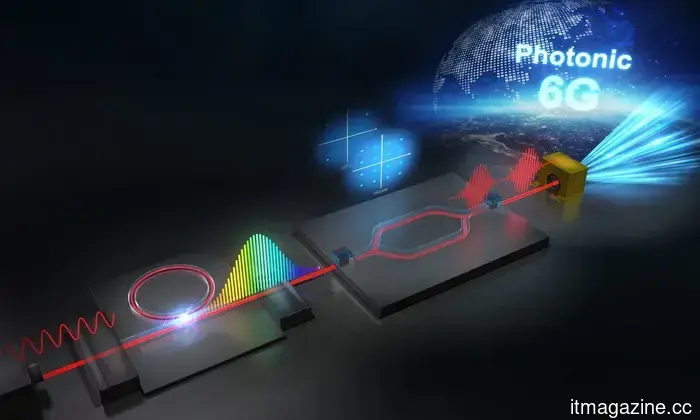
Researchers have just set a new wireless speed record that may influence the future of 6G technology.
Researchers achieved 112Gbps using a 560GHz wireless connection, demonstrating how microcomb-driven terahertz technology could enhance data transfer speeds in future 6G networks.