
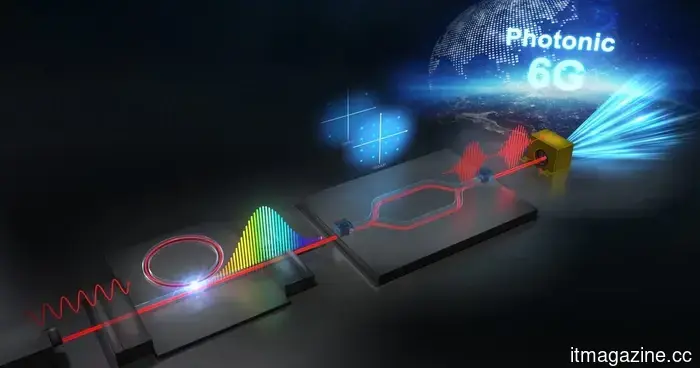
Researchers have set a new record for wireless speed that may influence the future of 6G technology.
Researchers have achieved a wireless speed of 112Gbps over a 560GHz connection, paving the way for faster backhaul infrastructure before 6G technology reaches consumer devices.
The focus isn’t on immediate handset upgrades but on the underlying infrastructure that manages traffic between network sites. This backhaul capacity is crucial for ensuring that future 6G speeds can be experienced, rather than being bottlenecked by congested networks. Hence, this development in 6G speed is noteworthy, even if consumers won’t benefit from it directly in the near future.
What makes this achievement significant?
The 112Gbps record is largely attributed to the 560GHz frequency band. The research team successfully transmitted a single-channel wireless signal beyond the limits where traditional electronic devices typically encounter diminished output power and increased signal noise.
Placed within the terahertz range, this frequency is being explored by researchers as a means to create broader data transmission lanes for 6G. Previous communication technologies at these frequencies have typically operated in the range of just a few to several dozen gigabits per second. This new test exceeds the 100Gbps threshold beyond 420GHz, marking an important advancement.
How did they maintain signal quality?
Achieving high speeds at these frequencies involves careful control in addition to sufficient bandwidth. Issues such as phase noise and limited output power make it challenging to maintain stable wireless transmission, particularly when attempting to transmit more data through a single channel without compromising signal integrity.
Tokushima University’s approach utilizes a compact fiber-coupled microresonator, decreasing the need for meticulous optical alignment. The system also incorporates temperature control to enhance the consistency of the optical resonance. These technical details may seem minor, but they represent the engineering efforts that distinguish impressive lab results from practical, sustained applications.
When can we expect real networks to utilize this technology?
This breakthrough should not be interpreted as an imminent upgrade for mobile phones. The researchers must first further reduce phase noise, enhance support for higher-order modulation, boost terahertz output power, and improve antenna design for greater transmission distances.
The technology's initial application is likely to be in mobile backhaul or photonic-wireless network connections. While less noticeable than a new 6G smartphone, this innovation is crucial for the overall network. To provide significant speeds to regular devices, the infrastructure powering those devices must first be capable of transporting data more rapidly.
Paulo Vargas has transitioned from an English major to a reporter to a technical writer, with a career path that has consistently returned to…
Google's Gemini may be exploring user limits, which might not please free users.
Currently, most AI chatbots operate under a familiar model: attract users with an appealing free tier before subtly encouraging a subscription as reliance grows. In reality, the free versions are sufficient for many users, allowing for question asking, image generation, document summarizing, and idea brainstorming without encountering frequent paywalls. This brings a recent change in Google’s Gemini app into focus.
A user on X has shared a screenshot indicating that Google may be trialing stricter usage monitoring and potential weekly limits for Gemini. The screenshot reveals a new section stating, “Plan limits determine how much you can use Gemini over time.” This suggests that Google could be developing a more rigorous system to track how often free users engage with Gemini, particularly when utilizing more demanding AI models.
With Google I/O 2026 on the horizon, leaks about Gemini seem to be emerging regularly. There is now speculation that Google is testing a “Thinking Level” feature that allows users to control the depth of processing Gemini does before delivering responses.
Reports indicate that some users have encountered a new “Thinking Level” option within the existing model selector of the Gemini app, where they can choose between settings like Fast, Thinking, Pro, or Google AI Plus.
In Japan, orders for robotic wolves designed to deter bear attacks have surged, reflecting increasing wildlife encounters.
Few headlines can simultaneously read as both a technological advancement and the premise of a low-budget sci-fi horror film as convincingly as the story of Japan deploying illuminated robot wolves to fend off bears. Demand for these unique machines has reportedly risen dramatically amid a rise in bear attacks and sightings throughout the country. Japan’s robot wolves are quickly gaining popularity as effective deterrents against bear encounters.





Other articles
 Step aside gigabytes, AI tokens are now the latest currency on your phone bill.
China's telecommunications firms are beginning to approach AI usage similarly to mobile data, indicating a future for technology that may be more unconventional than many anticipated.
Starlink price hike: SpaceX has increased residential and Roam plan prices by $5 to $10 and has raised the Standby Mode fee to $10.
All consumer Starlink tiers, with the exception of the new Roam 300GB plan, are impacted. These price hikes come as SpaceX applies for the largest IPO in history and Amazon Leo readies for its commercial launch.
Step aside gigabytes, AI tokens are now the latest currency on your phone bill.
China's telecommunications firms are beginning to approach AI usage similarly to mobile data, indicating a future for technology that may be more unconventional than many anticipated.
Starlink price hike: SpaceX has increased residential and Roam plan prices by $5 to $10 and has raised the Standby Mode fee to $10.
All consumer Starlink tiers, with the exception of the new Roam 300GB plan, are impacted. These price hikes come as SpaceX applies for the largest IPO in history and Amazon Leo readies for its commercial launch.
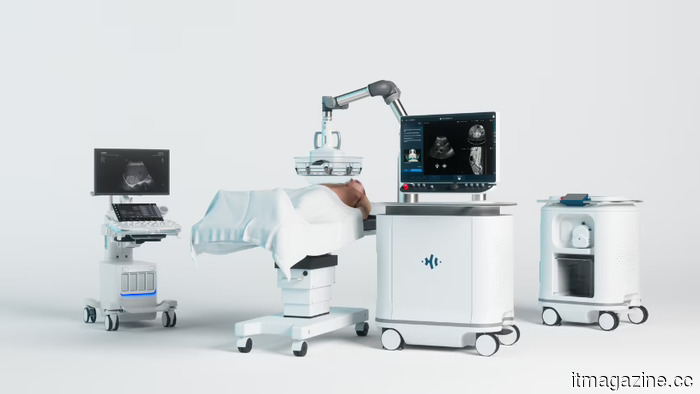 HistoSonics has obtained TFDA approval in Taiwan for the Edison Histotripsy System, which speeds up its expansion in Asia.
The non-invasive focused ultrasound technology eliminates liver tumors without the need for surgery or radiation. Supported by Bezos Expeditions and valued at $2.25 billion, HistoSonics has also filed with the FDA concerning kidney tumors on May 11.
Starlink price hike: SpaceX raises the costs for residential and Roam plans by $5 to $10 and increases the Standby Mode fee to $10.
All consumer Starlink plans, with the exception of the new Roam 300GB option, are impacted. The price hikes come at a time when SpaceX is preparing for the largest IPO ever and Amazon Leo is getting ready for its commercial launch.
HistoSonics has obtained TFDA approval in Taiwan for the Edison Histotripsy System, which speeds up its expansion in Asia.
The non-invasive focused ultrasound technology eliminates liver tumors without the need for surgery or radiation. Supported by Bezos Expeditions and valued at $2.25 billion, HistoSonics has also filed with the FDA concerning kidney tumors on May 11.
Starlink price hike: SpaceX raises the costs for residential and Roam plans by $5 to $10 and increases the Standby Mode fee to $10.
All consumer Starlink plans, with the exception of the new Roam 300GB option, are impacted. The price hikes come at a time when SpaceX is preparing for the largest IPO ever and Amazon Leo is getting ready for its commercial launch.
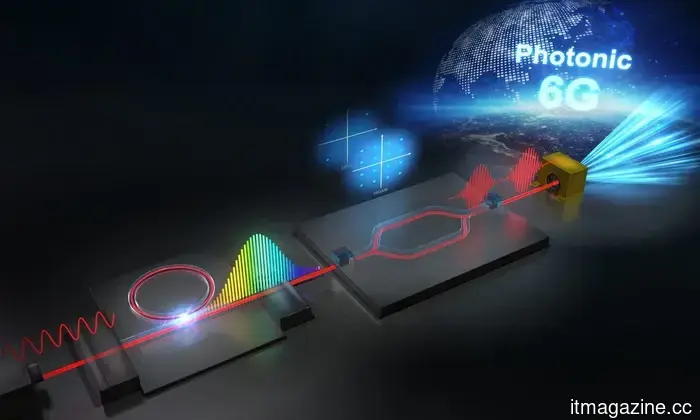
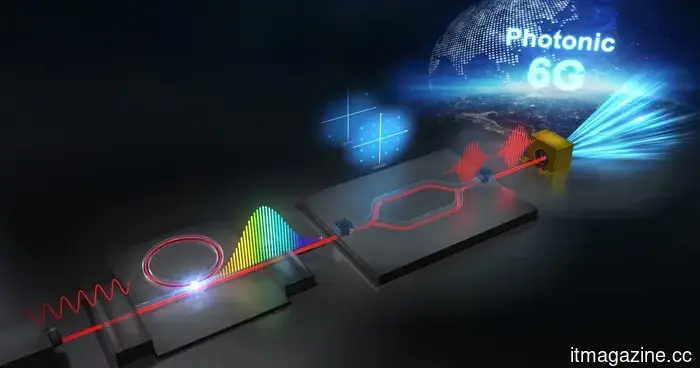 Researchers have recently set a new record for wireless speed that may influence the future of 6G technology.
Researchers achieved 112Gbps through a 560GHz wireless connection, demonstrating how terahertz technology powered by microcombs could accelerate data transmission for future 6G networks.
Researchers have recently set a new record for wireless speed that may influence the future of 6G technology.
Researchers achieved 112Gbps through a 560GHz wireless connection, demonstrating how terahertz technology powered by microcombs could accelerate data transmission for future 6G networks.
 Peter Steinberger's 100 AI agents amassed $1.3 million in OpenAI tokens over the course of 30 days while creating OpenClaw.
The bill amounted to 603 billion tokens from 7.6 million requests generated by 100 Codex instances operating on GPT-5.5. Turning off Fast Mode would reduce the cost to $300,000, but this figure highlights the actual economics involved in autonomous AI development.
Peter Steinberger's 100 AI agents amassed $1.3 million in OpenAI tokens over the course of 30 days while creating OpenClaw.
The bill amounted to 603 billion tokens from 7.6 million requests generated by 100 Codex instances operating on GPT-5.5. Turning off Fast Mode would reduce the cost to $300,000, but this figure highlights the actual economics involved in autonomous AI development.
Researchers have set a new record for wireless speed that may influence the future of 6G technology.
Researchers achieved a speed of 112Gbps through a 560GHz wireless connection, demonstrating how terahertz technology driven by microcombs could enhance data transfer rates in future 6G networks behind the scenes.