
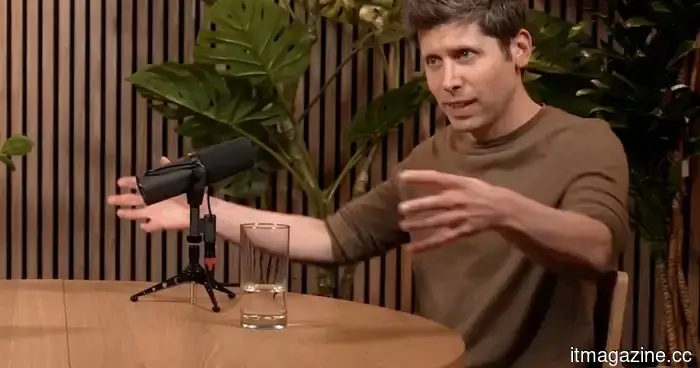
Experts are concerned that as AI becomes more intelligent, we may become less so.
Experts indicate that while chatbots can assist in research, relying on them too much may result in outsourcing the efforts that foster true understanding.
AI is now capable of delivering answers so swiftly that conducting a search may feel unnecessary. This ease raises concerns for the Royal Observatory Greenwich, which cautions that immediate AI responses can diminish the curiosity, critical thinking, and fact-checking that underpin genuine knowledge.
The potential downsides lurk within their advantages. Chatbots can facilitate idea testing, speed up processes, and uncover new perspectives, yet a completed answer may disconnect users from the complex journey that reinforces learning. Consequently, information can arrive devoid of the struggle necessary for forming insight.
To what extent should AI handle our cognitive tasks?
The Royal Observatory's perspective is significant given its foundation on careful observation rather than quick overviews. Paddy Rodgers, director of Royal Museums Greenwich, emphasizes the important habits essential for scientific discovery, which include asking incisive questions, evaluating evidence, and pursuing leads that may initially appear unpromising.
Astronomy's own past supports his view. Early astronomers compiled extensive records of the sky, and subsequent generations found applications for that information that the original creators could not have anticipated. An efficiency-focused machine might have bypassed those explorations due to their seemingly minimal immediate value.
What happens when intelligence is treated as a commodity?
Sam Altman has articulated the notion of AI evolving into a measured service, akin to how electricity or water is sold based on consumption. While this perspective represents a business approach, it heightens cultural concerns about AI supplanting mental exertion.
If intelligence is perceived as something one can obtain on demand, reasoning may begin to resemble a service rather than a skill to refine. The potential danger increases when a polished answer is regarded as established knowledge, particularly if users are unaware of the information the system omitted, simplified, or failed to verify.
What should individuals focus on next?
A more beneficial practice would be to utilize AI to challenge your own assumptions. Inquire if it can question an idea, highlight absent evidence, and test a conclusion before accepting the answer as conclusive.
This transforms the Royal Observatory's caution into a practical guideline. Leverage AI to expand inquiries rather than conclude them. Scrutinize what it overlooks, trace claims to their origins, and maintain the final decision-making in human hands.
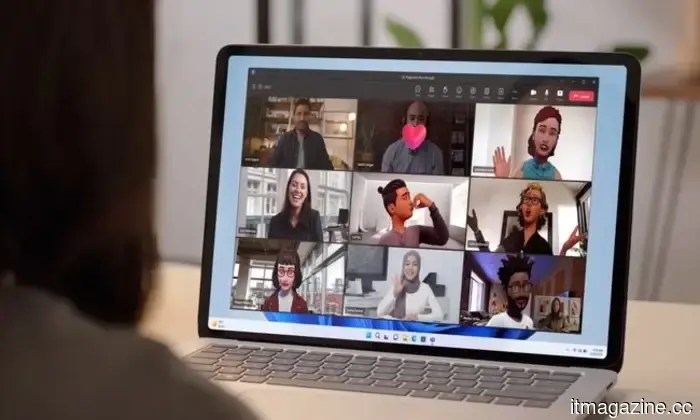
Microsoft is discontinuing the Together Mode in Teams for a more straightforward and practical set of meeting layouts.
Teams is phasing out Together Mode, one of its most well-known meeting features, which could be beneficial. The company announced its removal as it aims for simpler meeting layouts. Originally launched during the surge of video calls in the pandemic, Together Mode placed participants in shared virtual environments like auditoriums and classrooms. It was a novel concept at the time, but it never became the standard view for most users.
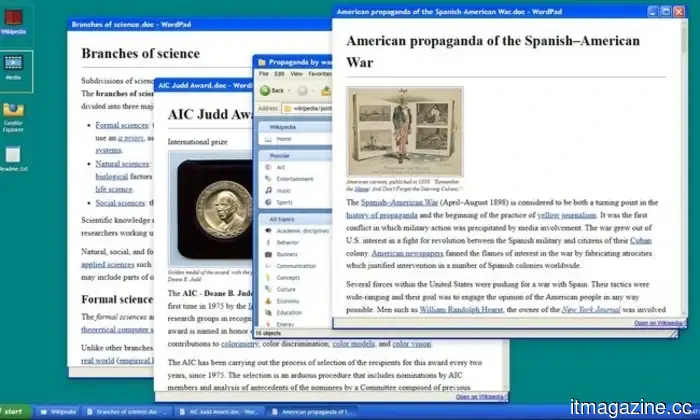
A new website lets users relive the nostalgia of old PC days by experiencing Wikipedia as if it were on Windows XP.
A quirky, unofficial front page offers a Windows XP-style Wikipedia explorer that transforms online research into a nostalgic experience while revealing how browsing shifts when traditional search is set aside. Developer Sami Smith has created a browser-based platform where categories appear as folders and articles are displayed as documents. It's a fun, somewhat cumbersome, but more engaging alternative to yet another AI-driven search interface.
Scientists have proposed an economical approach that could lower the cost of traveling to the Moon.
The Moon just became slightly less expensive to visit, and scientists are thrilled. The high cost of lunar travel is well-known, with fuel expenses being a major factor. Therefore, finding ways to minimize these costs has become a priority. A recent study in the journal Astrodynamics has outlined a new trajectory from Earth's orbit to the Moon that could significantly reduce mission expenses. The innovation involves a strategical stop at the L1 Lagrange point, a gravitational balance point located between Earth and the Moon.



Other articles
 Meta reduces its workforce by 8,000 positions while reporting a record quarterly revenue of $56 billion, as Zuckerberg invests $145 billion in AI infrastructure.
Employee morale has plummeted, as Meta announces unprecedented profits while cutting 10 percent of its workforce. Additional layoffs are anticipated in August and fall 2026, as the company shifts payroll expenditures towards AI investments.
Meta reduces its workforce by 8,000 positions while reporting a record quarterly revenue of $56 billion, as Zuckerberg invests $145 billion in AI infrastructure.
Employee morale has plummeted, as Meta announces unprecedented profits while cutting 10 percent of its workforce. Additional layoffs are anticipated in August and fall 2026, as the company shifts payroll expenditures towards AI investments.
 Do you long for the classic PC days? This website allows you to navigate Wikipedia as if you’re using Windows XP.
A new web project transforms Wikipedia into a Windows XP-style desktop, allowing categories, articles, and Wikimedia Commons to resemble folders that can be browsed instead of just pages to search through.
Do you long for the classic PC days? This website allows you to navigate Wikipedia as if you’re using Windows XP.
A new web project transforms Wikipedia into a Windows XP-style desktop, allowing categories, articles, and Wikimedia Commons to resemble folders that can be browsed instead of just pages to search through.
 Step aside gigabytes, AI tokens are now the latest currency on your phone bill.
China's telecommunications firms are beginning to approach AI usage similarly to mobile data, indicating a future for technology that may be more unconventional than many anticipated.
Step aside gigabytes, AI tokens are now the latest currency on your phone bill.
China's telecommunications firms are beginning to approach AI usage similarly to mobile data, indicating a future for technology that may be more unconventional than many anticipated.
 A data breach at NYC Health and Hospitals has compromised medical records, fingerprints, and geolocation information of 1.8 million individuals.
The hackers were connected to the network for over two months before being discovered, stealing biometric data that the affected individuals cannot replicate. The breach was traced back to an unidentified third-party vendor.
A data breach at NYC Health and Hospitals has compromised medical records, fingerprints, and geolocation information of 1.8 million individuals.
The hackers were connected to the network for over two months before being discovered, stealing biometric data that the affected individuals cannot replicate. The breach was traced back to an unidentified third-party vendor.
 Amazon introduces Alexa Podcasts, an AI capability that produces complete episodes using licensed news material.
Alexa+ is now able to produce podcast episodes on a wide range of topics, featuring narration by two AI-generated co-hosts. This capability leverages licensing agreements with organizations such as AP, Reuters, the Washington Post, and over 200 local newspapers.
Amazon introduces Alexa Podcasts, an AI capability that produces complete episodes using licensed news material.
Alexa+ is now able to produce podcast episodes on a wide range of topics, featuring narration by two AI-generated co-hosts. This capability leverages licensing agreements with organizations such as AP, Reuters, the Washington Post, and over 200 local newspapers.
 Coursera initiates a $500 million stock buyback program just days after finalizing its merger with Udemy.
The buyback, financed with available cash, occurs as COUR is trading close to its 52-week low of $5.00. The merged Coursera-Udemy platform reports 290 million learners and aims for $115 million in annual cost synergies.
Coursera initiates a $500 million stock buyback program just days after finalizing its merger with Udemy.
The buyback, financed with available cash, occurs as COUR is trading close to its 52-week low of $5.00. The merged Coursera-Udemy platform reports 290 million learners and aims for $115 million in annual cost synergies.
Experts are concerned that as AI becomes more intelligent, we may become less so.
As AI transforms intelligence into a service that is available on demand, specialists caution that immediate responses may diminish the curiosity, critical examination, and source verification behaviors that enhance human thinking.