
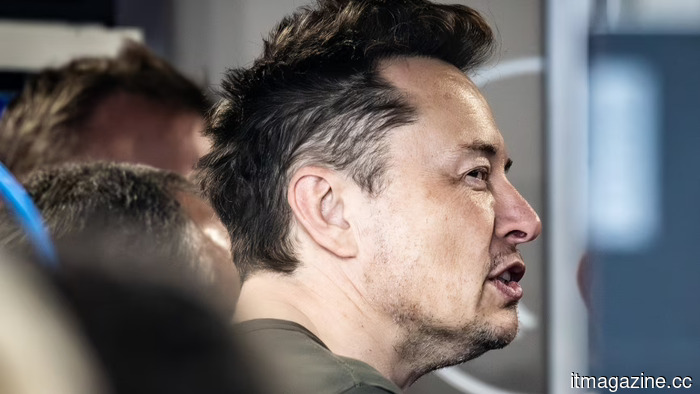
Elon Musk loses the lawsuit against Sam Altman and OpenAI after the jury determines that the claims were submitted after the deadline.
A nine-member jury in Oakland unanimously determined that Elon Musk’s lawsuit against Sam Altman and OpenAI was filed too late, leading to the trial's conclusion on statute of limitations grounds without addressing the substance of the case. If the judge accepts the jury's advisory verdict, it removes a significant legal barrier for OpenAI's plans for an IPO.
Elon Musk’s lawsuit against Sam Altman, Greg Brockman, OpenAI, and Microsoft has been dismissed. On Sunday, the jury in Oakland reached a unanimous decision, ruling that Musk filed his lawsuit after the statute of limitations had expired, thus concluding one of the most significant corporate governance trials in artificial intelligence history without ruling on the merits of whether OpenAI’s leaders misappropriated a charity.
The verdict is advisory, which means that Judge Yvonne Gonzalez Rogers from the Northern District of California will make the final liability decision. However, she had previously indicated that she would likely adhere to the jury's recommendations. Should she agree, Musk’s attempts to oust Altman from OpenAI, reverse the company’s $852 billion restructuring, and seek up to $134 billion in restitution for the nonprofit foundation would be effectively nullified.
The primary focus for the jury was not whether Altman and Brockman had violated OpenAI’s foundational mission, but rather a more specific inquiry: did Musk initiate his lawsuit within the required timeframe? Musk left OpenAI’s board in 2018 but did not file his lawsuit until February 2024, creating a six-year gap that his legal team struggled to justify during the three-week trial. Musk claimed he only became aware of OpenAI straying from its nonprofit mission in 2022, during Microsoft’s plans to invest $10 billion. OpenAI’s lawyers argued that crucial events, like establishing a for-profit subsidiary in 2019 and Microsoft’s initial $1 billion investment that same year, were well-publicized within the permissible filing period.
The jury sided with OpenAI. All nine jurors concluded that the alleged harms Musk claimed occurred before the filing deadline, making the lawsuit untimely regardless of its content. The unanimous verdict is particularly noteworthy, as not a single juror accepted Musk’s argument that the statute of limitations should begin from his later realization of the supposed wrongdoing.
Both parties framed the trial as one that would shape AI governance for the coming decade. Musk’s head attorney, Steven Molo, began by alleging that Altman and Brockman had "stolen a charity," while OpenAI's attorney, William Savitt, countered that Musk filed the lawsuit only after he was unsuccessful in OpenAI and went on to establish his own competing AI venture, xAI, in 2023.
Had the case proceeded to the merits, the jury would have evaluated two civil claims: breach of charitable trust and unjust enrichment. Musk donated about $44 million to OpenAI from 2015 to 2017 and argued that those contributions were effectively misappropriated when the organization transitioned from a nonprofit entity to a for-profit one valued at hundreds of billions. He sought to have Altman removed from his role, reverse OpenAI’s recapitalization into a public benefit corporation announced in October 2025, and claim up to $134 billion in restitution from OpenAI and Microsoft.
Musk testified over three days that the trial would set a precedent for charitable giving in the U.S., stating he sought no personal financial gain and requested that any damages be directed to OpenAI’s nonprofit branch. OpenAI's defense contended that Musk himself had pushed for the creation of a for-profit subsidiary as early as 2017, provided he had control over it, and that he departed the board when that request was denied.
The trial included three weeks of testimonies from various Silicon Valley figures, including Altman, Brockman, Microsoft CEO Satya Nadella, former OpenAI chief scientist Ilya Sutskever, and Musk himself. A particularly damaging piece of evidence for OpenAI was a journal entry by Brockman from November 2017, in which he recognized that the company could not legitimately claim allegiance to a nonprofit structure if it was planning to transition to a benefit corporation shortly thereafter. Judge Gonzalez Rogers had referenced this entry in her January 2026 ruling allowing the trial to commence.
Sutskever's testimony complicated matters for both sides. He, who was instrumental in Altman’s brief removal from the CEO position in November 2023, stated he had spent months gathering evidence of Altman’s alleged deceptive practices but later expressed regret for reinstating him. Under cross-examination, Altman admitted to "telling the occasional lie," while five witnesses characterized him as dishonest.
OpenAI also called upon Shivon Zilis, the mother of four of Musk's children, whose testimony did not align with Musk’s account of the founding commitments. Additionally, Musk was absent for the closing arguments on May 14, having participated in President Trump’s delegation to Beijing, a fact that Open
Other articles
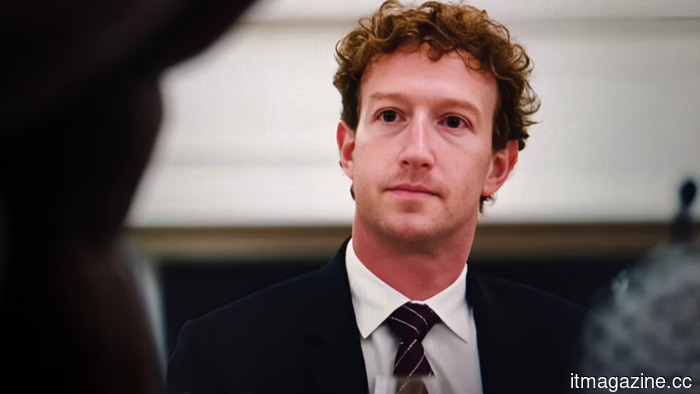 Meta reduces its workforce by 8,000 employees while reporting a record quarterly revenue of $56 billion, as Zuckerberg invests $145 billion in AI infrastructure.
Employee morale has plummeted as Meta announces record profits while cutting 10 percent of its workforce. Additional layoffs are anticipated in August and fall 2026, as the company shifts payroll expenses towards AI capital investments.
Meta reduces its workforce by 8,000 employees while reporting a record quarterly revenue of $56 billion, as Zuckerberg invests $145 billion in AI infrastructure.
Employee morale has plummeted as Meta announces record profits while cutting 10 percent of its workforce. Additional layoffs are anticipated in August and fall 2026, as the company shifts payroll expenses towards AI capital investments.
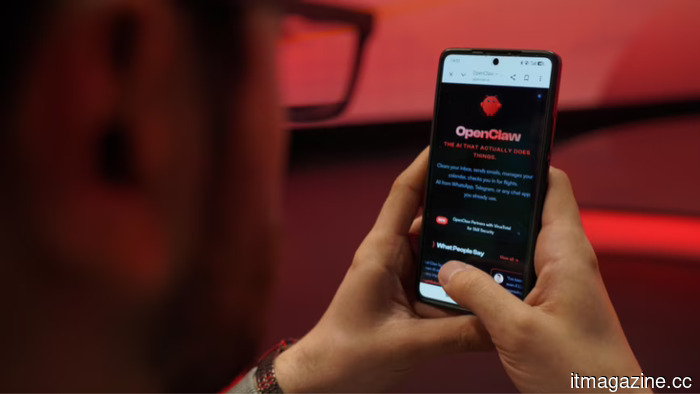 Peter Steinberger's 100 AI agents amassed $1.3 million in OpenAI tokens over the course of 30 days while creating OpenClaw.
The bill amounted to 603 billion tokens from 7.6 million requests generated by 100 Codex instances operating on GPT-5.5. Turning off Fast Mode would reduce the cost to $300,000, but this figure highlights the actual economics involved in autonomous AI development.
Peter Steinberger's 100 AI agents amassed $1.3 million in OpenAI tokens over the course of 30 days while creating OpenClaw.
The bill amounted to 603 billion tokens from 7.6 million requests generated by 100 Codex instances operating on GPT-5.5. Turning off Fast Mode would reduce the cost to $300,000, but this figure highlights the actual economics involved in autonomous AI development.
 Step aside gigabytes, AI tokens have become the latest unit on your phone bill.
China's telecommunications firms are beginning to approach AI utilization similarly to mobile data, and this transition suggests a future for technology that is more unconventional than many anticipated.
Starlink price hike: SpaceX has increased the cost of residential and Roam plans by $5 to $10, and has raised the fee for Standby Mode to $10.
All consumer Starlink plans, with the exception of the new Roam 300GB option, are impacted. The price hikes come as SpaceX prepares for the largest IPO ever and Amazon Leo nears its commercial rollout.
Step aside gigabytes, AI tokens have become the latest unit on your phone bill.
China's telecommunications firms are beginning to approach AI utilization similarly to mobile data, and this transition suggests a future for technology that is more unconventional than many anticipated.
Starlink price hike: SpaceX has increased the cost of residential and Roam plans by $5 to $10, and has raised the fee for Standby Mode to $10.
All consumer Starlink plans, with the exception of the new Roam 300GB option, are impacted. The price hikes come as SpaceX prepares for the largest IPO ever and Amazon Leo nears its commercial rollout.
 Nostalgic for the old PC era? This website allows you to interact with Wikipedia as if you were using Windows XP.
A new web initiative transforms Wikipedia into a desktop interface reminiscent of Windows XP, allowing users to navigate through categories, articles, and Wikimedia Commons as if they were browsing folders rather than searching through pages.
Nostalgic for the old PC era? This website allows you to interact with Wikipedia as if you were using Windows XP.
A new web initiative transforms Wikipedia into a desktop interface reminiscent of Windows XP, allowing users to navigate through categories, articles, and Wikimedia Commons as if they were browsing folders rather than searching through pages.
Elon Musk loses the lawsuit against Sam Altman and OpenAI after the jury determines that the claims were submitted after the deadline.
Nine jurors unanimously dismissed Musk's claim that the statute of limitations should begin from his later realization of OpenAI's shift from its nonprofit mission. This advisory verdict essentially concludes his attempt to oust Altman and reverse the $852 billion restructuring.