
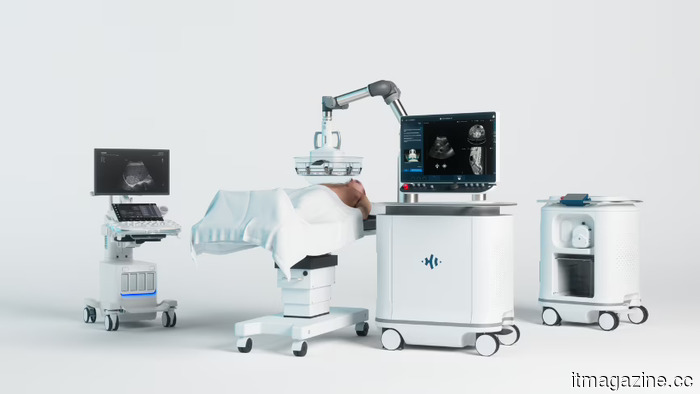
HistoSonics has obtained TFDA approval in Taiwan for the Edison Histotripsy System, expediting its expansion in Asia.
TL;DR HistoSonics has obtained approval from Taiwan's TFDA for its Edison Histotripsy System, a non-invasive focused ultrasound technology that targets and destroys tumors without surgery or radiation. Valued at $2.25 billion, the company is advancing its operations across Asia while seeking FDA authorization in the U.S. for kidney tumors.
HistoSonics has successfully secured regulatory approval from Taiwan's Food and Drug Administration for its Edison Histotripsy System, a non-invasive device that utilizes focused ultrasound to eliminate tumors without the need for cutting, radiation, or heat damage. The TFDA authorization, revealed on May 18, represents a significant step in HistoSonics' expansion into Asia, adding Taiwan to its list of markets where the technology is commercially available.
This approval follows a regulatory review process that concluded with unanimous support from committee members. HistoSonics has already established clinical operations in Taiwan through the National Taiwan University Hospital, which was the first institution in the country to implement the system. Here, physicians have treated patients under research protocols, reportedly achieving one of the fastest rates of clinical adoption globally.
Understanding histotripsy and its significance
Histotripsy involves a non-thermal mechanical process that harnesses precisely focused sound waves to create controlled acoustic cavitation, resulting in microscopic bubbles that expand and collapse forcefully to damage targeted tissue at the subcellular level. Unlike thermal ablation techniques that incinerate tumors or radiation therapy that affects DNA, histotripsy liquefies tissue mechanically without heating adjacent areas. The body then naturally absorbs and removes the destroyed tissue.
The Edison system, which HistoSonics has developed over more than twenty years based on research from the University of Michigan, received its initial U.S. FDA De Novo authorization in October 2023 for the non-invasive destruction of liver tumors, including those that cannot be surgically removed. This made Edison the first and only histotripsy platform available in the United States. One-year clinical data from a pivotal trial indicate a 90 percent tumor control rate, a statistic that has attracted interest from oncologists treating patients who are not surgical candidates.
The rapid growth of the healthcare technology landscape
The Edison system operates within a fast-growing area where AI and advanced technologies are transforming healthcare delivery. However, histotripsy stands out as a physical intervention with quantifiable clinical outcomes rather than merely a software-focused diagnostic tool. Its operational mechanism, which utilizes sound rather than incisions or radiation, allows for outpatient treatment with minimal recovery time—a feature that appeals to healthcare systems aiming to lower costs and shorten hospital stays.
The company behind the innovation
Founded in 2009 in Ann Arbor, Michigan, HistoSonics is not a new startup. Valued at $2.25 billion as of August 2025 after a consortium of investors including K5 Global, Bezos Expeditions, and Wellington Management acquired a majority share, the company’s growth was steered by this transaction which appointed CEO Mike Blue as chairman of the board. Subsequently, two months later, the company raised $250 million in an oversubscribed growth financing round, with the total capital exceeding $560 million across 11 funding rounds.
The investors associated with HistoSonics include prominent figures in the tech investment domain. The involvement of Jeff Bezos’s investment firm and Peter Thiel’s biotech fund highlights a belief that histotripsy could serve as a platform technology with potential applications beyond its present indication for liver tumors, possibly extending to kidney, pancreatic, and prostate cancers. The acquisition of French AI ultrasound startup Sonio by Samsung for €86 million reflects the broader trend of major tech and healthcare companies investing in ultrasound-based platforms, although HistoSonics' therapeutic initiative is much more ambitious than diagnostic imaging.
The TFDA approval is vital for two main reasons. Firstly, Taiwan has a robust healthcare system with strong institutional research capabilities, making it an excellent market for generating the clinical data that regulatory bodies in other Asian nations will seek. Secondly, this approval coincides with HistoSonics pursuing multiple regulatory and clinical milestones at the same time.
Taipei Veterans General Hospital has secured an Edison system, with its director likening the technology to a legendary weapon and announcing plans to provide free treatment to 50 liver cancer or liver metastases patients within six months as part of clinical trials. This acquisition was reportedly influenced by Hong Kong billionaire Li Ka-shing’s donation of a histotripsy system to the University of Hong Kong in 2024, highlighting how philanthropy can speed up commercial adoption in new markets.
HistoSonics intends to strengthen collaborations with physicians and institutions throughout Taiwan and the wider Asia-Pacific area, focusing on generating clinical data, expanding indications through research, and developing physician training programs. According to its latest disclosures, the company has treated over 2,000 patients in more than 50 active centers worldwide.
A look beyond liver applications
One week prior to receiving approval in Taiwan, on May
Other articles
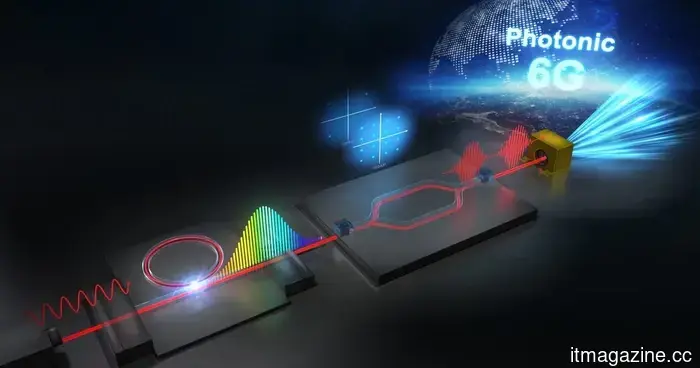 Researchers have just set a new wireless speed record that may influence the future of 6G technology.
Researchers achieved 112Gbps using a 560GHz wireless connection, demonstrating how microcomb-driven terahertz technology could enhance data transfer speeds in future 6G networks.
Researchers have just set a new wireless speed record that may influence the future of 6G technology.
Researchers achieved 112Gbps using a 560GHz wireless connection, demonstrating how microcomb-driven terahertz technology could enhance data transfer speeds in future 6G networks.
 Coursera initiates a $500 million stock buyback program just days after finalizing its merger with Udemy.
The buyback, financed with available cash, occurs as COUR is trading close to its 52-week low of $5.00. The merged Coursera-Udemy platform reports 290 million learners and aims for $115 million in annual cost synergies.
Coursera initiates a $500 million stock buyback program just days after finalizing its merger with Udemy.
The buyback, financed with available cash, occurs as COUR is trading close to its 52-week low of $5.00. The merged Coursera-Udemy platform reports 290 million learners and aims for $115 million in annual cost synergies.
 Step aside gigabytes, AI tokens are now the latest currency on your phone bill.
China's telecommunications firms are beginning to approach AI usage similarly to mobile data, indicating a future for technology that may be more unconventional than many anticipated.
Step aside gigabytes, AI tokens are now the latest currency on your phone bill.
China's telecommunications firms are beginning to approach AI usage similarly to mobile data, indicating a future for technology that may be more unconventional than many anticipated.
 Coursera initiates a $500 million share buyback program just days after finalizing its merger with Udemy.
The buyback, which is financed using current cash reserves, occurs as COUR's stock is close to its 52-week low of $5.00. The merged Coursera-Udemy platform reports having 290 million learners and aims to achieve $115 million in annual cost synergies.
Omnia and Casa dos Ventos have signed a $2 billion power agreement to support TikTok's data center in Brazil.
Omnia and Casa dos Ventos have entered into a renewable energy supply agreement valued at approximately $2 billion, which will support TikTok's $9.8 billion data center in Pecém, Ceará, marking ByteDance's first dedicated facility in Latin America.
Coursera initiates a $500 million share buyback program just days after finalizing its merger with Udemy.
The buyback, which is financed using current cash reserves, occurs as COUR's stock is close to its 52-week low of $5.00. The merged Coursera-Udemy platform reports having 290 million learners and aims to achieve $115 million in annual cost synergies.
Omnia and Casa dos Ventos have signed a $2 billion power agreement to support TikTok's data center in Brazil.
Omnia and Casa dos Ventos have entered into a renewable energy supply agreement valued at approximately $2 billion, which will support TikTok's $9.8 billion data center in Pecém, Ceará, marking ByteDance's first dedicated facility in Latin America.
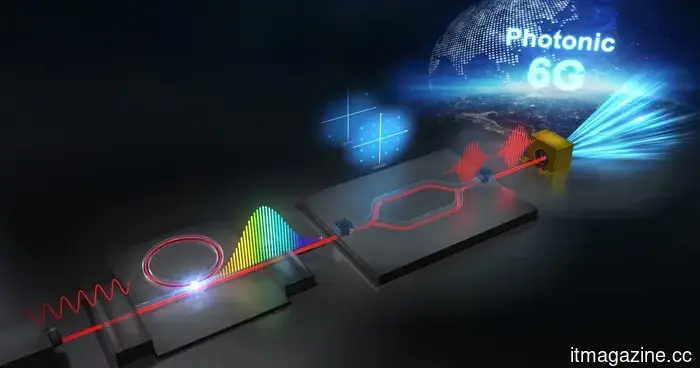 Researchers have recently set a new record for wireless speed that may influence the future of 6G technology.
Researchers achieved 112Gbps through a 560GHz wireless connection, demonstrating how terahertz technology powered by microcombs could accelerate data transmission for future 6G networks.
Researchers have recently set a new record for wireless speed that may influence the future of 6G technology.
Researchers achieved 112Gbps through a 560GHz wireless connection, demonstrating how terahertz technology powered by microcombs could accelerate data transmission for future 6G networks.
HistoSonics has obtained TFDA approval in Taiwan for the Edison Histotripsy System, expediting its expansion in Asia.
The non-invasive focused ultrasound technology eliminates liver tumors without the need for surgery or radiation. Supported by Bezos Expeditions and estimated at a value of $2.25 billion, HistoSonics also filed a submission to the FDA for treating kidney tumors on May 11.