
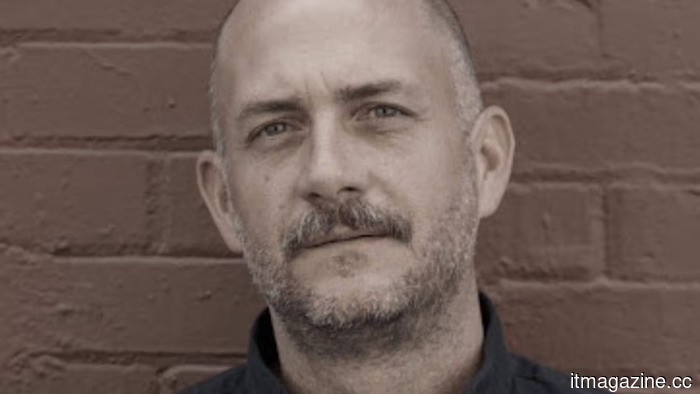
Robert Polacek from RoseBernard Studio discusses the role of AI in design and argues that it should remain in the background.
**TL;DR** Robert Polacek from RoseBernard Studio argues that AI is most effective when it works seamlessly behind the scenes, allowing designers to concentrate on creative tasks. He highlights that smaller, agile studios can quickly adopt new tools, and younger professionals now anticipate AI as a standard in their work.
Artificial intelligence has become a prominent topic within architecture, design, and the creative sectors. However, Robert Polacek, co-founder and creative director of RoseBernard Studio, contends that the vital conversations have shifted away from fears of replacement and uncertainty. His attention is now on how technology can enhance creative abilities and foster better collaboration across the industry.
Polacek sees AI as a tool that improves efficiency, giving creatives more time to cultivate ideas and enhance their conceptual work within studios. Recent research supports his view, with 84% of architects expressing optimism about AI's role in automating manual tasks.
He states, “Even as creatives constructing spaces for people, there is a wealth of technology we can utilize to expedite our processes. AI can increase our creative time and allow us to sharpen our skills simultaneously.”
His observations during Milan Design Week reinforced these beliefs. While viewing exhibits with other creatives, he noted AI was not overtly visible in the presented work. Instead, he found its influence to be subtly integrated into architecture, installations, renderings, written content, and creative methods.
“We realized AI was pervasive but not prominent,” he explains. “It operated behind the scenes, doing what it needed to do to produce the art we observed. That's exactly what we advocate: AI doesn’t need to take center stage; it can work for us, but from behind the scenes.”
Polacek regards this thoughtful application as essential for creative fields facing rapid technological advancements. He warns that studios viewing AI merely as a means to cut costs could compromise the human elements that imbue creative work with significance and emotional depth.
Conversely, he believes that firms resisting technological progress entirely place themselves at a severe operational and creative disadvantage. “We aim to minimize friction, which keeps us aware of staying current. This is essential to staying aligned with technological advancements,” he notes.
In RoseBernard Studio, Polacek promotes adaptability as a core aspect of the company’s culture. He emphasizes that team meetings focus on assessing new software, experimenting with new systems, and evaluating whether tools can enhance workflow, collaboration, and creative growth.
Polacek shares, “We convene every two weeks as a team to review our current and emerging software. We ask, ‘Should we switch?’ If it fulfills our needs, we adapt because we can afford to be agile.”
He sees this agility as a significant benefit for smaller studios in today’s rapidly changing landscape. Larger firms, he points out, often encounter considerable implementation hurdles when new technologies arise, particularly when numerous offices, departments, and legacy systems are involved. “By the time everyone is trained and adjusted, something new emerges, and the cycle begins anew," he observes.
Following a recent presentation by RoseBernard Studio, further discussions confirmed these insights. During the presentation, Polacek recalls how his team demonstrated various uses of AI within their workflows, encompassing conceptual development, rendering, research, and strategic planning. Afterward, younger designers voiced a common concern: many firms still limit or completely ban AI, a practice Polacek intentionally opposes.
He notes that younger creatives increasingly believe technology should be integral to everyday work. He anticipates that these expectations will significantly shape how future studios are established, staffed, and operated. “I’m hiring people straight out of school because they are familiar with the latest technology,” he explains. “They utilize it in their personal projects, whether in jewelry design, art creation, dance, or various creative pursuits.”
Polacek mentions that efficiency has enabled the studio to remain streamlined while boosting creative output. He asserts that AI has not eliminated jobs within the firm. Rather, he believes the technology has enabled the studio to function more efficiently with existing teams. “AI has removed tedious tasks that were previously managed by the younger generation. This means you don’t need 20 years of experience to make a difference; you just need a willingness to learn and the creativity to impact,” he states.
He also believes that access to advanced creative tools can open new opportunities for younger entrepreneurs and small firms entering the industry. He argues that advancements in software now allow smaller teams to accomplish tasks that previously required large departments. “It’s easier now to create a streamlined workflow on your own. If you’re creative and business-minded, there’s ample opportunity,” he affirms.
However, he doesn’t perceive this shift in a competitive manner. Instead, he views it as a chance for collaboration between smaller studios with complementary skills and viewpoints. “Combine three small firms, and suddenly you've formed an incredible team,” he suggests.
Polacek claims that technology continues to transform the relationship between digital systems and tangible creative practice. Having worked across both analog and
Other articles
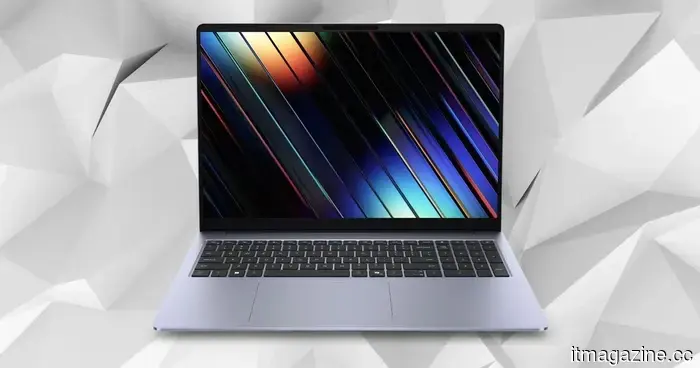 Dell broadens its AI PC range with the introduction of the new sleek Dell 14s and 16s laptops.
Dell has introduced the new 14S and 16S AI PCs featuring Intel Core Ultra processors, options for OLED displays, and extended battery life, all in more streamlined designs.
Dell broadens its AI PC range with the introduction of the new sleek Dell 14s and 16s laptops.
Dell has introduced the new 14S and 16S AI PCs featuring Intel Core Ultra processors, options for OLED displays, and extended battery life, all in more streamlined designs.
 Apple should simply apply the Neo approach to its forthcoming iPhone 18e, and I'll be interested.
Apple ought to evolve the iPhone 18e into a vibrant, compact, personality-focused "Neo" device rather than producing yet another simplified variant of its flagship series.
Apple should simply apply the Neo approach to its forthcoming iPhone 18e, and I'll be interested.
Apple ought to evolve the iPhone 18e into a vibrant, compact, personality-focused "Neo" device rather than producing yet another simplified variant of its flagship series.
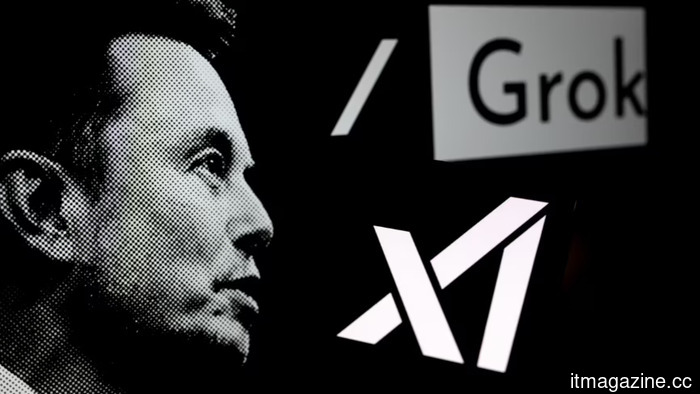 Musk's X has made a commitment to the UK regulator regarding hate speech, while the Grok investigation remains ongoing.
X has reached an agreement with Ofcom to assess illegal hate and terrorism posts within an average of 24 hours and provide quarterly reports. Additionally, a distinct investigation in the UK concerning X, which includes Grok, is still ongoing.
Musk's X has made a commitment to the UK regulator regarding hate speech, while the Grok investigation remains ongoing.
X has reached an agreement with Ofcom to assess illegal hate and terrorism posts within an average of 24 hours and provide quarterly reports. Additionally, a distinct investigation in the UK concerning X, which includes Grok, is still ongoing.
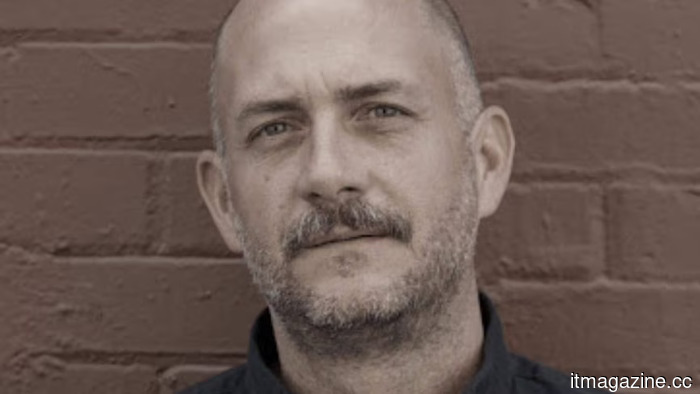 Robert Polacek from RoseBernard Studio discusses the reasons why AI should remain an unseen force in design.
Robert Polacek, co-founder of RoseBernard Studio, discusses how AI enhances creative productivity while still keeping designers in their roles, and highlights the competitive advantage that smaller studios possess in terms of agility.
Robert Polacek from RoseBernard Studio discusses the reasons why AI should remain an unseen force in design.
Robert Polacek, co-founder of RoseBernard Studio, discusses how AI enhances creative productivity while still keeping designers in their roles, and highlights the competitive advantage that smaller studios possess in terms of agility.
 AI-driven cryptocurrency hacks deplete $600 million from DeFi as North Korea capitalizes on the increase.
In April, two hacks resulted in North Korea-affiliated groups stealing $600 million from Drift Protocol and Kelp DAO. Analysts claim that AI played a significant role in expediting these attacks. Additionally, Aave experienced a $9 billion loss in deposits within just two days.
AI-driven cryptocurrency hacks deplete $600 million from DeFi as North Korea capitalizes on the increase.
In April, two hacks resulted in North Korea-affiliated groups stealing $600 million from Drift Protocol and Kelp DAO. Analysts claim that AI played a significant role in expediting these attacks. Additionally, Aave experienced a $9 billion loss in deposits within just two days.
 Apple ought to apply the Neo treatment to its soon-to-be-released iPhone 18e, and I would definitely be interested.
Apple ought to develop the iPhone 18e into a vibrant, compact, personality-focused "Neo" device rather than just another simplified version of its flagship series.
Apple ought to apply the Neo treatment to its soon-to-be-released iPhone 18e, and I would definitely be interested.
Apple ought to develop the iPhone 18e into a vibrant, compact, personality-focused "Neo" device rather than just another simplified version of its flagship series.
Robert Polacek from RoseBernard Studio discusses the role of AI in design and argues that it should remain in the background.
Robert Polacek, co-founder of RoseBernard Studio, discusses how artificial intelligence enhances creative productivity without substituting designers, and highlights the advantage smaller studios have in terms of agility.