
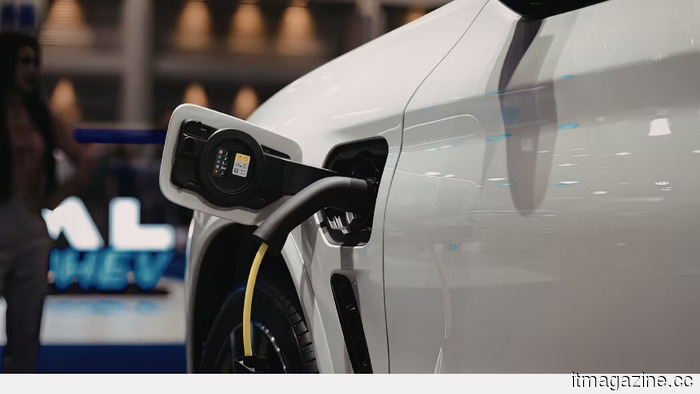
Bolt collaborates with China's Dongfeng to introduce an electric vehicle ride-hailing fleet in South Africa.
**TL;DR** Bolt has teamed up with China's Dongfeng Motor Group to introduce electric vehicles to its ride-hailing platform in South Africa, beginning in Cape Town. The Estonian company claims over 50% market share in the nation after investing about $180 million. This partnership combines Dongfeng’s Box hatchback and 007 sedan with Bolt’s driver network, as increasing fuel prices make EVs more appealing for ride-hailing operations.
Bolt Technology, the Estonian ride-hailing firm that has invested around $180 million to secure a leading market position in South Africa, has formed a partnership with China’s Dongfeng Motor Group to deploy an electric vehicle fleet in the region. The initiative will kick off in Cape Town, featuring Dongfeng's Box hatchback and premium 007 sedan available to riders via Bolt’s platform. A fleet management firm named Yugo Rides will be responsible for managing the vehicles.
This collaboration is a response to two unfolding trends: the growing global demand for Chinese electric vehicles and the economic strain imposed by rising fuel prices, exacerbated by the conflict in Iran, on ride-hailing drivers in developing markets. Simo Kalajdzic, head of Bolt’s South African operations, noted that the company is adopting a gradual rollout strategy due to infrastructure limitations, particularly the availability of charging stations.
**Why South Africa is important for Bolt**
Bolt asserts that it holds over 50% of the ride-hailing market in Africa's largest economy, a statistic that, if true, would position South Africa as one of the few markets globally where Uber does not lead. The company claims to have invested around $180 million to develop its local operations and consistently ranks South Africa among its top ten markets worldwide. Kalajdzic described the nation as a "strong strategic priority."
This investment is part of a larger expansion effort spanning over 50 countries and 850 cities. Following a funding round in 2022 that valued Bolt at €7.4 billion after raising €628 million from investors, including Sequoia Capital and Fidelity Management, the company has since ventured into East Asia with a launch in Taiwan and has also entered Canada under the sub-brand Hopp. Additionally, it has introduced scooters in Washington, DC.
**The case for EVs in ride-hailing**
The rationale for electrifying a ride-hailing fleet in South Africa is clear but complex. Fuel expenses represent one of the most significant costs for drivers on any ride-hailing platform, and the recent spikes in oil prices linked to the Iran conflict have intensified this challenge. Electric vehicles present considerably lower operating costs per kilometer, which could theoretically enhance driver earnings and attract new drivers to the platform.
However, infrastructure remains a key challenge. South Africa’s charging network is still underdeveloped compared to those in Europe or China, and the country’s electricity grid has long been known for its unreliability, though instances of load-shedding have recently decreased. Bolt's gradual implementation beginning in Cape Town, where the charging infrastructure is superior to that of most South African cities, indicates the company understands that scaling an electric fleet will require time.
For Dongfeng, this partnership provides a distribution channel in a market where Chinese automakers are becoming more competitive but lack the consumer brand recognition that companies like BYD have achieved in Europe and Southeast Asia. Collaborating with a ride-hailing platform enables Dongfeng to showcase its vehicles to millions of riders without having to establish a retail network from the ground up.
**The IPO consideration**
This agreement with South Africa comes at a time when Bolt is contemplating an initial public offering. Kalajdzic stated that the company will "consider options when market conditions are favorable," a common phrasing used by venture-backed firms anticipating an IPO but not yet committed to one. Bolt’s private valuation of €7.4 billion dates back to 2022, and since then, market conditions for ride-hailing IPOs have changed significantly, particularly as Uber’s stock has shown the difficulties of maintaining high valuations in the sector.
In this context, the partnership with Dongfeng could serve a dual purpose. Successfully demonstrating the ability to electrify its fleet in a key market would bolster Bolt’s appeal to public investors, particularly those concerned with environmental, social, and governance factors. Furthermore, it would set Bolt apart from Uber, which has heavily invested in autonomous vehicles but has been slower to electrify its traditional fleet in emerging markets.
The viability of this economic model at scale remains uncertain. The current deal is limited in scope, involving a phased introduction of two Dongfeng models in a single city, and Bolt has not disclosed the financial specifics or the number of vehicles involved. Nonetheless, it signals a strategic direction that, if successful, could be implemented across Bolt’s operations in Africa and other emerging markets. For a company that has carved out its niche by being more affordable and efficient than Uber in markets that the American firm considered secondary, the move toward electrification is a logical progression.
Other articles
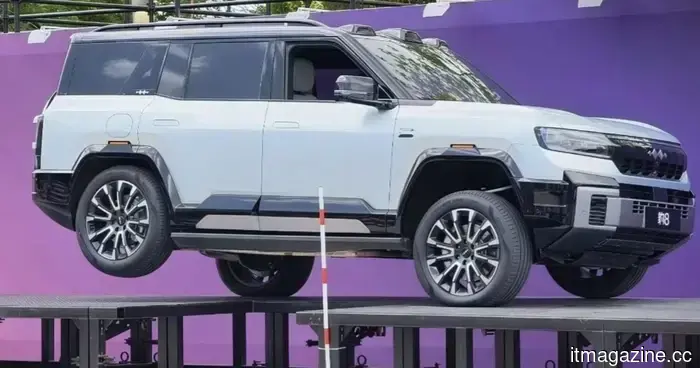 After excelling in range and charging, Chinese EV brands showcase three-wheel driving in SUVs.
Chinese electric vehicle brands are utilizing active suspension as a new feature for their SUVs, with BYD, Aito, and Li Auto showcasing three-wheel driving demonstrations that may assist with tire changes, recovery, and navigating rough terrain.
After excelling in range and charging, Chinese EV brands showcase three-wheel driving in SUVs.
Chinese electric vehicle brands are utilizing active suspension as a new feature for their SUVs, with BYD, Aito, and Li Auto showcasing three-wheel driving demonstrations that may assist with tire changes, recovery, and navigating rough terrain.
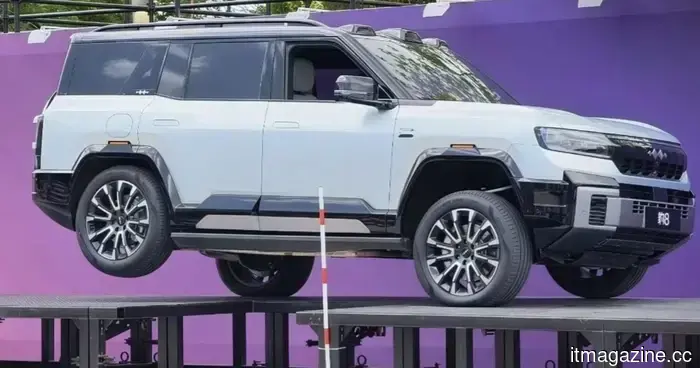 Having excelled in range and charging capabilities, Chinese EV manufacturers showcase three-wheel drive technology in their SUVs.
Chinese electric vehicle brands are making active suspension a highlight of their SUVs, as BYD, Aito, and Li Auto demonstrate three-wheel driving capabilities that may assist with tire changes, vehicle recovery, and navigating rough terrain.
Having excelled in range and charging capabilities, Chinese EV manufacturers showcase three-wheel drive technology in their SUVs.
Chinese electric vehicle brands are making active suspension a highlight of their SUVs, as BYD, Aito, and Li Auto demonstrate three-wheel driving capabilities that may assist with tire changes, vehicle recovery, and navigating rough terrain.
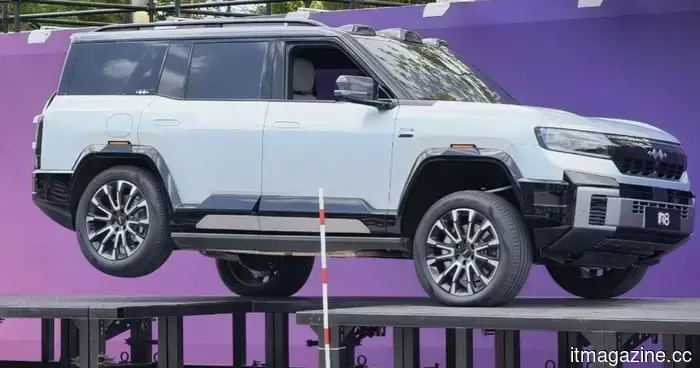 After excelling in range and charging capabilities, Chinese EV brands showcase three-wheel driving features in their SUVs.
Chinese electric vehicle brands are making active suspension their next highlight for SUVs, with BYD, Aito, and Li Auto showcasing three-wheel driving demonstrations that may assist with tire changes, recovery, and traversing rough terrain.
After excelling in range and charging capabilities, Chinese EV brands showcase three-wheel driving features in their SUVs.
Chinese electric vehicle brands are making active suspension their next highlight for SUVs, with BYD, Aito, and Li Auto showcasing three-wheel driving demonstrations that may assist with tire changes, recovery, and traversing rough terrain.
 Apple should simply apply the Neo approach to its forthcoming iPhone 18e, and I'll be interested.
Apple ought to evolve the iPhone 18e into a vibrant, compact, personality-focused "Neo" device rather than producing yet another simplified variant of its flagship series.
Apple should simply apply the Neo approach to its forthcoming iPhone 18e, and I'll be interested.
Apple ought to evolve the iPhone 18e into a vibrant, compact, personality-focused "Neo" device rather than producing yet another simplified variant of its flagship series.
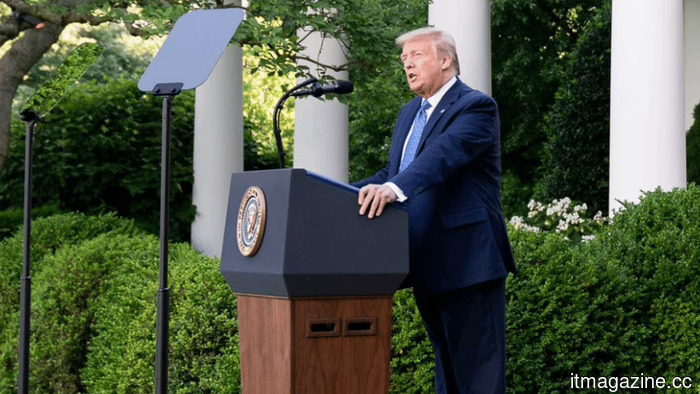 Trump departs from Beijing, indicating that he and Xi discussed AI regulations. No agreements were reached.
On Air Force One on Friday, Donald Trump stated that he and Xi Jinping talked about AI guardrails and Nvidia H200 chips during their meeting in Beijing. No agreement was reached, and the H200s for the ten approved Chinese buyers have not yet been delivered.
Trump departs from Beijing, indicating that he and Xi discussed AI regulations. No agreements were reached.
On Air Force One on Friday, Donald Trump stated that he and Xi Jinping talked about AI guardrails and Nvidia H200 chips during their meeting in Beijing. No agreement was reached, and the H200s for the ten approved Chinese buyers have not yet been delivered.
 Ultra-slim transparent solar panels offer the potential for discreet charging of wearables, vehicles, and residential spaces.
Researchers at NTU have created ultra-thin transparent solar cells that have the potential to transform windows, vehicle glass, and wearables into clean energy sources while maintaining their appearance.
Ultra-slim transparent solar panels offer the potential for discreet charging of wearables, vehicles, and residential spaces.
Researchers at NTU have created ultra-thin transparent solar cells that have the potential to transform windows, vehicle glass, and wearables into clean energy sources while maintaining their appearance.
Bolt collaborates with China's Dongfeng to introduce an electric vehicle ride-hailing fleet in South Africa.
Bolt, which asserts that it holds over 50% market share in South Africa following a $180 million investment, will provide Dongfeng's Box and 007 electric vehicles to passengers in Cape Town as fuel prices increase.