
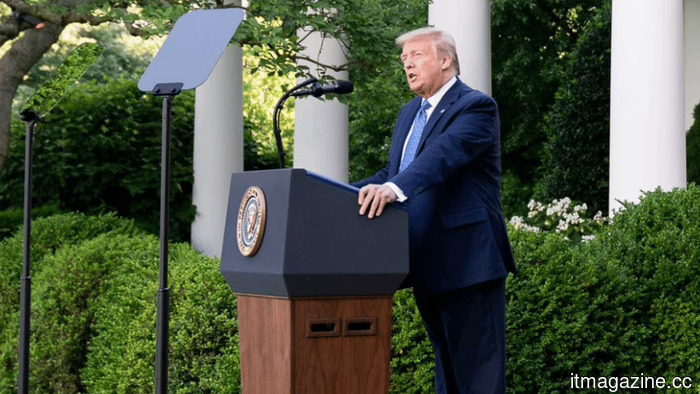
Trump departs from Beijing, indicating that he and Xi discussed AI regulations. No agreements were reached.
When asked about the type of guardrails discussed, the US president informed reporters on Air Force One that they were "standard guardrails that we talk about all the time." Deliveries of H200 chips to ten approved Chinese buyers continue to be stalled.
According to Bloomberg, Donald Trump stated on Air Force One on Friday that he and Xi Jinping talked about AI guardrails and Nvidia's H200 chips during their two-day summit in Beijing. When queried about the specifics of the guardrails, the US president reiterated, "standard guardrails that we talk about all the time," and mentioned that the leaders discussed the possibility of collaborating on these issues.
The summit concluded without a signed framework for AI governance and did not see movement on the most anticipated aspects of the deal. Just before the summit on Thursday, Washington had authorized around ten Chinese tech companies, including Alibaba, Tencent, ByteDance, JD.com, and Lenovo, to purchase up to 75,000 H200 chips each under a new export-licensing system, as reported by CNBC. However, none of the H200 chips have been delivered to the approved buyers, and Chinese rare-earth exports remain approximately 50% lower than pre-restriction levels.
The term "standard guardrails" carries significant weight in the summary, as the US and Chinese governments have yet to reach an official agreement on what those guardrails would entail. Time's report on the meeting characterized AI as "the elephant in the room," indicating it was not the main focus, while discussions were primarily centered around trade and the H200 situation. Conversations about a more comprehensive framework on autonomous weapons, model misuse, and dual-use AI were only mentioned in broad terms.
Senior officials provided background briefings suggesting that both governments are contemplating an ongoing dialogue regarding AI risk, but no schedule, working group, or formal agreement has been established during this round of talks.
The export-licensing system that allowed the ten Chinese buyers is notably complex. H200 shipments to China are limited to no more than 50% of Nvidia's domestic sales, every shipment must be verified by a US-based third-party lab, Chinese buyers must confirm the chips will not be used for military purposes, and the arrangement includes a 25% revenue share routed through US territory. The current outcome has resulted in a paper clearance rather than actual shipments.
Senate Democratic leader Chuck Schumer remarked that "allowing China access to this leading US technology is risky and threatens our position in the AI race." The administration, as articulated by Nvidia's Jensen Huang last week, claims that the H200 is one generation behind the Blackwell line still under export controls, and that maintaining sales to regulated Chinese demand keeps revenue and US jobs within the country.
China’s controls on rare earths, instituted last year in retaliation for earlier US tariffs, continue to affect Western magnet and motor supply chains and were not resolved during the discussions on AI. Rare earths and chips are both in the same negotiating category on the agendas of both governments, but they did not advance together in Beijing.
The corporate implications are evident in the larger AI capital expenditure cycle. Hyperscalers have pledged over $650 billion to AI infrastructure through 2026, based on combined Q1 figures from Microsoft, Alphabet, Amazon, Meta, and Apple, with Nvidia positioned at the core of the supply side of that expenditure. A revenue stream from China, even at regulated volumes with a 25% pass-through, would significantly alter Nvidia's medium-term outlook. The trajectory shared by Microsoft and OpenAI represents the visible US side of the scenario, while Huawei's Ascend chips are the aspect the export regime is implicitly attempting to curtail.
In this context, Trump's statement from Air Force One is more a procedural indication than a substantive announcement on AI policy. The president confirmed that discussions on AI guardrails and H200s took place and that the licensing regime established earlier in the week remains active regarding the chips. However, the anticipated signed document did not materialize.
Other articles
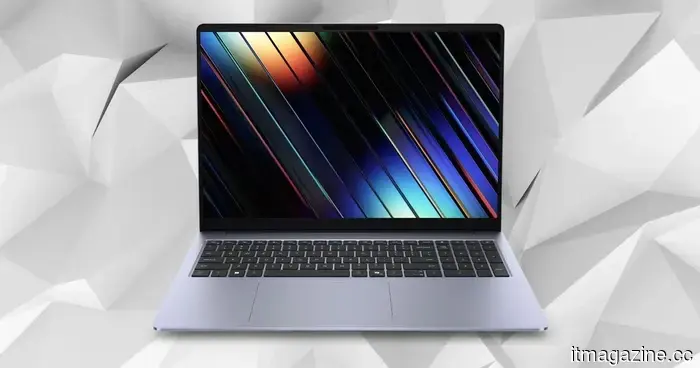 Dell broadens its AI PC range with the introduction of the new sleek Dell 14s and 16s laptops.
Dell has introduced the new 14S and 16S AI PCs featuring Intel Core Ultra processors, options for OLED displays, and extended battery life in more streamlined designs.
Dell broadens its AI PC range with the introduction of the new sleek Dell 14s and 16s laptops.
Dell has introduced the new 14S and 16S AI PCs featuring Intel Core Ultra processors, options for OLED displays, and extended battery life in more streamlined designs.
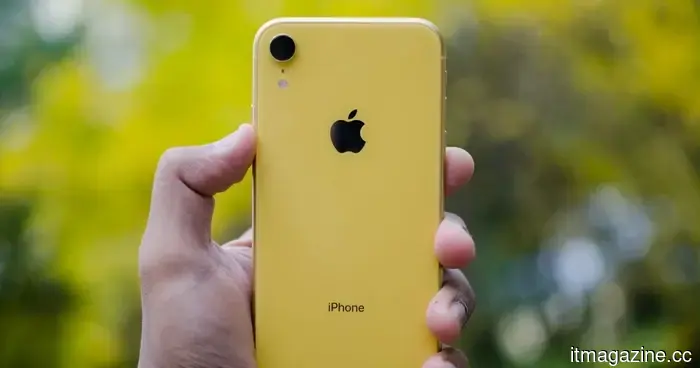 Apple should simply apply the Neo approach to its forthcoming iPhone 18e, and I'll be interested.
Apple ought to evolve the iPhone 18e into a vibrant, compact, personality-focused "Neo" device rather than producing yet another simplified variant of its flagship series.
Apple should simply apply the Neo approach to its forthcoming iPhone 18e, and I'll be interested.
Apple ought to evolve the iPhone 18e into a vibrant, compact, personality-focused "Neo" device rather than producing yet another simplified variant of its flagship series.
 How tokenized real-world assets are addressing the counterparty issues in cryptocurrency.
Tokenized money market funds are transforming institutional crypto trading by separating custody from execution, reducing settlement failures, and ensuring capital remains yield-bearing continuously.
How tokenized real-world assets are addressing the counterparty issues in cryptocurrency.
Tokenized money market funds are transforming institutional crypto trading by separating custody from execution, reducing settlement failures, and ensuring capital remains yield-bearing continuously.
 Robert Polacek from RoseBernard Studio discusses the role of AI in design and argues that it should remain in the background.
Robert Polacek, co-founder of RoseBernard Studio, discusses how artificial intelligence enhances creative productivity without substituting designers, and highlights the advantage smaller studios have in terms of agility.
Robert Polacek from RoseBernard Studio discusses the role of AI in design and argues that it should remain in the background.
Robert Polacek, co-founder of RoseBernard Studio, discusses how artificial intelligence enhances creative productivity without substituting designers, and highlights the advantage smaller studios have in terms of agility.
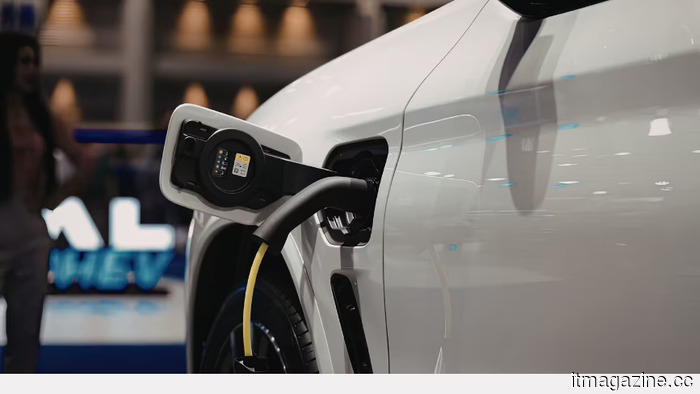 Bolt collaborates with China's Dongfeng to introduce an electric vehicle ride-hailing fleet in South Africa.
Bolt, which asserts a market share of over 50% in South Africa following a $180M investment, will provide Dongfeng's Box and 007 electric vehicles to passengers in Cape Town amid increasing fuel prices.
Bolt collaborates with China's Dongfeng to introduce an electric vehicle ride-hailing fleet in South Africa.
Bolt, which asserts a market share of over 50% in South Africa following a $180M investment, will provide Dongfeng's Box and 007 electric vehicles to passengers in Cape Town amid increasing fuel prices.
 AI-driven cryptocurrency hacks siphon off $600 million from DeFi as North Korea takes advantage of the increase.
Two hacks in April resulted in North Korea-affiliated groups securing $600 million from Drift Protocol and Kelp DAO. Analysts indicate that AI played a role in hastening the attacks. Aave experienced a loss of $9 billion in deposits over the course of two days.
AI-driven cryptocurrency hacks siphon off $600 million from DeFi as North Korea takes advantage of the increase.
Two hacks in April resulted in North Korea-affiliated groups securing $600 million from Drift Protocol and Kelp DAO. Analysts indicate that AI played a role in hastening the attacks. Aave experienced a loss of $9 billion in deposits over the course of two days.
Trump departs from Beijing, indicating that he and Xi discussed AI regulations. No agreements were reached.
On Air Force One on Friday, Donald Trump stated that he and Xi Jinping talked about AI guardrails and Nvidia H200 chips during their meeting in Beijing. No agreement was reached, and the H200s for the ten approved Chinese buyers have not yet been delivered.