
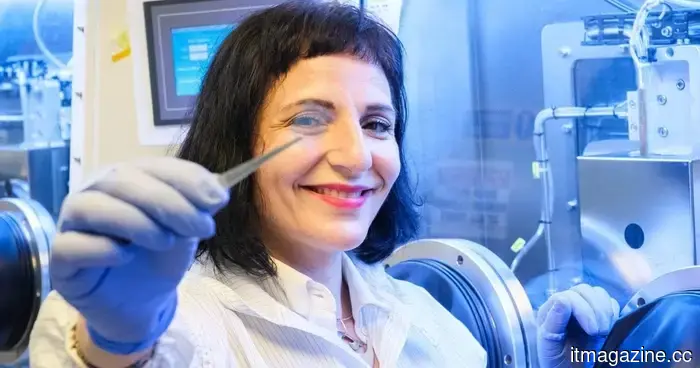
Ultra-slim transparent solar panels offer the potential for discreet charging of wearables, vehicles, and residential spaces.
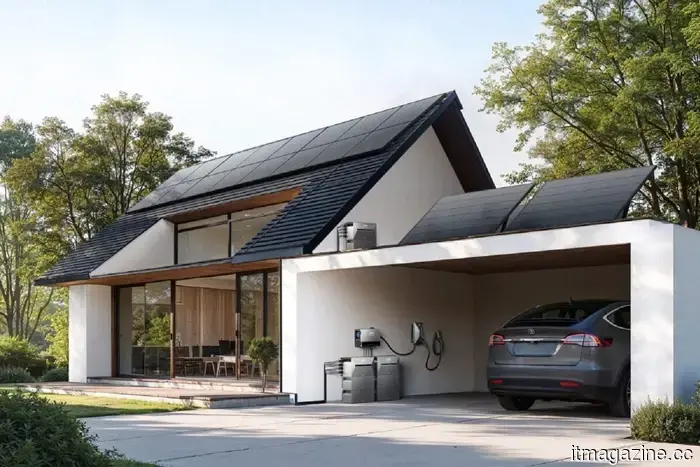
A new type of nearly invisible solar cell has the potential to enable ordinary glass surfaces to produce electricity in the future. This could encompass car windows, sunroofs, smart glasses, wearables, building facades, and residential windows.
Researchers at Nanyang Technological University in Singapore have created ultrathin transparent perovskite solar cells that are approximately 10,000 times thinner than a human hair and about 50 times thinner than traditional perovskite solar cells. The research team at NTU, led by Associate Professor Annalisa Bruno, published their findings in ACS Energy Letters (as reported by TechXplore).
Can solar cells be integrated into everyday glass?
These solar cells are semi-transparent and color-neutral, enabling them to be integrated into glass without resembling conventional solar panels. This technology could be particularly beneficial in urban areas where rooftops are already utilized for solar energy, yet windows and vertical glass facades remain largely unexploited.
Researchers worldwide are striving to make solar technology more accessible and visually appealing for everyday consumers. While some are developing colorful solar cells to enhance the aesthetic of home panels, NTU’s focus is on creating solar cells that can seamlessly blend into glass. If successful on a larger scale, this innovation could address one of solar energy's significant hurdles by producing clean energy without requiring changes to the appearance of homes, vehicles, or devices.
NTU reports that these cells can generate electricity from indirect and diffuse light, making them suitable for densely populated urban buildings with limited direct sunlight. If effectively scaled, large glass-fronted structures could theoretically produce hundreds of megawatt-hours of electricity annually, depending on their orientation and the amount of usable glass.
What obstacles must be overcome before commercial deployment?
The cells were created using a method known as thermal evaporation, where materials are heated in a vacuum chamber until they vaporize and subsequently settle into a very thin layer. NTU explains that this technique facilitates uniform layers over extensive areas, avoids the use of toxic solvents, and allows researchers to control the transparency of the solar cells.
The most successful result came from a 60 nanometer opaque cell, which achieved approximately 12% efficiency. Thinner opaque versions achieved efficiencies of about 11% at 30 nanometers and 7% at 10 nanometers. The 60 nanometer semi-transparent model permitted roughly 41% of visible light to pass through, achieving 7.6% efficiency.
In comparison, standard rooftop solar panels tend to be much more efficient, with many commercial residential panels converting approximately 18% to 24% of sunlight into electricity. NTU’s semi-transparent cells do not aim to surpass those panels in terms of raw efficiency; their key advantage lies in their potential to be installed in locations where traditional solar panels would be impractical or unwelcome.
This research is currently in the lab stage and is not yet ready for commercial application in windows, vehicles, or wearables. NTU has filed a patent and is in discussions with companies to validate the manufacturing process. The researchers still need to demonstrate that the cells can maintain stability, endure long-term usage, and perform effectively when produced over larger areas.
Other articles
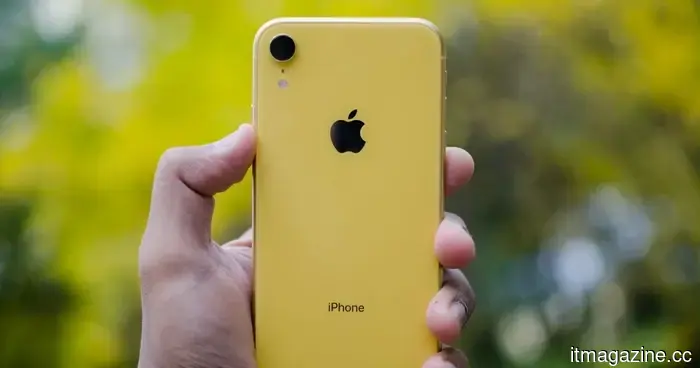 Apple should apply the Neo treatment to its upcoming iPhone 18e and I would definitely be interested.
Apple ought to evolve the iPhone 18e into a vibrant, compact, personality-centric “Neo” device rather than producing another minimalist iteration of its flagship series.
Apple should apply the Neo treatment to its upcoming iPhone 18e and I would definitely be interested.
Apple ought to evolve the iPhone 18e into a vibrant, compact, personality-centric “Neo” device rather than producing another minimalist iteration of its flagship series.
 Apple should apply the Neo approach to its soon-to-be-released iPhone 18e, and I would definitely be interested.
Apple ought to reshape the iPhone 18e into a vibrant, compact, and personality-focused "Neo" device rather than producing yet another simplified version of its flagship series.
Apple should apply the Neo approach to its soon-to-be-released iPhone 18e, and I would definitely be interested.
Apple ought to reshape the iPhone 18e into a vibrant, compact, and personality-focused "Neo" device rather than producing yet another simplified version of its flagship series.
 AI-driven cryptocurrency hacks siphon off $600 million from DeFi, with North Korea taking advantage of the increase.
In April, two hacks associated with North Korea-related groups resulted in the theft of $600 million from Drift Protocol and Kelp DAO. Analysts claim that AI played a role in speeding up the attacks. Aave experienced a $9 billion drop in deposits within just two days.
AI-driven cryptocurrency hacks siphon off $600 million from DeFi, with North Korea taking advantage of the increase.
In April, two hacks associated with North Korea-related groups resulted in the theft of $600 million from Drift Protocol and Kelp DAO. Analysts claim that AI played a role in speeding up the attacks. Aave experienced a $9 billion drop in deposits within just two days.
 How tokenized real-world assets are addressing the counterparty issue in cryptocurrency
Tokenized money market funds are transforming institutional crypto trading by separating custody from execution, reducing settlement failures, and ensuring that capital remains yield-generating continuously.
How tokenized real-world assets are addressing the counterparty issue in cryptocurrency
Tokenized money market funds are transforming institutional crypto trading by separating custody from execution, reducing settlement failures, and ensuring that capital remains yield-generating continuously.
 How tokenized real-world assets are addressing the counterparty issues in cryptocurrency.
Tokenized money market funds are transforming institutional crypto trading by separating custody from execution, reducing settlement failures, and ensuring capital remains yield-bearing continuously.
How tokenized real-world assets are addressing the counterparty issues in cryptocurrency.
Tokenized money market funds are transforming institutional crypto trading by separating custody from execution, reducing settlement failures, and ensuring capital remains yield-bearing continuously.
 After excelling in range and charging capabilities, Chinese EV brands showcase three-wheel driving features in their SUVs.
Chinese electric vehicle brands are making active suspension their next highlight for SUVs, with BYD, Aito, and Li Auto showcasing three-wheel driving demonstrations that may assist with tire changes, recovery, and traversing rough terrain.
After excelling in range and charging capabilities, Chinese EV brands showcase three-wheel driving features in their SUVs.
Chinese electric vehicle brands are making active suspension their next highlight for SUVs, with BYD, Aito, and Li Auto showcasing three-wheel driving demonstrations that may assist with tire changes, recovery, and traversing rough terrain.
Ultra-slim transparent solar panels offer the potential for discreet charging of wearables, vehicles, and residential spaces.
Researchers at NTU have created ultra-thin transparent solar cells that have the potential to transform windows, vehicle glass, and wearables into clean energy sources while maintaining their appearance.