
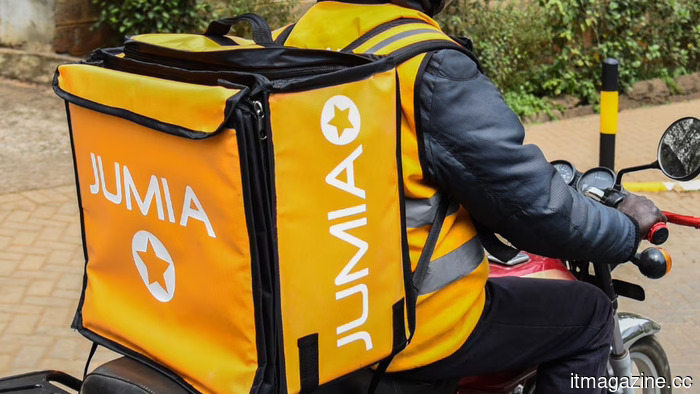
Jumia is reducing its workforce by an additional 10%. The context is centered around AI, while the aim is to achieve profitability by the set deadline.
Francis Dufay informed Bloomberg TV that the African e-commerce company is integrating AI into its operations, logistics, finance, and marketing, aiming for profitability by the end of the year. The current reduction of 200 jobs adds to a workforce that has already decreased by over half since 2022.
Jumia Technologies is set to eliminate approximately 200 positions, which constitutes about 10% of its existing workforce of 2,000, as it strives for profitability by the end of 2026. Dufay mentioned on Bloomberg TV that the company is utilizing AI-driven processes in various areas.
This narrative mirrors the approach Big Tech has adopted over the past year, though the underlying issues are longstanding. Jumia's workforce was 4,318 at the end of 2022, but it has now dwindled to just under 2,000, a reduction of around 54% over four years. In November 2025, a cut of 7% occurred, with the current reduction adding another 10%.
The company has also exited markets in South Africa and Tunisia, lost Baillie Gifford as its main external investor, and seen Rocket Internet, which supported Jumia since 2012, divest its remaining shares. By December 2025, total losses amounted to $2.2 billion, with AI now being cited as the explanation, even though the restructuring predates it.
The timing of these cuts aligns with Q1 performance. Jumia reported a revenue of $50.6 million for the quarter, reflecting a 39% year-on-year increase, with gross merchandise value rising 31% to $211.2 million, and adjusted EBITDA losses tightening by 32% to $10.7 million.
In Nigeria, Jumia's largest market, physical-goods GMV grew by 42%, and Kenya saw close to 50% growth. Dufay has reiterated projections for adjusted EBITDA breakeven and positive cash flow in Q4, aiming for full-year profitability by 2027. The size of the job cuts is intended to bridge the gap between Q1 results and the projected Q4 figures.
According to the company, AI is primarily implemented in back-office functions and the call center. Customer service is the first area mentioned in Jumia's automation strategy, followed by marketing operations and the management of logistics inquiries.
General and administrative expenses dropped 7% to $17.6 million in Q3 2025 due to similar workflows, and the current job cuts aim to reduce this figure even further. The underlying assumption is that Jumia can maintain its platform with 1,800 employees instead of 2,000, and that the additional automation will offset costs before it affects customer experience.
Over the past eighteen months, the African tech sector has grappled with AI-related restructuring at a pace comparable to that of the US sector. Flutterwave reduced its workforce by about half in Kenya and South Africa in mid-2025 in preparation for a potential IPO.
Sabi downsized by 20% and shifted its focus to commodities, while MAX, a Nigerian mobility-financing startup, began 2025 by letting go of 30% of its staff. Jumia's recent reductions align with this broader trend, which is part of the larger wave of tech layoffs in 2026 that has surpassed 100,000 job losses worldwide.
The debate over whether AI is the driving factor or merely a convenient narrative for these moves has persisted throughout the year. Mark Zuckerberg recently told Meta employees that the company's own job cuts were more about capital expenditures than AI efficiency, indicating that the AI explanation has become the most straightforward justification for such decisions.
Although Jumia is smaller and has less to gain from this narrative, the trend remains: AI is being adopted; cost-cutting is the strategy being pursued; and the marketing rhetoric is what garners attention.
For workers in the African tech sector, the significant question is whether the AI productivity narrative holds true at Jumia's scale. The continent lacks the GPU infrastructure, model expertise, and budgeting for inferences that Big Tech employs to substantiate similar claims.
The cost of replacing a call center position in Lagos with an LLM is lower and closer than that of replacing an engineering role in Menlo Park with a coding agent, which explains why such cuts are occurring first and why the social implications appear different.
The crucial metric to observe is the Q4 EBITDA outcome. If Jumia achieves this target, the AI narrative will effectively become the primary explanation. If it falls short, this framing will then become just one of several reasons that, based on the evidence, were insufficient.
Other articles
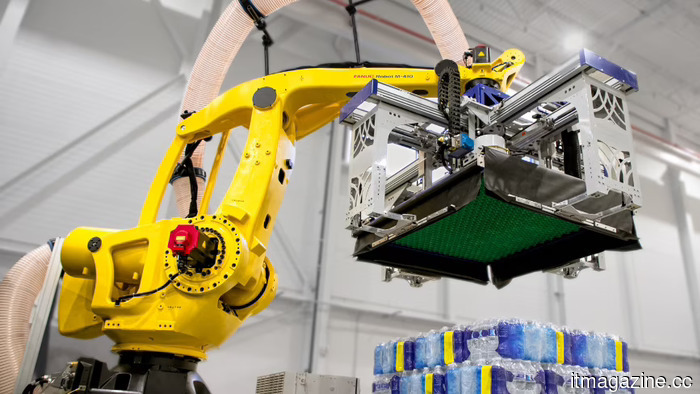 Fanuc collaborates with Google to integrate Gemini AI and the Intrinsic platform into 1.1 million industrial robots.
Fanuc's stock reached an all-time high following its collaboration with Google to incorporate Gemini Enterprise and the Intrinsic robotics platform into its global industrial robot systems.
Fanuc collaborates with Google to integrate Gemini AI and the Intrinsic platform into 1.1 million industrial robots.
Fanuc's stock reached an all-time high following its collaboration with Google to incorporate Gemini Enterprise and the Intrinsic robotics platform into its global industrial robot systems.
 Furry robotic seals are being utilized for mental health support at a hospital in the UK.
An NHS trust in Kent and Medway is testing out PARO, a therapeutic robot baby seal, to assist patients with learning disabilities in feeling more at ease during their appointments.
Furry robotic seals are being utilized for mental health support at a hospital in the UK.
An NHS trust in Kent and Medway is testing out PARO, a therapeutic robot baby seal, to assist patients with learning disabilities in feeling more at ease during their appointments.
 Samsung's AI smart glasses are expected to launch in July, and they may be called Galaxy Glasses.
Samsung might unveil the Galaxy Glasses at the Unpacked event in July, integrating Android XR and Gemini with cameras, microphones, and speakers to create a voice-first AI wearable connected to the Galaxy ecosystem.
Samsung's AI smart glasses are expected to launch in July, and they may be called Galaxy Glasses.
Samsung might unveil the Galaxy Glasses at the Unpacked event in July, integrating Android XR and Gemini with cameras, microphones, and speakers to create a voice-first AI wearable connected to the Galaxy ecosystem.
 Top ITGC Tools and Software for SOX Compliance in 2026
In 2026, we evaluated the top ITGC tools for SOX compliance, which included Scytale, Pathlock, ServiceNow GRC, Workiva, MetricStream, Archer, and others.
Top ITGC Tools and Software for SOX Compliance in 2026
In 2026, we evaluated the top ITGC tools for SOX compliance, which included Scytale, Pathlock, ServiceNow GRC, Workiva, MetricStream, Archer, and others.
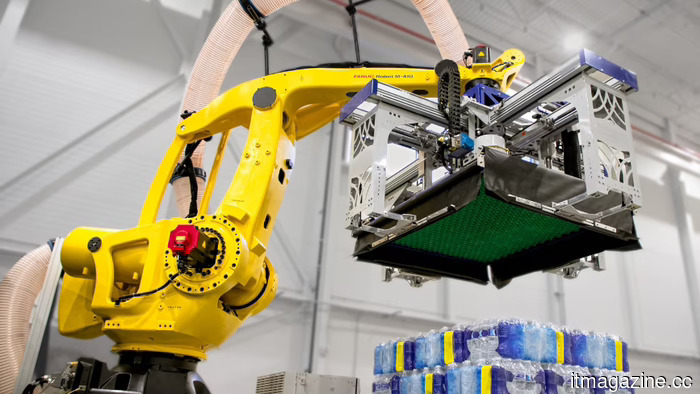 Fanuc collaborates with Google to introduce Gemini AI and the Intrinsic platform to 1.1 million industrial robots.
Fanuc's stock reached an all-time high following its collaboration with Google to merge Gemini Enterprise and the Intrinsic robotics platform into its industrial robotic systems globally.
Fanuc collaborates with Google to introduce Gemini AI and the Intrinsic platform to 1.1 million industrial robots.
Fanuc's stock reached an all-time high following its collaboration with Google to merge Gemini Enterprise and the Intrinsic robotics platform into its industrial robotic systems globally.
 Meta and Google support the children's organizations they reference to regulators.
Meta and Google established a network in the U.S. focused on advocating for children, which they reference to regulators. The PTA withdrew in February. Reuters provides the remaining details.
Meta and Google support the children's organizations they reference to regulators.
Meta and Google established a network in the U.S. focused on advocating for children, which they reference to regulators. The PTA withdrew in February. Reuters provides the remaining details.
Jumia is reducing its workforce by an additional 10%. The context is centered around AI, while the aim is to achieve profitability by the set deadline.
Jumia is reducing its workforce by an additional 10%, attributing the decision to AI workflows. Since 2022, the company has eliminated over half of its employees. The deadline for achieving profitability in Q4 is approaching.