
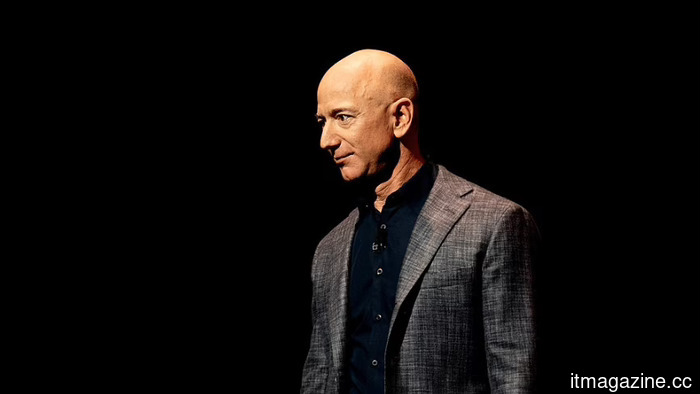
After 25 years of personally signing the checks, Bezos is now allowing outside investors into Blue Origin.
Dave Limp informed an all-hands meeting that external funding is now a possibility, just weeks before SpaceX is anticipated to set the price for what would be the largest IPO in history at $1.75 trillion. The target for launch cadence is 100 launches per year, and the total expenses incurred so far amount to approximately $28 billion.
Blue Origin is preparing to accept external funding for the first time in its 25-year existence. During a recent all-hands meeting, Chief Executive Dave Limp conveyed to employees that the company’s launch cadence goals would require more capital than a single investor could reasonably provide, hence external funding is now an option, according to two attendees mentioned by the Financial Times.
The timing of this announcement is notable. SpaceX aims for a June initial public offering at a valuation of $1.75 trillion, which would surpass Saudi Aramco as the largest IPO ever. The S-1 was confidentially submitted on April 1 under the codename Project Apex.
Reuters has reported that SpaceX plans to raise $75 billion, with up to 30% of the offering reserved for individual investors. As the bookbuild approaches in three weeks, interest in any products related to rockets is at its highest since 2021, prompting Blue Origin’s chief executive to indicate to his team that the company is open to discussions about funding at this time.
The financial landscape clarifies the shift in strategy. Blue Origin is projected to spend roughly $4.8 billion this year, according to Capstone analyst Josh Parker, and has expended nearly $28 billion since its establishment in 2000. Jeff Bezos has financed all of this, primarily through sales of Amazon stock. He now owns 9% of Amazon, down from over 10% last year, following a series of systematic disposals that will continue through May 29 under his current trading strategy. Although he can still fund the company, he is no longer required to do so.
The cadence target underscores the pressing need for additional financing. Blue Origin reached orbit for the first time in January 2025 with the New Glenn, a 98-meter heavy-lift rocket that succeeded in its first mission but lost its first stage during descent. Limp mentioned in April that the company aims for eight to twelve flights this year, a decrease from an earlier internal goal of fourteen. The long-term ambition is to conduct 100 launches annually.
Most of these launches are intended to deploy the TeraWave satellite constellation, a network of 5,408 spacecraft that Blue Origin unveiled in January, aimed at providing terabit-class connectivity to data-center operators and businesses, rather than individual consumers.
Limp was primarily discussing employee compensation during the Q&A, which revolved around a new stock-option plan designed to enable secondary sales akin to those used by SpaceX and OpenAI to allow employees to exercise options without an IPO. “We crafted this plan specifically for that purpose,” he stated. This same reasoning supports a primary funding round, and Limp did not disguise this fact: the company needed to be “prepared for external funding,” and he anticipated considerable interest.
He also expressed that he did not foresee Bezos selling Blue Origin, while not dismissing the possibility of a future IPO.
Determining what the funding round would actually be valued at is more complex. Blue Origin boasts a reliable heavy-lift vehicle, a $3.4 billion Artemis V lunar-lander contract, a satellite constellation that won’t initiate deployment until late 2027, and a launch cadence that fulfills only a fraction of its target requirements. SpaceX completed over 130 Falcon 9 missions in 2025 alone. The disparity, measured in multiples based on whatever valuation Blue Origin’s bankers eventually provide, forms the crux of the discussion.
The key aspect to observe is not whether the funding round occurs, but whether Bezos appears on the cap table afterward as an individual or as the head of a list.
Other articles
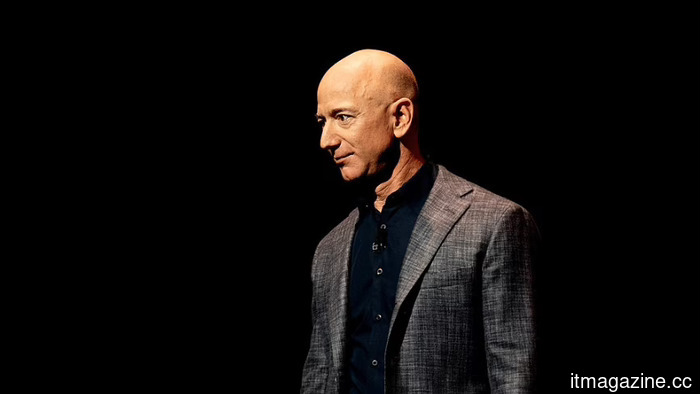 After 25 years of personally funding the cheques, Bezos is now making Blue Origin available to outside investors.
Blue Origin is set to accept external funding for the first time in its 25-year existence, just three weeks ahead of SpaceX's $1.75 trillion IPO pricing.
After 25 years of personally funding the cheques, Bezos is now making Blue Origin available to outside investors.
Blue Origin is set to accept external funding for the first time in its 25-year existence, just three weeks ahead of SpaceX's $1.75 trillion IPO pricing.
 If you drop the Steam Controller, it will make a loud noise, and I’m unsure how to react to that.
Valve included a humorous Easter egg in the new Steam Controller, leading many to abandon their sold-out $99 controllers just to activate the famous Wilhelm scream.
If you drop the Steam Controller, it will make a loud noise, and I’m unsure how to react to that.
Valve included a humorous Easter egg in the new Steam Controller, leading many to abandon their sold-out $99 controllers just to activate the famous Wilhelm scream.
 The six biggest banks on Wall Street eliminated 15,000 positions and reported profits of $47 billion. The CEOs ceased their pretenses.
In the first quarter of 2026, the six largest banks in the US cut 15,000 jobs while reporting profits of $47 billion. Their CEOs specifically attributed the job losses to the impact of AI. JPMorgan, Citi, Goldman Sachs, Bank of America, and Wells Fargo are now revealing...
The six biggest banks on Wall Street eliminated 15,000 positions and reported profits of $47 billion. The CEOs ceased their pretenses.
In the first quarter of 2026, the six largest banks in the US cut 15,000 jobs while reporting profits of $47 billion. Their CEOs specifically attributed the job losses to the impact of AI. JPMorgan, Citi, Goldman Sachs, Bank of America, and Wells Fargo are now revealing...
 The CMA has initiated its fourth Strategic Market Status investigation concerning Microsoft.
The CMA has initiated its fourth Strategic Market Status investigation, focusing on Microsoft's business software, which encompasses cloud licensing and the defaults of Copilot.
The CMA has initiated its fourth Strategic Market Status investigation concerning Microsoft.
The CMA has initiated its fourth Strategic Market Status investigation, focusing on Microsoft's business software, which encompasses cloud licensing and the defaults of Copilot.
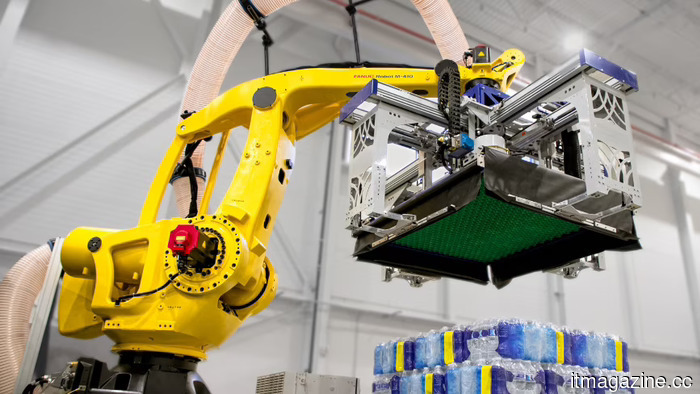 Fanuc collaborates with Google to integrate Gemini AI and the Intrinsic platform into 1.1 million industrial robots.
Fanuc stocks reached an all-time high following its collaboration with Google to incorporate Gemini Enterprise and the Intrinsic robotics platform into its global industrial robot systems.
Fanuc collaborates with Google to integrate Gemini AI and the Intrinsic platform into 1.1 million industrial robots.
Fanuc stocks reached an all-time high following its collaboration with Google to incorporate Gemini Enterprise and the Intrinsic robotics platform into its global industrial robot systems.
 Google may be working on a robust new Gemini AI model aimed at surpassing ChatGPT.
Google's upcoming Gemini model may close the AI gap, but the true challenge lies in its ability to capture developer routines, manage autonomous tasks, and make ChatGPT seem less robotic.
Google may be working on a robust new Gemini AI model aimed at surpassing ChatGPT.
Google's upcoming Gemini model may close the AI gap, but the true challenge lies in its ability to capture developer routines, manage autonomous tasks, and make ChatGPT seem less robotic.
After 25 years of personally signing the checks, Bezos is now allowing outside investors into Blue Origin.
Blue Origin is getting ready to accept external funding for the first time in its 25-year existence, just three weeks ahead of SpaceX's $1.75 trillion IPO pricing.