
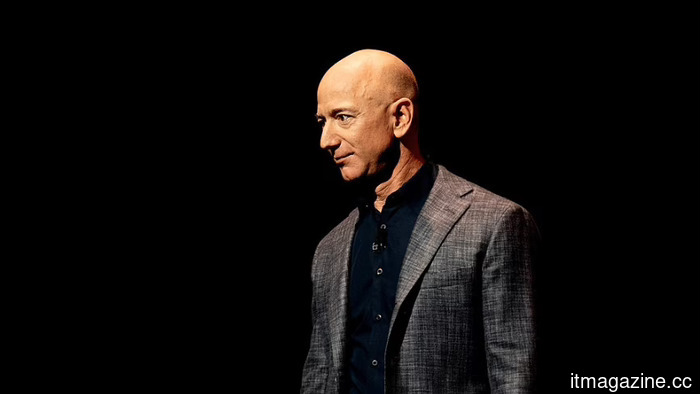
After 25 years of personally funding the cheques, Bezos is now making Blue Origin available to outside investors.
Dave Limp informed everyone at an all-hands meeting that the option for external funding is now available, just weeks before SpaceX is expected to announce the largest IPO ever at a valuation of $1.75 trillion. The target for launch cadence is set at 100 per year, with the total expenditure to date around $28 billion.
Blue Origin is getting ready to seek outside investment for the first time in its 25-year existence. During a recent all-hands meeting, Chief Executive Dave Limp explained that achieving the company's launch cadence goals would require more capital than could reasonably be provided by a single investor, leading to the consideration of external funding, as reported by two attendees mentioned in the Financial Times.
The timing is noteworthy. SpaceX plans to list in June with a $1.75 trillion valuation, making it the largest IPO in history, marginally above Saudi Aramco. The S-1 was confidentially filed on April 1 under the codename Project Apex.
According to Reuters, SpaceX is looking to raise $75 billion, with up to 30% reserved for retail investors. With only three weeks left before the bookbuild, interest in rocket-related investments has surged to its highest level since 2021, prompting Blue Origin's CEO to signal a welcoming attitude toward discussions about funding in front of his staff.
The financial context highlights the shift in strategy. Capstone analyst Josh Parker projects that Blue Origin will spend about $4.8 billion this year, bringing its total spending since 2000 to nearly $28 billion.
Jeff Bezos has financed all of this, primarily through the sale of Amazon stock. His stake in Amazon now stands at 9%, down from over 10% a year ago, following a year of systematic stock sales that are set to continue until May 29 as per his current trading plan. Although he is still one of the world's richest individuals capable of providing financial support, he is now looking at other options.
The cadence target makes the financial needs clear. Blue Origin successfully achieved orbit for the first time in January 2025 with New Glenn, a 98-meter heavy-lift rocket that succeeded on its first mission but lost its first stage during descent.
In April, Limp announced that the company plans to conduct eight to twelve flights this year instead of the previously aimed fourteen. The long-term objective remains at 100 launches annually.
Most of these launches are intended to deploy the TeraWave satellite constellation, a network of 5,408 satellites announced by Blue Origin in January, aimed at providing terabit-class connectivity to data centers and enterprises rather than direct to consumers.
During the meeting, Limp was ostensibly discussing employee compensation. The question-and-answer segment focused on a new stock-option plan designed to allow secondary sales similar to those utilized by SpaceX and OpenAI, enabling staff to exercise options without necessitating an IPO.
“We designed this plan specifically for that purpose,” he stated. The rationale also applies to a primary funding round, and Limp acknowledged that the company needed to be “prepared for external funding” and anticipated significant interest.
He expressed that he did not foresee Bezos selling Blue Origin and did not dismiss the possibility of a future IPO.
However, determining the actual valuation for the funding round is more challenging. Blue Origin has a reliable heavy-lift vehicle, a $3.4 billion contract for the Artemis V lunar lander, a satellite constellation that won’t begin deployment until late 2027, and a launch cadence that is currently only about one-eighth to one-tenth of its proposed targets.
In contrast, SpaceX completed over 130 Falcon 9 missions in 2025 alone. The disparity, expressed as multiples based on any valuation that Blue Origin's bankers might eventually assign, forms the crux of the discussion.
What will be crucial to observe is not whether the funding round occurs, but whether Bezos appears on the cap table afterwards as a singular name or as part of a broader list.
Other articles
 Reasons why international companies are transitioning to cryptocurrency for mass payments.
Large-scale cryptocurrency payouts are transforming the global payment system. Discover how crypto payouts to various recipients provide gig platforms with a scalable, quicker, and more dependable option compared to conventional payment methods.
Reasons why international companies are transitioning to cryptocurrency for mass payments.
Large-scale cryptocurrency payouts are transforming the global payment system. Discover how crypto payouts to various recipients provide gig platforms with a scalable, quicker, and more dependable option compared to conventional payment methods.
 Research reveals that EV batteries only require a little AI enhancement to receive a significant 23% increase in their lifespan.
Researchers have created a charging system powered by AI that accelerates the charging of electric vehicles while simultaneously safeguarding battery health, which could lead to an increase in battery life of almost 23%.
Research reveals that EV batteries only require a little AI enhancement to receive a significant 23% increase in their lifespan.
Researchers have created a charging system powered by AI that accelerates the charging of electric vehicles while simultaneously safeguarding battery health, which could lead to an increase in battery life of almost 23%.
 Reasons why global companies are shifting towards mass payouts with cryptocurrency.
Large-scale cryptocurrency payouts are transforming the global payment system. Discover how crypto payments to numerous recipients provide gig platforms with a scalable, quicker, and more dependable option compared to conventional payment methods.
Reasons why global companies are shifting towards mass payouts with cryptocurrency.
Large-scale cryptocurrency payouts are transforming the global payment system. Discover how crypto payments to numerous recipients provide gig platforms with a scalable, quicker, and more dependable option compared to conventional payment methods.
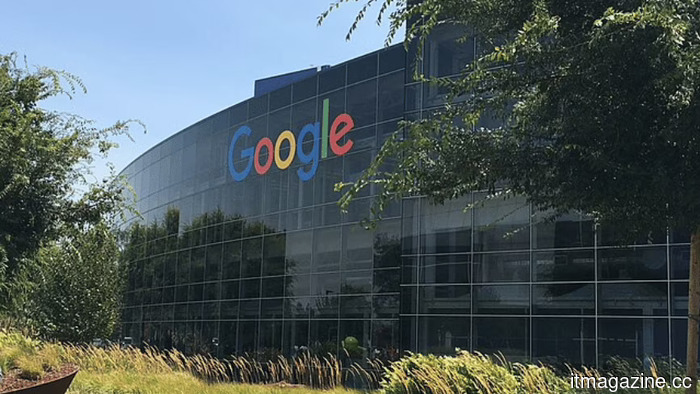 Meta and Google support the children's organizations they reference to regulators.
Meta and Google established a network in the U.S. focused on advocating for children, which they reference to regulators. The PTA withdrew in February. Reuters provides the remaining details.
Meta and Google support the children's organizations they reference to regulators.
Meta and Google established a network in the U.S. focused on advocating for children, which they reference to regulators. The PTA withdrew in February. Reuters provides the remaining details.
 Unitree GD01 robot revealed as the company prepares to file for a $7 billion IPO after surpassing Tesla in humanoid robot sales.
Unitree Robotics has introduced a $650,000 transformable mecha and is seeking to file for a $7 billion IPO. The Chinese firm delivered more humanoid robots than Tesla in 2025.
Unitree GD01 robot revealed as the company prepares to file for a $7 billion IPO after surpassing Tesla in humanoid robot sales.
Unitree Robotics has introduced a $650,000 transformable mecha and is seeking to file for a $7 billion IPO. The Chinese firm delivered more humanoid robots than Tesla in 2025.
 Meta and Google financially support the youth organizations they refer to when addressing regulators.
Meta and Google have established a network for advocating for children in the U.S. that they reference to regulators. The PTA withdrew in February. Reuters has the full list.
Meta and Google financially support the youth organizations they refer to when addressing regulators.
Meta and Google have established a network for advocating for children in the U.S. that they reference to regulators. The PTA withdrew in February. Reuters has the full list.
After 25 years of personally funding the cheques, Bezos is now making Blue Origin available to outside investors.
Blue Origin is set to accept external funding for the first time in its 25-year existence, just three weeks ahead of SpaceX's $1.75 trillion IPO pricing.