
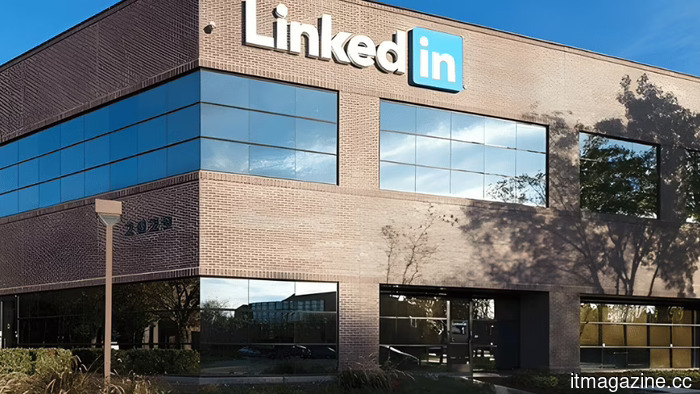
LinkedIn has joined the list of tech companies that have laid off 100,000 workers.
LinkedIn, Microsoft’s professional network, has become the latest addition to a growing list that includes Meta, Amazon, Oracle, and IBM, all of which are directing $725 billion toward AI capital expenditures this year. The company is eliminating approximately 5% of its workforce, marking the most recent cut at a Microsoft-acquired entity and the latest in a year-long contraction within Big Tech that has resulted in over 100,000 job losses across the industry.
In a letter to employees, CEO Ryan Roslansky outlined the layoffs, citing “changes in customer behavior and slower revenue growth” and a shift toward “a flatter organizational structure,” as reported by Bloomberg on Wednesday. LinkedIn had around 18,500 employees at the beginning of 2026, indicating layoffs of roughly 900 to 1,000 positions, though the exact number has not been confirmed by the company.
The larger picture is what frames the context. By May 13, the global tech sector had announced over 100,000 layoffs across roughly 250 different events, averaging about 880 layoffs per day according to industry monitors, with some trade reports indicating totals closer to 128,000 when factoring in cuts from smaller startups. The compilation by 24/7 Wall St., referencing tracker data, recorded the year-to-date layoffs at over 102,000 in early May, marking the highest level since the 2023 downturn.
A key trend is the contrast between payrolls and capital expenditures. Amazon, Microsoft, Alphabet, and Meta are collectively forecasting approximately $725 billion in capital spending for 2026, predominantly focused on AI infrastructure, GPUs, and data centers. This represents an increase from $462 billion in 2025 and is growing faster than at any time since the late 2010s cloud buildup. Conversely, headcount at these companies is declining, as evidenced by a rough total of over 50,000 job cuts in the past four months at Amazon, Meta, Microsoft, and their peers.
The upcoming layoffs from Meta stand out, as the company plans to lay off around 8,000 employees, or about 10% of its 78,865-strong workforce, beginning on May 20, with further cuts expected in the latter half of 2026. Notably, this follows recent protests by Meta US employees regarding the company's new mouse-tracking software, interpreted internally as an indicator of roles being absorbed by AI training data.
Microsoft's strategy has taken a different approach; instead of compulsory layoffs, in April the company initiated a voluntary-separation program for about 8,750 US employees, nearly 7% of its domestic workforce, based on a “Rule of 70” criteria involving years of service and age. This initiative marks the first of its kind in the company’s 51-year history, with final decisions communicated by May 7, allowing for a 30-day response period. The layoffs at LinkedIn are in addition to these Microsoft measures.
Amazon, while less vocal, is also experiencing larger layoffs. The company confirmed it was reducing 16,000 corporate positions starting in January, which brings total job losses since October 2025 to approximately 30,000, representing its largest workforce cut ever. CEO Andy Jassy described these adjustments as necessary to streamline layers from the rapid growth phase between 2020 and 2022, rather than reflecting direct substitution by AI. Amazon has also announced plans to hire 11,000 engineers this year, suggesting a shift in the structure of its workforce rather than an overall decrease.
Other smaller firms are following a similar trajectory albeit on a different scale. Oracle has cut around 30,000 jobs, roughly 20% of its global workforce. Companies like IBM, Salesforce, Cisco, and SAP have also reported layoffs this year. Contractors and consulting firms related to federal technology procurement have lost several thousand roles since the beginning of the year.
As of May 13, the TrueUp tracker recorded 286 layoff events at tech firms, impacting 128,270 workers. However, the data does not distinctly separate AI-related job displacement from cyclical restructuring. Earlier this month, The Washington Post suggested that attributing layoffs solely to AI is an oversimplification, as broader macroeconomic pressures also play a significant role. Contrarily, a CNBC analysis referenced economists calling the current situation an AI-driven labor crisis already in progress, highlighting a hiring manager survey where 44% identified AI as the primary cause behind the expected cuts in 2026.
Both perspectives could hold validity simultaneously. The companies engaging in the most aggressive layoffs are also those investing substantially in AI infrastructure, with job substitutions occurring at varying levels, including in recruitment, content moderation, customer support, and software testing, as well as through overall payroll adjustments to allocate more funds for capital expenditures.
Meta is particularly forthright about this; CEO Mark Zuckerberg stated during the company’s January earnings call that 2026 would be “the year that AI
Other articles
 Fractile's $220 million funding round comes as Anthropic targets its UK semiconductor operations.
Fractile has secured $220 million to bring its SRAM-based inference chip to market, with Accel leading the funding round and Pat Gelsinger participating as an investor.
Fractile's $220 million funding round comes as Anthropic targets its UK semiconductor operations.
Fractile has secured $220 million to bring its SRAM-based inference chip to market, with Accel leading the funding round and Pat Gelsinger participating as an investor.
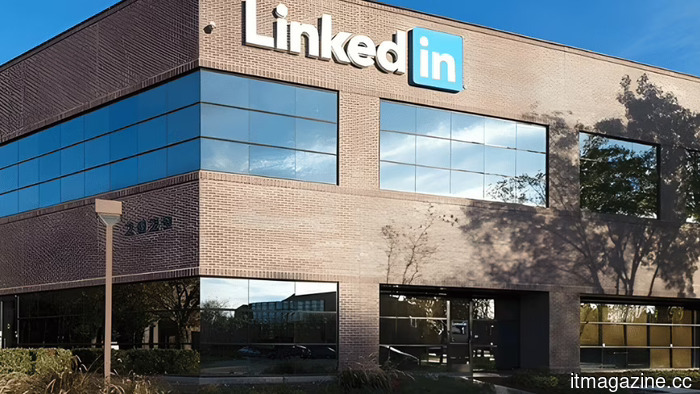 LinkedIn joins the list of tech companies that have laid off 100,000 workers.
LinkedIn is laying off approximately 5% of its workforce, marking the latest event in a series of tech layoffs in 2026 that has affected over 100,000 employees.
LinkedIn joins the list of tech companies that have laid off 100,000 workers.
LinkedIn is laying off approximately 5% of its workforce, marking the latest event in a series of tech layoffs in 2026 that has affected over 100,000 employees.
 Amazon integrates Alexa into the search bar as agentic commerce gains momentum.
Amazon is integrating Alexa for Shopping, a combined form of Rufus and Alexa+, into the primary search bar on Amazon.com.
Amazon integrates Alexa into the search bar as agentic commerce gains momentum.
Amazon is integrating Alexa for Shopping, a combined form of Rufus and Alexa+, into the primary search bar on Amazon.com.
 Googlebook laptops will feature various chip options in addition to Intel, which is quite reassuring.
Google has announced that Googlebook laptops will be compatible with chips from Intel, Qualcomm, and MediaTek. This ensures genuine hardware diversity from the outset, offering greater flexibility for consumers with varying needs and budgets.
Googlebook laptops will feature various chip options in addition to Intel, which is quite reassuring.
Google has announced that Googlebook laptops will be compatible with chips from Intel, Qualcomm, and MediaTek. This ensures genuine hardware diversity from the outset, offering greater flexibility for consumers with varying needs and budgets.
 Googlebook laptops will offer various chip options aside from just Intel, which is a reassuring development.
Google has confirmed that Googlebook laptops will utilize chips from Intel, Qualcomm, and MediaTek. This ensures a genuine variety of hardware from the start, providing greater flexibility for consumers with varying needs and budgets.
Googlebook laptops will offer various chip options aside from just Intel, which is a reassuring development.
Google has confirmed that Googlebook laptops will utilize chips from Intel, Qualcomm, and MediaTek. This ensures a genuine variety of hardware from the start, providing greater flexibility for consumers with varying needs and budgets.
 Fractile's $220 million funding round comes as Anthropic looks towards its UK silicon.
Fractile has secured $220 million to move its SRAM-based inference chip into production, with Accel as the leading investor and Pat Gelsinger also contributing.
Fractile's $220 million funding round comes as Anthropic looks towards its UK silicon.
Fractile has secured $220 million to move its SRAM-based inference chip into production, with Accel as the leading investor and Pat Gelsinger also contributing.
LinkedIn has joined the list of tech companies that have laid off 100,000 workers.
LinkedIn is reducing its workforce by approximately 5%, as part of a trend in 2026 that has seen over 100,000 employees laid off in the tech industry.