

Amazon integrates Alexa into the search bar as agentic commerce gains momentum.
The integrated Alexa for Shopping assistant is taking over the main search function as Amazon takes legal action to keep external AI agents like Perplexity’s Comet off its platform. Amazon is placing its AI shopping assistant directly into the primary search bar. From this week, US users typing in the search area on Amazon.com or using the Amazon app will now utilize Alexa for Shopping, a consolidated version of Rufus and the Alexa+ assistant that provides conversational replies, product comparisons, historical price data for up to a year, and customized shopping guides alongside regular product listings.
The Rufus brand is being phased out from the shopping interface. This chatbot, introduced in 2024 and utilized by over 300 million customers in 2025, is being integrated into the Alexa for Shopping branding across Amazon’s app, website, and Echo devices.
Amazon claims the new assistant can automate the reordering of household essentials, monitor prices, notify users about new products in tracked categories, and create shopping carts based on indicated preferences.
It does not require a Prime membership, an Echo device, or the standalone Alexa app, and is available for free to any signed-in US account.
The main change is that the AI now operates within the default search flow rather than being accessed via a separate icon. The original Rufus was accessible but optional. Alexa for Shopping transforms the search box into a conversational interface, similar to how Google’s AI Overviews have changed the search experience on Google.com.
Amazon describes this shift as making the assistant “agentic,” meaning it can perform multi-step tasks such as comparison, cart building, and reordering on behalf of the customer.
The competitive context enhances the significance of this placement. OpenAI introduced Instant Checkout in September 2025, in partnership with Stripe and an open-source Agentic Commerce Protocol that allows ChatGPT to complete purchases within its own interface.
Google is integrating Buy for Me into Gemini and operates its agent-to-agent protocol with over 150 partner organizations. Perplexity’s Comet browser has offered a Buy with Pro feature since late 2024, enabling checkout via PayPal at more than 5,000 merchants.
In China, Alibaba integrated its Qwen AI directly into Taobao for complete agentic shopping last quarter. Each of these routes the purchasing flow through entities other than Amazon.
The situation with Perplexity sharpens the scenario. Amazon filed a lawsuit against the AI search company in November, claiming that its Comet shopping agent was accessing Amazon.com in violation of site terms and disrupting ad-impression measurement.
A federal judge granted Amazon a preliminary injunction in March; Perplexity appealed to the Ninth Circuit, which has temporarily paused parts of the ruling while the appeal is reviewed.
The legal dispute focuses on agent access, but the commercial contention is about capturing high-intent search queries at the beginning of the funnel. That’s exactly what Alexa for Shopping aims to protect. Amazon's $56 billion advertising business relies entirely on sponsored placements within search and product pages, which depends on Amazon being the first and last interaction a buyer has.
If a third-party AI agent performs the comparison and clicks for the customer, the sponsored slot loses its target. The internal strategy is to ensure Amazon’s AI assistant is the most proficient shopper on Amazon.com, equipped with access to price history, recommendation graphs, and account-level purchase information that an external agent lacks.
Whether this will succeed as a product is another matter. Amazon has aimed to establish Alexa as the entry point for its shopping platform for nearly a decade, with varied results. Voice shopping never achieved the market share the company originally predicted, and the initial Rufus chatbot, though widely used, has been noted in industry reports as more effective for product research rather than closing sales.
The integration with Alexa+ also indicates an acknowledgment that having two AI assistants—one for home use and another for shopping—was confusing for customers and costly to manage.
This week's rollout is limited to the US, with plans for international expansion aligned with the wider availability of Alexa+, which Amazon is working to promote throughout 2026.
Other articles
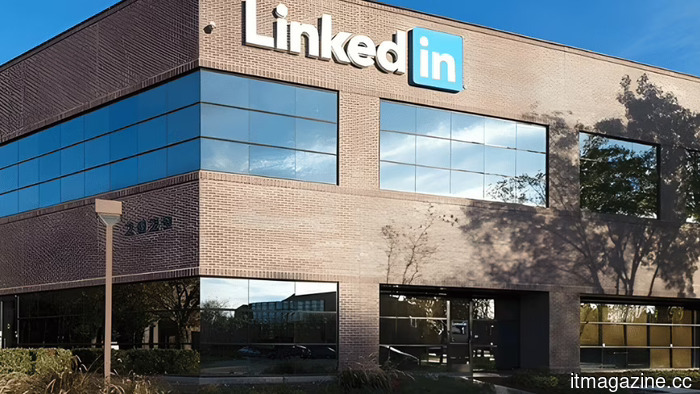 LinkedIn joins the list of tech companies that have laid off 100,000 workers.
LinkedIn is laying off approximately 5% of its workforce, marking the latest event in a series of tech layoffs in 2026 that has affected over 100,000 employees.
LinkedIn joins the list of tech companies that have laid off 100,000 workers.
LinkedIn is laying off approximately 5% of its workforce, marking the latest event in a series of tech layoffs in 2026 that has affected over 100,000 employees.
 Fractile's $220 million funding round comes as Anthropic targets its UK semiconductor operations.
Fractile has secured $220 million to bring its SRAM-based inference chip to market, with Accel leading the funding round and Pat Gelsinger participating as an investor.
Fractile's $220 million funding round comes as Anthropic targets its UK semiconductor operations.
Fractile has secured $220 million to bring its SRAM-based inference chip to market, with Accel leading the funding round and Pat Gelsinger participating as an investor.
 Fractile's $220 million funding round comes as Anthropic looks towards its UK silicon.
Fractile has secured $220 million to move its SRAM-based inference chip into production, with Accel as the leading investor and Pat Gelsinger also contributing.
Fractile's $220 million funding round comes as Anthropic looks towards its UK silicon.
Fractile has secured $220 million to move its SRAM-based inference chip into production, with Accel as the leading investor and Pat Gelsinger also contributing.
 Amazon integrates Alexa into the search bar as agentic commerce gains momentum.
Amazon is integrating Alexa for Shopping, a consolidated version of Rufus and Alexa+, into the primary search bar on Amazon.com.
Amazon integrates Alexa into the search bar as agentic commerce gains momentum.
Amazon is integrating Alexa for Shopping, a consolidated version of Rufus and Alexa+, into the primary search bar on Amazon.com.
 Fractile's $220 million funding round comes as Anthropic looks towards its UK silicon.
Fractile has secured $220 million to advance its SRAM-based inference chip into production, with Accel as the lead investor and Pat Gelsinger also participating in the funding.
Fractile's $220 million funding round comes as Anthropic looks towards its UK silicon.
Fractile has secured $220 million to advance its SRAM-based inference chip into production, with Accel as the lead investor and Pat Gelsinger also participating in the funding.
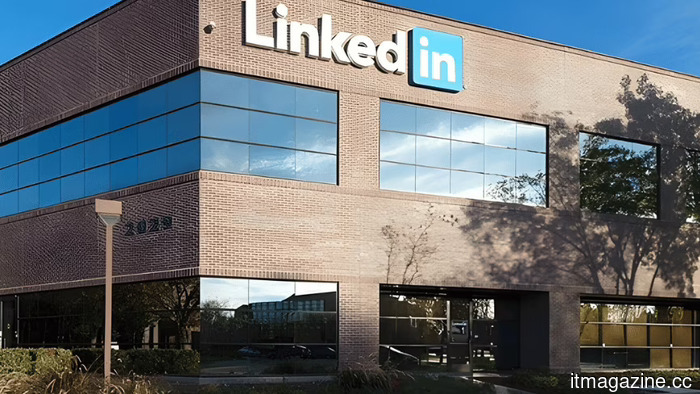 LinkedIn joins the list of tech companies that have laid off 100,000 workers.
LinkedIn is reducing its workforce by approximately 5%, marking the latest development in the wave of tech layoffs in 2026 that has affected over 100,000 employees.
LinkedIn joins the list of tech companies that have laid off 100,000 workers.
LinkedIn is reducing its workforce by approximately 5%, marking the latest development in the wave of tech layoffs in 2026 that has affected over 100,000 employees.
Amazon integrates Alexa into the search bar as agentic commerce gains momentum.
Amazon is integrating Alexa for Shopping, a combined form of Rufus and Alexa+, into the primary search bar on Amazon.com.