
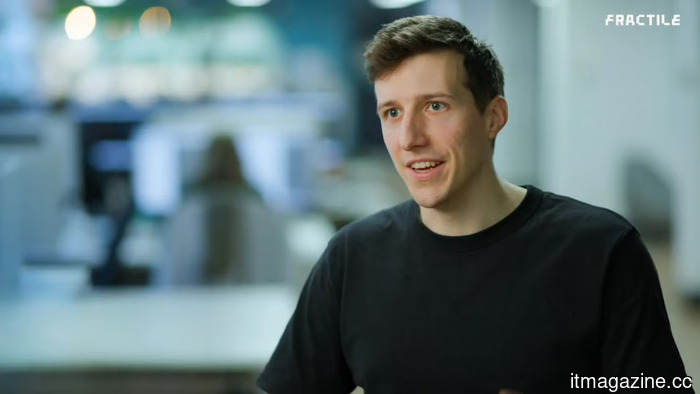
Fractile's $220 million funding round comes as Anthropic looks towards its UK silicon.
Accel led the funding round for the London-based chip startup, with Pat Gelsinger joining as an angel investor shortly after reports emerged that Anthropic was in early talks to become a customer. On Tuesday, Fractile announced it has raised $220 million to move its hardware into production. This funding round exceeds the $200 million target mentioned in late March, as highlighted by Electronics Weekly, and positions Fractile among European chip companies presenting themselves as alternatives to Nvidia in the inference sector.
The strength of the funding round is largely attributed to the investor profile. Accel is believed to have taken the lead, with former Intel CEO Pat Gelsinger contributing as an angel investor and operating adviser. Existing investors such as Kindred Capital, the NATO Innovation Fund, and Oxford Science Enterprises, which co-led Fractile’s $15 million seed round in July 2024, are also participating.
Fractile's technology offer challenges the existing architecture. Traditional AI accelerators, such as Nvidia’s H- and B-series GPUs, separate the compute die from high-bandwidth memory, incurring energy and latency costs as they transfer data between these components. In contrast, Fractile’s design conducts the matrix multiplications essential for transformer inference within SRAM cells situated next to the compute logic, adopting an in-memory compute strategy that the company claims significantly reduces reliance on DRAM, which is currently a critical restriction on inference costs.
Fractile asserts that its chips can execute frontier models up to 100 times faster and 10 times cheaper than existing GPU configurations, with more recent investor documentation framing the comparison as 25 times faster at one-tenth the cost. The key technical question is whether these performance metrics hold true under production conditions; thus far, the company has only revealed simulation and small-silicon results instead of large-scale benchmarks against deployed GPU clusters.
Fractile’s first commercial chip is projected to be available by 2027, a timeline the company has consistently communicated, and the $220 million is intended to support the design process through tape-out, software development, and initial customer integration rather than ramping up full-scale production.
The timing of the funding round coincides with Anthropic's exploration of purchasing Fractile chips once they are available, as reported by several sources earlier this month. Should this relationship formalize, Fractile would serve as Anthropic’s fourth named compute supplier, alongside Nvidia, Google’s TPUs, and Amazon's Trainium and Inferentia components. While Anthropic has been considering the development of its own custom AI chips, the relationship with Fractile indicates a continued strategy to diversify suppliers.
Fractile is also part of a select group of European chip startups that argue the inference market is fundamentally different from training and is, therefore, an achievable target. TNW has tracked three such companies over the past year, contending that while training will demand the largest and most advanced systems, with Nvidia’s CUDA dominance being strongest in that area, inference—the workload that generates the most revenue post-deployment—benefits from specialized architectures optimized for throughput and energy efficiency rather than maximum FLOPs.
The competitive landscape supporting this argument is growing increasingly crowded. Groq has delivered its language-processing units to numerous model providers and recently raised funds at a valuation of $6.9 billion; Etched is developing transformer-specific chips; Cerebras and SambaNova are pursuing the same workload from different angles. Additionally, Google is building a four-partner supply chain for inference chips with Broadcom, MediaTek, and Marvell to compete with Nvidia in this space. Fractile claims its in-memory architecture excels in the metric most relevant for cost-sensitive inference: watts per useful token.
This funding round follows Fractile’s February announcement of a £100 million ($132 million) three-year expansion of its operations in London and Bristol, including a new hardware engineering facility in Bristol, aligning with the broader UK sovereign AI initiative that has also led to partnerships involving BT, Nscale, and Nvidia data centers in April. Founder and CEO Walter Goodwin, who has a PhD from the Oxford Robotics Institute and is in his late twenties, has been the public face of the initiative. The team is comprised of engineers from Graphcore, Nvidia, and Imagination Technologies and is simultaneously developing its software stack alongside the silicon. The next key milestones include tape-out and customer integration.
Other articles
 LinkedIn joins the list of tech companies that have laid off 100,000 workers.
LinkedIn is reducing its workforce by approximately 5%, marking the latest development in the wave of tech layoffs in 2026 that has affected over 100,000 employees.
LinkedIn joins the list of tech companies that have laid off 100,000 workers.
LinkedIn is reducing its workforce by approximately 5%, marking the latest development in the wave of tech layoffs in 2026 that has affected over 100,000 employees.
 LinkedIn joins the list of tech companies that have laid off 100,000 workers.
LinkedIn is laying off approximately 5% of its workforce, marking the latest event in a series of tech layoffs in 2026 that has affected over 100,000 employees.
LinkedIn joins the list of tech companies that have laid off 100,000 workers.
LinkedIn is laying off approximately 5% of its workforce, marking the latest event in a series of tech layoffs in 2026 that has affected over 100,000 employees.
 Amazon integrates Alexa into the search bar as agentic commerce gains momentum.
Amazon is integrating Alexa for Shopping, a combined form of Rufus and Alexa+, into the primary search bar on Amazon.com.
Amazon integrates Alexa into the search bar as agentic commerce gains momentum.
Amazon is integrating Alexa for Shopping, a combined form of Rufus and Alexa+, into the primary search bar on Amazon.com.
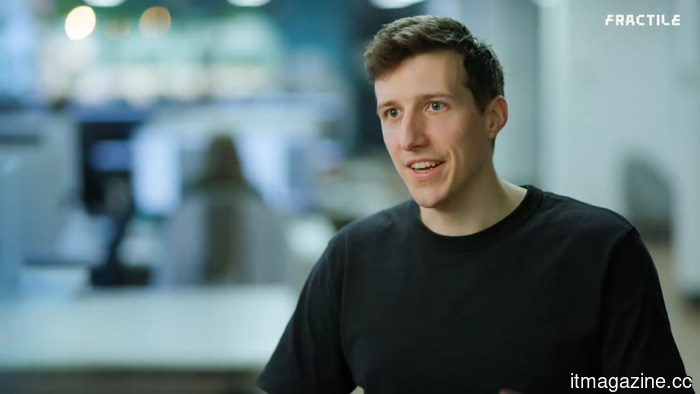 Fractile's $220 million funding round comes as Anthropic looks towards its UK silicon.
Fractile has secured $220 million to move its SRAM-based inference chip into production, with Accel as the leading investor and Pat Gelsinger also contributing.
Fractile's $220 million funding round comes as Anthropic looks towards its UK silicon.
Fractile has secured $220 million to move its SRAM-based inference chip into production, with Accel as the leading investor and Pat Gelsinger also contributing.
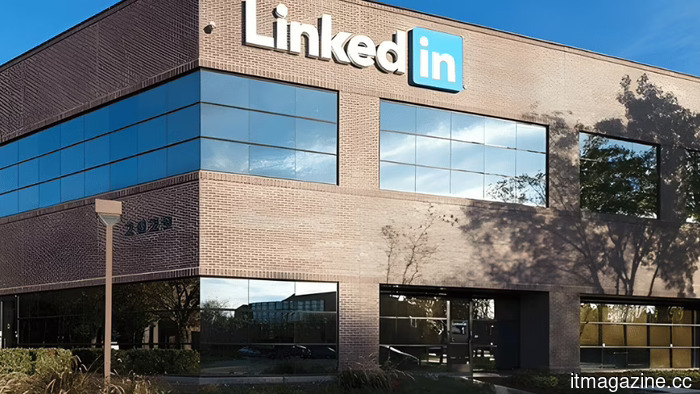 LinkedIn has joined the list of tech companies that have laid off 100,000 workers.
LinkedIn is reducing its workforce by approximately 5%, as part of a trend in 2026 that has seen over 100,000 employees laid off in the tech industry.
LinkedIn has joined the list of tech companies that have laid off 100,000 workers.
LinkedIn is reducing its workforce by approximately 5%, as part of a trend in 2026 that has seen over 100,000 employees laid off in the tech industry.
 Amazon integrates Alexa into the search bar as agentic commerce gains momentum.
Amazon is integrating Alexa for Shopping, a consolidated version of Rufus and Alexa+, into the primary search bar on Amazon.com.
Amazon integrates Alexa into the search bar as agentic commerce gains momentum.
Amazon is integrating Alexa for Shopping, a consolidated version of Rufus and Alexa+, into the primary search bar on Amazon.com.
Fractile's $220 million funding round comes as Anthropic looks towards its UK silicon.
Fractile has secured $220 million to advance its SRAM-based inference chip into production, with Accel as the lead investor and Pat Gelsinger also participating in the funding.