

JPMorgan submits a second tokenized money market fund on Ethereum as the competition for blockchain advancements on Wall Street intensifies.
**TL;DR** JPMorgan has submitted an application for its second tokenized money market fund on Ethereum, driving Wall Street's efforts to create regulated financial offerings using blockchain technology following the Genius Act, which has clarified regulatory uncertainties for institutions.
On Tuesday, JPMorgan Chase filed documents for its second tokenized money market fund, just four months after it became the largest global systemically important bank to introduce a fund on the Ethereum blockchain. The JPMorgan OnChain Liquidity-Token Money Market Fund, ticker JLTXX, will issue digital tokens on Ethereum that represent shares in a portfolio made up of US Treasuries and overnight repurchase agreements. These tokens can be stored in digital wallets, transferred between investors, or used as collateral in crypto markets, with settlement times reduced to minutes compared to the one to two days typical for traditional fund shares.
While the filing itself is not particularly noteworthy in the realm of conventional asset management—it’s just another money market fund buying Treasuries and paying a yield—the significance lies in its blockchain basis. This fund operates on a public blockchain governed by smart contracts, accessible to those with digital wallets, and is crafted to comply with the Genius Act, which is the federal stablecoin regulation signed into law by President Trump in July 2025. The largest bank in the US is developing regulated financial products on the very infrastructure that the crypto industry had long claimed would supplant traditional finance.
**The first fund**
In December 2025, JPMorgan’s asset management division launched My OnChain Net Yield Fund, referred to as MONY, on the Ethereum blockchain. This fund focuses on US Treasuries and repurchase agreements that are fully backed by Treasuries, requiring a minimum investment of one million dollars from qualified investors. JPMorgan initiated it with a funding of 100 million dollars. MONY operates on Kinexys Digital Assets, JPMorgan’s proprietary tokenization platform, which has facilitated over 300 billion dollars in intraday repurchase transactions since its launch.
The second fund, JLTXX, builds on this strategy. While MONY was a private placement under SEC Rule 506(c) limited to qualified investors, JLTXX seems to be crafted for wider distribution via a 485BPOS filing, which is the amendment form for existing registered investment companies. The underlying assets remain Treasuries and overnight repos secured by Treasuries. The innovation lies not in the assets but in the way the fund's shares are transacted.
Typically, a share in a money market fund is settled through a transfer agent, custodian, and clearing house, a process that can take a business day or two and involves several intermediaries. In contrast, a tokenized share settles on-chain in minutes. The investor retains direct ownership of the token in a wallet, allowing for peer-to-peer transfers and use as collateral in decentralized finance (DeFi) protocols or in crypto-native trading without prior conversion to cash. The Treasuries stay with a conventional custodian, while ownership transitions to the blockchain. The underlying asset remains the same; only the method of transfer changes.
**The race**
JPMorgan is not alone in this initiative. Last week, BlackRock filed applications for two tokenized money market funds aimed at investors holding cash in stablecoins. The first, the BlackRock Daily Reinvestment Stablecoin Reserve Vehicle, aims to invest in cash, short-term Treasuries, and overnight repos. The second will tokenize a share class of an existing 6.1 billion dollar money market fund on Ethereum. BlackRock’s BUIDL fund, its inaugural tokenized offering, launched in March 2024 and currently manages over 2.5 billion dollars across eight blockchains, including Ethereum, Solana, and Aptos.
Since early 2025, the market value of tokenized assets has surged over 400 percent to around 32 billion dollars, as noted by rwa.xyz. Although this sum is small when compared to the trillions managed in mutual funds and ETFs, the rapid growth is notable, and the key players are major institutions. JPMorgan, BlackRock, Franklin Templeton, and Goldman Sachs are all in various stages of launching or testing tokenized fund products. The firms that once regarded blockchain as a solution in search of a problem are now in a competitive rush to develop products based on it.
In May, Haun Ventures raised one billion dollars for two funds targeting the infrastructures of stablecoins and AI agents. Katie Haun contends that AI agents will require regulated financial infrastructure for autonomous transactions, positioning firms with stablecoin expertise as well-suited to build this infrastructure. JPMorgan’s tokenized funds reflect a similar stance: utilizing traditional assets on crypto infrastructure, tailored for a scenario where capital moves swiftly akin to software.
**The law**
The Genius Act, enacted in July 2025, established the first federal regulatory framework for dollar-pegged stablecoins. It mandates that issuers be
Other articles
 JPMorgan has submitted a second tokenized money market fund on Ethereum as the competition among Wall Street firms in blockchain technology intensifies.
JPMorgan has submitted an application for its second tokenized money market fund on Ethereum, entering into competition with BlackRock to create blockchain-based finance within the Genius Act framework.
JPMorgan has submitted a second tokenized money market fund on Ethereum as the competition among Wall Street firms in blockchain technology intensifies.
JPMorgan has submitted an application for its second tokenized money market fund on Ethereum, entering into competition with BlackRock to create blockchain-based finance within the Genius Act framework.
 Google introduces Googlebook: AI laptops powered by Android that take the place of Chromebooks, integrating Gemini at the operating system level.
Google has discontinued ChromeOS and introduced Googlebook, a high-end Android laptop featuring the Gemini interface. The Magic Pointer transforms the cursor into an AI assistant. Devices are set to be released this fall.
Google introduces Googlebook: AI laptops powered by Android that take the place of Chromebooks, integrating Gemini at the operating system level.
Google has discontinued ChromeOS and introduced Googlebook, a high-end Android laptop featuring the Gemini interface. The Magic Pointer transforms the cursor into an AI assistant. Devices are set to be released this fall.
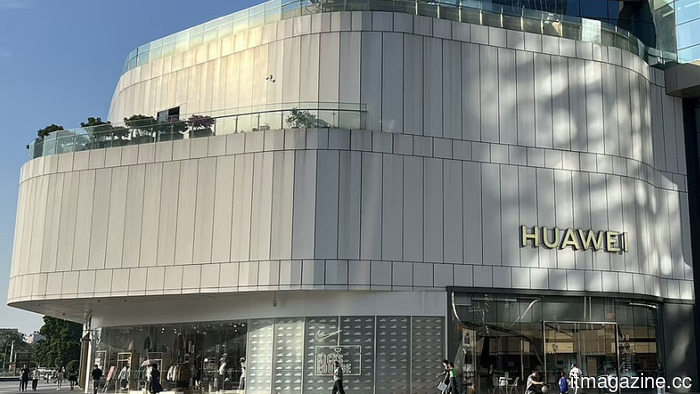 Two days before Trump's arrival, Beijing showcased Huawei's secret chip laboratory on national television. The intended audience was not the Chinese public.
China showcased Huawei's clandestine chip laboratory on national television just days prior to Trump's visit to Beijing. This airing indicates that US export restrictions have strengthened rather than stifled China's ambitions in the semiconductor sector.
SAP introduces the Autonomous Enterprise featuring over 200 AI agents and a partnership with Anthropic at Sapphire 2026.
SAP introduced the Autonomous Enterprise during Sapphire 2026, incorporating over 200 AI agents in finance, supply chain, and HR, and collaborating with Anthropic. Its stock has declined by 41%.
SAP announces its Autonomous Enterprise featuring over 200 AI agents and a partnership with Anthropic at Sapphire 2026.
At Sapphire 2026, SAP introduced the Autonomous Enterprise, incorporating over 200 AI agents into finance, supply chain, and HR, and collaborating with Anthropic. Its stock has decreased by 41%.
Two days before Trump's arrival, Beijing showcased Huawei's secret chip laboratory on national television. The intended audience was not the Chinese public.
China showcased Huawei's clandestine chip laboratory on national television just days prior to Trump's visit to Beijing. This airing indicates that US export restrictions have strengthened rather than stifled China's ambitions in the semiconductor sector.
SAP introduces the Autonomous Enterprise featuring over 200 AI agents and a partnership with Anthropic at Sapphire 2026.
SAP introduced the Autonomous Enterprise during Sapphire 2026, incorporating over 200 AI agents in finance, supply chain, and HR, and collaborating with Anthropic. Its stock has declined by 41%.
SAP announces its Autonomous Enterprise featuring over 200 AI agents and a partnership with Anthropic at Sapphire 2026.
At Sapphire 2026, SAP introduced the Autonomous Enterprise, incorporating over 200 AI agents into finance, supply chain, and HR, and collaborating with Anthropic. Its stock has decreased by 41%.
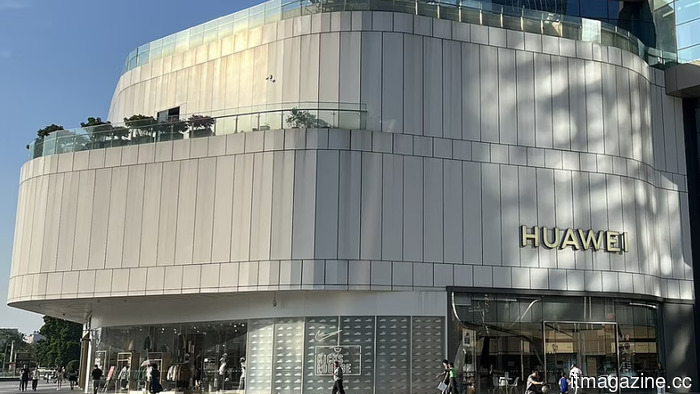 Two days prior to Trump's arrival, Beijing aired a segment about Huawei's covert chip laboratory on national television. The audience for this message was not the Chinese public.
China displayed Huawei's clandestine chip laboratory on prime-time television just days before Trump's visit to Beijing. The airing indicates that US export restrictions have strengthened, rather than weakened, China's aspirations in the chip industry.
Two days prior to Trump's arrival, Beijing aired a segment about Huawei's covert chip laboratory on national television. The audience for this message was not the Chinese public.
China displayed Huawei's clandestine chip laboratory on prime-time television just days before Trump's visit to Beijing. The airing indicates that US export restrictions have strengthened, rather than weakened, China's aspirations in the chip industry.
JPMorgan submits a second tokenized money market fund on Ethereum as the competition for blockchain advancements on Wall Street intensifies.
JPMorgan submitted an application for its second tokenized money market fund on Ethereum, aligning with BlackRock in the competition to establish blockchain-based finance under the Genius Act framework.