
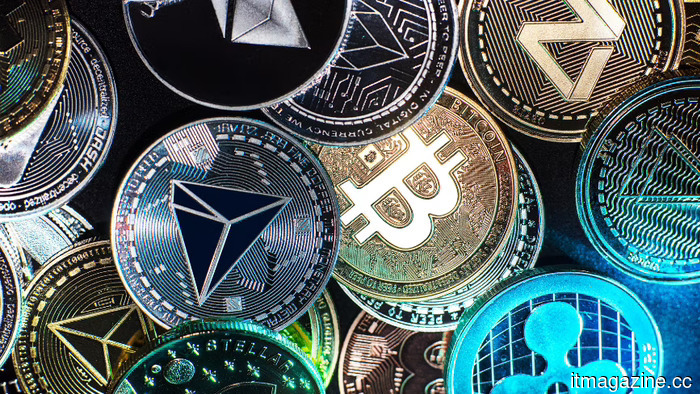
JPMorgan has submitted a second tokenized money market fund on Ethereum as the competition among Wall Street firms in blockchain technology intensifies.
**Summary**: JPMorgan has submitted paperwork for its second tokenized money market fund on Ethereum, speeding up Wall Street’s efforts to develop regulated financial products utilizing blockchain technology following the removal of regulatory uncertainties by the Genius Act.
On Tuesday, JPMorgan Chase filed for its second tokenized money market fund, just four months after becoming the largest global bank to establish a fund on the Ethereum blockchain. The JPMorgan OnChain Liquidity-Token Money Market Fund, ticker JLTXX, will generate digital tokens on Ethereum that represent shares in a portfolio of U.S. Treasuries and overnight repurchase agreements. These tokens can be stored in digital wallets, exchanged among investors, or used as collateral in cryptocurrency markets, with transaction settlement occurring in minutes as opposed to the traditional one to two days for conventional fund shares.
The filing may seem ordinary in the context of traditional asset management as it involves a money market fund that invests in Treasuries and offers yields. However, its significance lies in its operational framework: it is located on a public blockchain, operates under smart contracts, is accessible to individuals with digital wallets, and adheres to the Genius Act—the federal stablecoin framework signed into law by President Trump in July 2025. The largest U.S. bank is crafting regulated financial instruments on the very infrastructure that the crypto sector has claimed would eventually replace traditional finance.
**The First Fund**
In December 2025, JPMorgan’s asset management division introduced the My OnChain Net Yield Fund, or MONY, via the Ethereum blockchain. This fund invests in U.S. Treasuries and repurchase agreements that are fully backed by Treasuries, requiring a minimum investment of one million dollars for eligible investors, with the bank initially funding it with 100 million dollars. MONY is facilitated by Kinexys Digital Assets, JPMorgan’s proprietary tokenization platform that has handled over 300 billion dollars in intraday repurchase transactions since its launch.
JLTXX, the second fund, builds upon this strategy. Unlike MONY, which was a private placement under SEC Rule 506(c) limited to qualified investors, JLTXX appears to be set up for wider distribution through a 485BPOS filing, commonly used for registered investment companies. It retains the same underlying assets—Treasuries and overnight repos collateralized by Treasuries—but the innovation lies in the way the fund's shares are exchanged.
In a conventional money market fund, shares settle through a transfer agent, custodian, and clearinghouse, which takes a business day or more and includes several intermediaries. Conversely, a tokenized share settles on the blockchain in minutes. Investors directly hold the token in their wallets, enabling peer-to-peer transfers and the ability to use it as collateral in decentralized finance protocols or crypto-native trading platforms without needing to convert to cash first. While ownership of the underlying Treasuries remains with a traditional custodian, the ownership aspect transitions to the blockchain.
**The Race**
JPMorgan is not alone in this endeavor. Last week, BlackRock filed for two tokenized money market funds aimed at investors with cash in stablecoins. The first, the BlackRock Daily Reinvestment Stablecoin Reserve Vehicle, would invest in cash, short-dated Treasuries, and overnight repos. The second would tokenize a share class of an existing 6.1 billion dollar money market fund on Ethereum. BlackRock’s BUIDL fund, its first tokenized offering, launched in March 2024 and currently manages over 2.5 billion dollars across eight blockchain networks, including Ethereum, Solana, and Aptos.
The market value of tokenized assets has increased over 400% since early 2025, reaching approximately 32 billion dollars, as reported by rwa.xyz. While this figure is minor compared to the trillions held in mutual funds and ETFs, the pace of growth is significant, and the participants are notable players. JPMorgan, BlackRock, Franklin Templeton, and Goldman Sachs are all launching or testing tokenized fund products. Institutions that once dismissed blockchain as a problematic solution are now striving to develop products based on it.
Haun Ventures raised one billion dollars in May for two funds focused on stablecoin infrastructure and AI agent capabilities, based on the premise that the financial systems created by crypto will serve as the backbone for AI agents. Katie Haun believes that AI agents will require regulated financial infrastructure for autonomous transactions, and that the firms which established stablecoin systems are best equipped to provide it. JPMorgan’s tokenized funds represent the institutional version of this idea: traditional assets distributed on cryptocurrency frameworks, aimed at a future where capital transfers occur at the speed of software.
**The Law**
The Genius Act, enacted in July 2025, established the first federal regulatory framework for dollar-linked stablecoins, mandating that issuers obtain licenses, maintain one-to-one reserves in dollars or secure assets like Treasury bills, and adhere to anti-money laundering and
Other articles
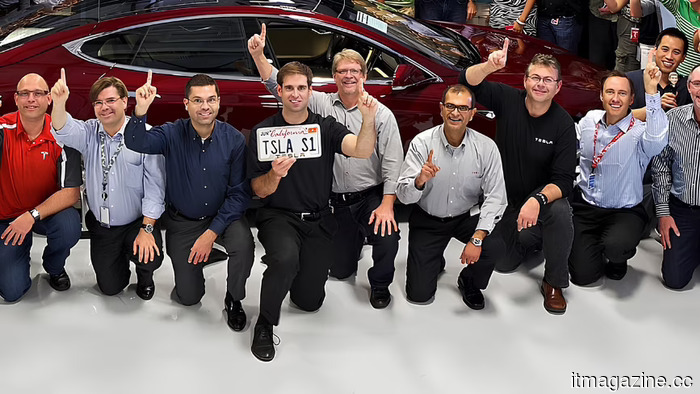 Former Tesla CFO Deepak Ahuja has joined Redwood Materials as the battery recycler shifts its focus to AI-driven energy infrastructure.
Deepak Ahuja, the CFO who led Tesla's public offering, is joining Redwood Materials as the company shifts its focus from battery recycling to supplying power for AI data centers using second-life electric vehicle batteries.
Former Tesla CFO Deepak Ahuja has joined Redwood Materials as the battery recycler shifts its focus to AI-driven energy infrastructure.
Deepak Ahuja, the CFO who led Tesla's public offering, is joining Redwood Materials as the company shifts its focus from battery recycling to supplying power for AI data centers using second-life electric vehicle batteries.
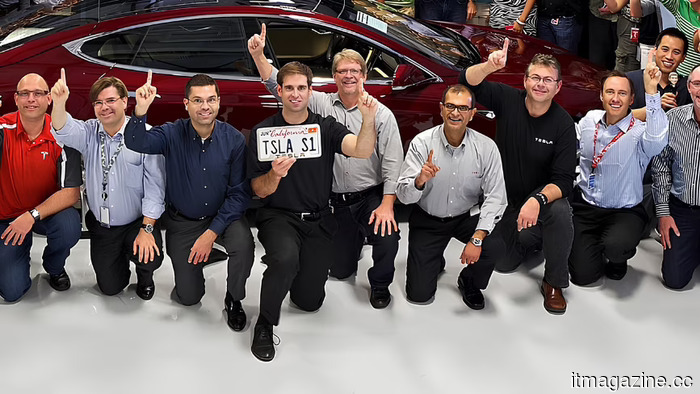 Former Tesla CFO Deepak Ahuja has joined Redwood Materials as the battery recycler shifts its focus to AI-driven energy infrastructure.
Deepak Ahuja, the CFO who led Tesla's IPO, is joining Redwood Materials as the company shifts its focus from battery recycling to supplying power for AI data centers using second-life EV batteries.
Former Tesla CFO Deepak Ahuja has joined Redwood Materials as the battery recycler shifts its focus to AI-driven energy infrastructure.
Deepak Ahuja, the CFO who led Tesla's IPO, is joining Redwood Materials as the company shifts its focus from battery recycling to supplying power for AI data centers using second-life EV batteries.
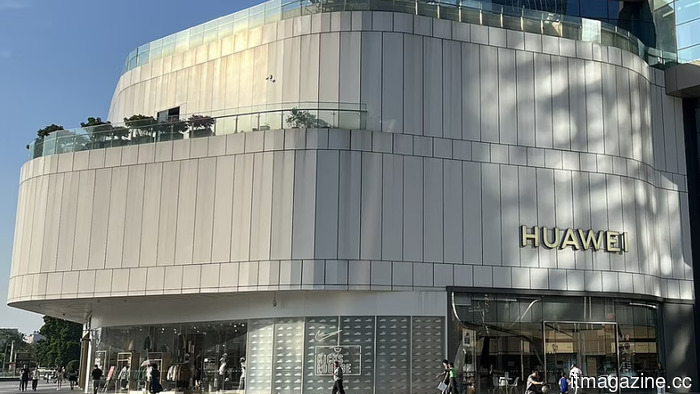 Two days prior to Trump's arrival, Beijing aired a segment about Huawei's covert chip laboratory on national television. The audience for this message was not the Chinese public.
China displayed Huawei's clandestine chip laboratory on prime-time television just days before Trump's visit to Beijing. The airing indicates that US export restrictions have strengthened, rather than weakened, China's aspirations in the chip industry.
Two days prior to Trump's arrival, Beijing aired a segment about Huawei's covert chip laboratory on national television. The audience for this message was not the Chinese public.
China displayed Huawei's clandestine chip laboratory on prime-time television just days before Trump's visit to Beijing. The airing indicates that US export restrictions have strengthened, rather than weakened, China's aspirations in the chip industry.
 6 actions Gemini Intelligence is set to take on your Android devices.
Google is introducing these Gemini features to Android, broadening their availability across applications and devices to automate daily activities, streamline browsing, and enhance your phone's helpfulness while ensuring you remain in control.
6 actions Gemini Intelligence is set to take on your Android devices.
Google is introducing these Gemini features to Android, broadening their availability across applications and devices to automate daily activities, streamline browsing, and enhance your phone's helpfulness while ensuring you remain in control.
 Android and iPhone are becoming increasingly similar, which may alter the way you switch between the two.
Transferring from Android to iPhone is beginning to feel less chaotic and more like simply copying, pasting, and finishing.
Android and iPhone are becoming increasingly similar, which may alter the way you switch between the two.
Transferring from Android to iPhone is beginning to feel less chaotic and more like simply copying, pasting, and finishing.
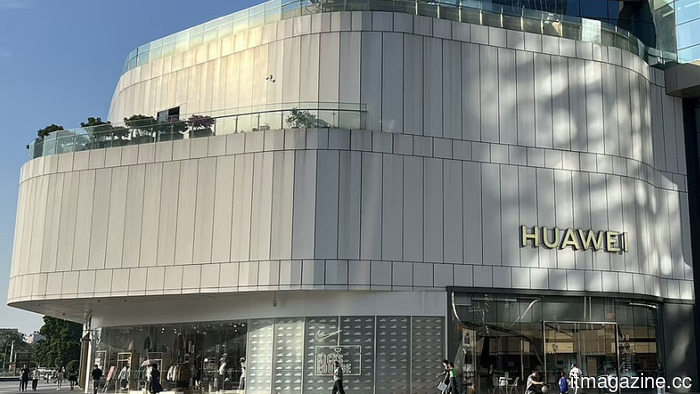 Two days before Trump's arrival, Beijing showcased Huawei's secret chip laboratory on national television. The intended audience was not the Chinese public.
China showcased Huawei's clandestine chip laboratory on national television just days prior to Trump's visit to Beijing. This airing indicates that US export restrictions have strengthened rather than stifled China's ambitions in the semiconductor sector.
Two days before Trump's arrival, Beijing showcased Huawei's secret chip laboratory on national television. The intended audience was not the Chinese public.
China showcased Huawei's clandestine chip laboratory on national television just days prior to Trump's visit to Beijing. This airing indicates that US export restrictions have strengthened rather than stifled China's ambitions in the semiconductor sector.
JPMorgan has submitted a second tokenized money market fund on Ethereum as the competition among Wall Street firms in blockchain technology intensifies.
JPMorgan has submitted an application for its second tokenized money market fund on Ethereum, entering into competition with BlackRock to create blockchain-based finance within the Genius Act framework.