
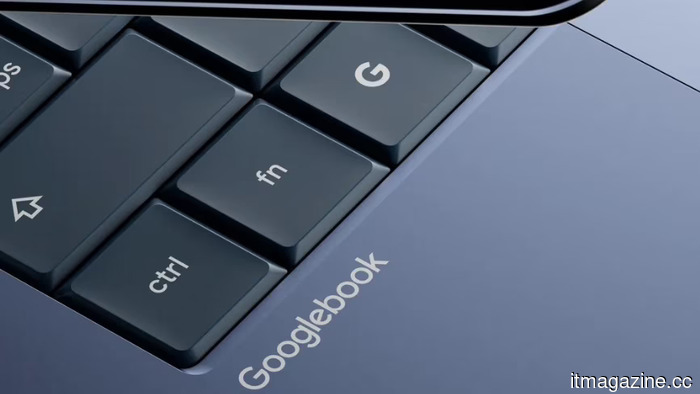
Google introduces Googlebook: AI laptops powered by Android that take the place of Chromebooks, integrating Gemini at the operating system level.
**TL;DR** Google has discontinued ChromeOS and introduced Googlebook, a high-end Android laptop featuring Gemini integrated at the OS level, transforming the cursor into an AI agent and unifying its ecosystem across 3.6 billion devices onto a desktop for the first time.
Google has phased out the Chromebook. After 15 years, the company that pioneered the browser-as-an-operating-system has recognized that a browser alone is insufficient. At the Android Show on Monday, Google announced Googlebook, a new category of premium laptops powered by Android with Gemini built at the operating system level. These devices will be available this autumn from manufacturers like Acer, ASUS, Dell, HP, and Lenovo. ChromeOS is not just being updated; it is being replaced.
The rebranding is significant. Googlebook operates on what is referred to internally as Aluminium OS, a reconfigured version of Android 17 designed as a true desktop platform, complete with a custom window manager, native multitasking, and Gemini integrated into every interaction. There are no containers, emulation layers, or compatibility modes. The operating system is Android, with native apps and AI that serves not just as an assistant but as the primary interface.
The standout feature is called Magic Pointer. Developed in collaboration with Google’s DeepMind team, it transforms the laptop cursor into a context-aware AI agent. When the cursor hovers over a date in an email, Gemini suggests scheduling a meeting. If it points at two images, it can merge them. Selecting a paragraph enables summarization, translation, or rewriting. The cursor, a traditional method of interaction in computing, becomes a direct link to a large language model that can analyze the screen and act accordingly.
Magic Pointer is distinct from a chatbot as it requires no prompts. It understands the context of whatever the cursor interacts with and proactively suggests actions before the user even asks. This difference is crucial, reflecting a novel approach to how AI plays a role in personal computing. While Apple integrates intelligence within specific applications and Microsoft positions Copilot in a sidebar, Google integrates Gemini directly into the cursor.
Another highlighted feature is Create your Widget, which allows users to describe a custom widget using natural language, and Gemini generates it instantly, utilizing data from Gmail, Calendar, web searches, and more to create a tailored dashboard. These widgets are crafted by AI from user descriptions rather than selected from a pre-existing list, allowing users to create what they envision rather than choosing from what is available.
Googlebook addresses a decade-long challenge for the company. ChromeOS was primarily a web-based operating system that ran Android apps through a compatibility layer, resulting in a suboptimal experience. ChromeOS's dual nature meant Android apps on Chromebooks couldn't leverage the file system, properly engage with desktop windows, or utilize hardware features as effectively as they would on a phone. Aluminium OS resolves this division by enabling Android apps to run natively since the laptop operates on Android. A feature called Cast my Apps allows users to launch any application from their Android phone directly on the Googlebook’s screen without needing to download it. Quick Access facilitates direct access to phone files via the laptop's file browser, eliminating the need for manual transfers. Both devices share the same operating system, app ecosystem, and AI capabilities.
The European Commission is preparing to compel Google to provide rival AI assistants with access to Android comparable to that of Gemini, a ruling that could impact whether Googlebook’s deep Gemini integration serves as a competitive advantage or an open platform. A decision on the DMA is anticipated in July, coinciding with the planned launch of Googlebook this autumn.
The market landscape for laptops has shifted due to two key influences. First, Apple introduced the MacBook Neo, a $599 laptop running macOS on an A18 Pro chip derived from the iPhone, marking a notable drop in Apple's entry price. Second, the Snapdragon X Elite has enhanced Windows laptops with competitive battery life and AI capabilities for the first time in years.
In response, Google is moving away from the low-end market. Googlebook is branded as a premium product, characterized by what the company claims to be superior craftsmanship and materials. Each device includes a Glowbar, an LED strip in the keyboard that responds to Gemini’s activities. Google is not simply creating an affordable laptop equipped with AI; it is developing an AI-driven device that functions as a laptop.
This shift is significant considering Chromebooks thrived by being budget-friendly. Google integrates Gemini into four million GM vehicles, embedding similar AI into cars, phones, wearables, and laptops. The pattern is clear: Google intends for Gemini to be an intelligence layer that connects all screens in a user’s life, with Googlebook forming a desktop component of this strategy.
Concerning the educational sector, Chromebooks dominate over 60 percent of the global education laptop market, supporting 38 million students in K-12 schools, with 93 percent of US school districts planning to purchase Chromebooks this year. The installed base is vast, though profit
Other articles
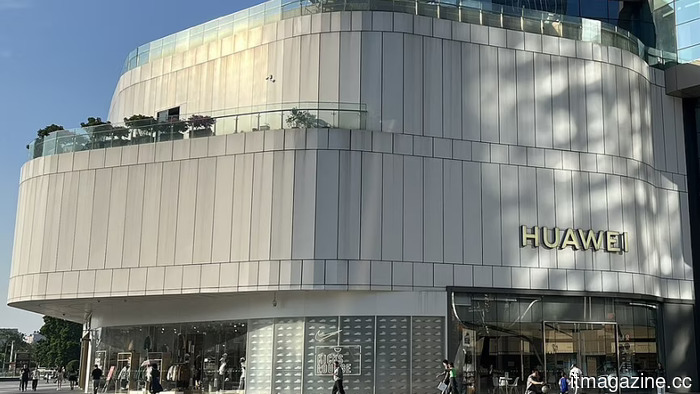 Beijing showcased Huawei's hidden chip laboratory on national television just two days prior to Trump's arrival. The intended audience was not the Chinese public.
China unveiled Huawei's clandestine chip laboratory on prime-time television just days prior to Trump's visit to Beijing. This broadcast indicates that US export restrictions have strengthened, rather than weakened, China's aspirations in the semiconductor industry.
Beijing showcased Huawei's hidden chip laboratory on national television just two days prior to Trump's arrival. The intended audience was not the Chinese public.
China unveiled Huawei's clandestine chip laboratory on prime-time television just days prior to Trump's visit to Beijing. This broadcast indicates that US export restrictions have strengthened, rather than weakened, China's aspirations in the semiconductor industry.
 Bristol Myers Squibb has entered into a $15.2 billion pharmaceutical agreement with China's Hengrui as it faces an impending patent expiration.
BMS is providing Hengrui with $15.2 billion for 13 developmental drugs in the fields of oncology and immunology. This agreement highlights how the patent expiration issues faced by major pharmaceutical companies have made Chinese innovation crucial.
Bristol Myers Squibb has entered into a $15.2 billion pharmaceutical agreement with China's Hengrui as it faces an impending patent expiration.
BMS is providing Hengrui with $15.2 billion for 13 developmental drugs in the fields of oncology and immunology. This agreement highlights how the patent expiration issues faced by major pharmaceutical companies have made Chinese innovation crucial.
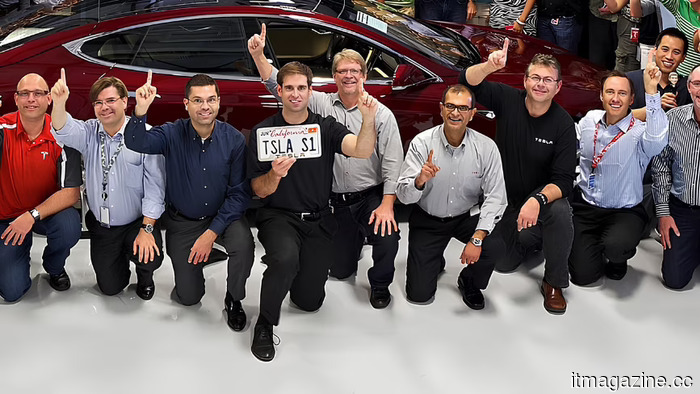 Former Tesla CFO Deepak Ahuja has joined Redwood Materials as the battery recycler shifts its focus to AI-driven energy infrastructure.
Deepak Ahuja, the CFO who led Tesla's IPO, is joining Redwood Materials as the company shifts its focus from battery recycling to supplying power for AI data centers using second-life EV batteries.
Former Tesla CFO Deepak Ahuja has joined Redwood Materials as the battery recycler shifts its focus to AI-driven energy infrastructure.
Deepak Ahuja, the CFO who led Tesla's IPO, is joining Redwood Materials as the company shifts its focus from battery recycling to supplying power for AI data centers using second-life EV batteries.
 6 actions Gemini Intelligence is set to take on your Android devices.
Google is introducing these Gemini features to Android, broadening their availability across applications and devices to automate daily activities, streamline browsing, and enhance your phone's helpfulness while ensuring you remain in control.
6 actions Gemini Intelligence is set to take on your Android devices.
Google is introducing these Gemini features to Android, broadening their availability across applications and devices to automate daily activities, streamline browsing, and enhance your phone's helpfulness while ensuring you remain in control.
 JPMorgan submits a second tokenized money market fund on Ethereum as the competition for blockchain advancements on Wall Street intensifies.
JPMorgan submitted an application for its second tokenized money market fund on Ethereum, aligning with BlackRock in the competition to establish blockchain-based finance under the Genius Act framework.
SAP announces its Autonomous Enterprise featuring over 200 AI agents and a partnership with Anthropic at Sapphire 2026.
At Sapphire 2026, SAP introduced the Autonomous Enterprise, incorporating over 200 AI agents into finance, supply chain, and HR, and collaborating with Anthropic. Its stock has decreased by 41%.
JPMorgan submits a second tokenized money market fund on Ethereum as the competition for blockchain advancements on Wall Street intensifies.
JPMorgan submitted an application for its second tokenized money market fund on Ethereum, aligning with BlackRock in the competition to establish blockchain-based finance under the Genius Act framework.
SAP announces its Autonomous Enterprise featuring over 200 AI agents and a partnership with Anthropic at Sapphire 2026.
At Sapphire 2026, SAP introduced the Autonomous Enterprise, incorporating over 200 AI agents into finance, supply chain, and HR, and collaborating with Anthropic. Its stock has decreased by 41%.
Google introduces Googlebook: AI laptops powered by Android that take the place of Chromebooks, integrating Gemini at the operating system level.
Google has discontinued ChromeOS and introduced Googlebook, a high-end Android laptop featuring the Gemini interface. The Magic Pointer transforms the cursor into an AI assistant. Devices are set to be released this fall.