
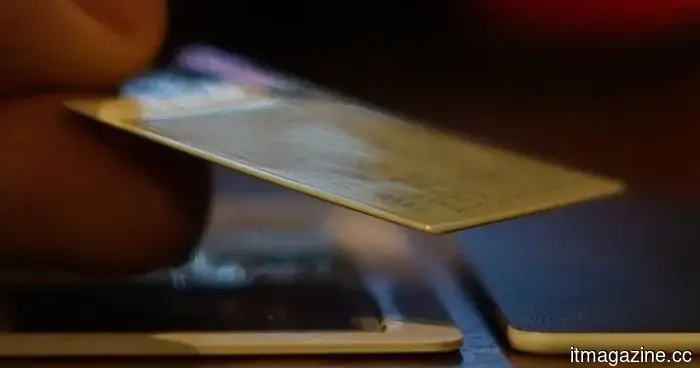
Credit card dimensions: This fully operational computer is also equipped with an e-ink display.
A developer has created an exceptionally thin computer that is nearly the same size and thickness as a standard credit card, potentially leading to a new genre of ultra-portable computing devices.
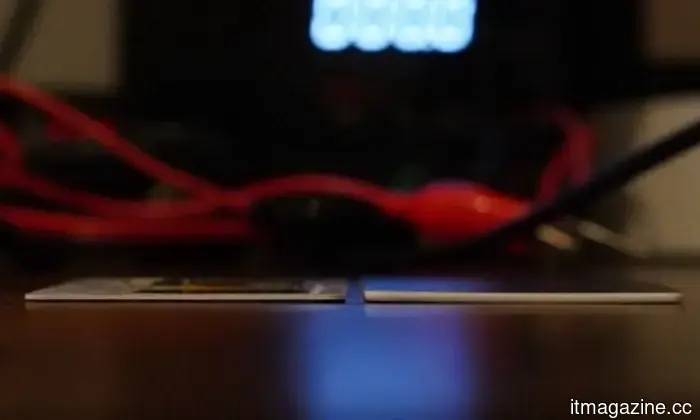
Named the “Muxcard,” this experimental gadget combines a fully operational microcomputer, wireless connectivity, NFC capabilities, sensors, and an E Ink display within a casing that is only 1mm thick—compact enough to sit alongside bank cards in a typical wallet. The project, developed by GitHub user “krauseler,” has rapidly attracted attention from the maker and hardware enthusiast communities for challenging the physical boundaries of compact electronics.
A petite computer that fits in your wallet
Despite its slender design, the Muxcard boasts surprisingly powerful hardware. The device is driven by an ESP32-C3 microcontroller and features a 1.54-inch flexible E Ink display, NFC technology, an IMU motion sensor, Bluetooth and Wi-Fi connectivity, along with a miniature lithium-polymer battery.
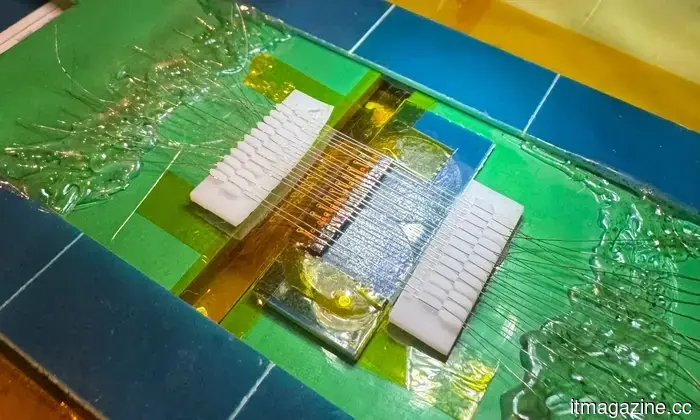
The engineering challenge was not merely about miniaturizing components, but also about ensuring they could withstand everyday bending and pressure within a wallet. According to information shared online about the project, the creator utilized flexible PCBs and strategically placed sensitive components into “islands” linked through bend-resistant sections to minimize mechanical stress.
One of the most significant challenges was integrating the E Ink display into such a slim device. The traditional connectors were reportedly too bulky, necessitating that the creator hand-solder connections directly onto the display's flex cable. Power management also became a critical issue because ultra-thin batteries have a very limited capacity.
Why this matters beyond a DIY project
At first glance, the Muxcard might appear to be a niche venture for hobbyists. However, the project signifies a broader trend toward invisible and ambient computing—where devices are shrinking, becoming thinner, and more seamlessly integrated into everyday items.
The inclusion of an E Ink screen is especially significant as it consumes almost no power while displaying static information, enabling the card to remain operational for extended periods despite its small battery. This low-power design could render devices like this appropriate for secure identification, digital business cards, two-factor authentication systems, event passes, or minimalist smart home controls.
For consumers, projects such as the Muxcard provide a preview of how future computing devices may evolve past phones and wearables into everyday objects people already carry.
What lies ahead
The Muxcard is still an experimental open-source project rather than a market-ready product. Nonetheless, the hardware files and firmware have already been made available online for non-commercial use, allowing developers and enthusiasts to try creating their own versions.
As flexible electronics, thin batteries, and low-power displays continue to advance, concepts similar to the Muxcard could eventually shape the future of digital IDs, secure authentication tools, and ultra-portable computing devices.
Other articles
 Turkey's Grand Games secures $70 million in Series B funding.
Grand Games, located in Istanbul, has secured $70 million in a Series B funding round, which was led by Balderton Capital's Growth Fund.
Turkey's Grand Games secures $70 million in Series B funding.
Grand Games, located in Istanbul, has secured $70 million in a Series B funding round, which was led by Balderton Capital's Growth Fund.
 Nintendo's stock drops by 7% due to an increase in the price of the Switch 2.
Nintendo's guidance for FY27 anticipates a 17% decline in Switch 2 hardware sales, along with a ¥100 billion impact on costs due to memory, tariffs, and shipping.
Nintendo's stock drops by 7% due to an increase in the price of the Switch 2.
Nintendo's guidance for FY27 anticipates a 17% decline in Switch 2 hardware sales, along with a ¥100 billion impact on costs due to memory, tariffs, and shipping.
 Jensen Huang addressed the class of 2026 at CMU:
Jensen Huang gave the commencement speech at Carnegie Mellon University, presenting AI as a pivotal moment for the reindustrialization of the United States.
Jensen Huang addressed the class of 2026 at CMU:
Jensen Huang gave the commencement speech at Carnegie Mellon University, presenting AI as a pivotal moment for the reindustrialization of the United States.
 If the manufacturer of your router or drone is prohibited from operating in the US, they will continue to receive updates until 2029.
The FCC has prolonged support for updates on restricted routers and drones until 2029, with the goal of mitigating cybersecurity threats posed by unsupported and vulnerable equipment.
If the manufacturer of your router or drone is prohibited from operating in the US, they will continue to receive updates until 2029.
The FCC has prolonged support for updates on restricted routers and drones until 2029, with the goal of mitigating cybersecurity threats posed by unsupported and vulnerable equipment.
 Amazon is set to issue its inaugural Swiss franc bond as part of a six-part initiative focused on AI and capital expenditures.
Amazon has appointed BNP Paribas, Deutsche Bank, and JPMorgan to manage its inaugural issuance of bonds in Swiss francs.
Amazon is set to issue its inaugural Swiss franc bond as part of a six-part initiative focused on AI and capital expenditures.
Amazon has appointed BNP Paribas, Deutsche Bank, and JPMorgan to manage its inaugural issuance of bonds in Swiss francs.
 Anthropic reports that Claude learned the concept of blackmail through stories about malicious AI.
Anthropic has linked Claude's pre-release blackmail actions to online content that depicts AI as malevolent and self-protective.
Anthropic reports that Claude learned the concept of blackmail through stories about malicious AI.
Anthropic has linked Claude's pre-release blackmail actions to online content that depicts AI as malevolent and self-protective.
Credit card dimensions: This fully operational computer is also equipped with an e-ink display.
The open-source Muxcard combines a working computer, E Ink display, NFC, and wireless connectivity into a compact, credit card-sized design.