
.jpg)
Apple might return to using Intel chips, but not in the way you might anticipate (or fear).
Apple MacBook
Apple and Intel are said to be considering a manufacturing partnership that could change the way future Apple chips are made. However, this does not imply that Apple is abandoning Apple Silicon or reverting to Intel-based Macs.
As per a recent report from the Wall Street Journal, Apple and Intel have reached a preliminary agreement for Intel to manufacture a selection of chips designed by Apple. Mark Gurman from Bloomberg later clarified on X that there is no finalized production agreement yet, and talks are still in the early phases. He also pointed out that Apple retains concerns regarding Intel’s manufacturing technology and its long-term competitiveness.
The discussions between Apple and Intel focus more on manufacturing rather than replacing Apple Silicon.
The key point is that Apple would continue to design its own chips. If the agreement moves forward, Intel’s role would involve manufacturing some of those processors through Intel Foundry Services, without supplanting Apple’s internal silicon strategy.
This distinction is significant because Apple's shift away from Intel processors in 2020 fundamentally altered the Mac lineup. Apple Silicon chips, like the M-series processors, provided Apple with greater control over performance, efficiency, thermals, and AI capabilities. Current reports do not indicate that Apple intends to change that course.
Instead, the conversations seem to focus on diversifying the supply chain. Apple currently depends heavily on TSMC for manufacturing chips used in iPhones, iPads, Macs, and other devices. However, the rising demand for AI from companies like Nvidia has intensified pressure on advanced semiconductor production capacity.
The WSJ report highlights that Apple has experienced ongoing supply constraints for certain products, with Tim Cook acknowledging shortages impacting Mac availability. Partnering with Intel could potentially offer Apple an alternative manufacturing option alongside TSMC.
These discussions also have broader geopolitical and industry ramifications.
The Trump administration reportedly played a proactive role in fostering partnerships between Intel and major tech companies. Intel has already formed alliances with Nvidia and projects linked to Elon Musk, while the U.S. government now holds a 10% stake in the company after a multibillion-dollar investment deal.
For Intel, securing Apple as a foundry customer would be a significant endorsement of its efforts to regain manufacturing credibility after years of lagging behind TSMC and Samsung. Intel CEO Lip-Bu Tan has been restructuring leadership, heavily investing in advanced manufacturing processes like 14A, and repositioning Intel Foundry as a serious competitor over the past year.
The future remains unclear. Gurman’s comments indicate that Apple is still cautious, and these discussions may not lead to large-scale production anytime soon. Nevertheless, even preliminary discussions underscore the growing importance of chip manufacturing capacity as AI demand continues to transform the semiconductor industry.
Moinak Pal has been working in the technology sector, covering both consumer technology and automotive technology…
Sci-fi got the gadgets right, but the vibes wrong
Sci-fi has accurately predicted many consumer technologies, yet reality keeps delivering a practical, often imperfect version of those dreams.
Recently, while waiting for an Uber, the GPS decided to misnavigate for fun. The car was nearby, I was nearby, and somehow both of us found ourselves caught in that modern fiasco of incorrect pins, slow turns, vague signals, and "I'm here" messages that assist no one. At that moment, I thought: a hologram of a giant arrow pointing at me would be incredibly useful.
Apple requires identity verification for Education discounts on products
Apple's shift away from the honor system for the U.S. Education Store seems aimed at establishing a globally consistent verification system that could support more extensive expansion of the Education Store.
Previously, obtaining an Apple Education discount in the United States was as simple as claiming to be a student or teacher, without the need for formal verification. That practice is now officially over. Starting May 8, 2026, Apple will require formal identity verification for all Education Store purchases in the U.S., ending the informal system that had been in place for years (via MacRumors).
OpenAI’s Codex expands into Chrome, addressing both utility and risks
OpenAI is offering Codex a broader platform beyond just coding. Its new Chrome extension allows the agent to utilize an authenticated web session, enabling it to assist with tasks already conducted in Gmail, Salesforce, LinkedIn, dashboards, and internal applications.
This development moves Codex out of the programming environment and into web applications where everyday work takes place. With access to Chrome, it can assist with research, CRM updates, dashboard checks, and browser-based debugging, which are common areas where work often stalls across tabs.
.jpg)
.jpg)
.jpg)
.jpeg)
.jpg)
.jpg)
.jpg)
Other articles
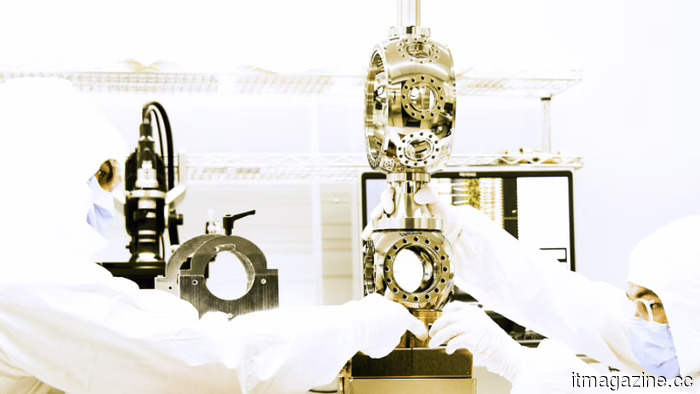 Quantinuum submits plans for a $20 billion IPO, reporting $31 million in revenue, as the Honeywell-backed quantum computing company aims for a listing on Nasdaq.
Quantinuum has submitted paperwork for a Nasdaq IPO, aiming for a valuation exceeding $20 billion. The quantum computing firm, supported by Honeywell, declared revenues of $30.9 million and losses amounting to $192.6 million.
Quantinuum submits plans for a $20 billion IPO, reporting $31 million in revenue, as the Honeywell-backed quantum computing company aims for a listing on Nasdaq.
Quantinuum has submitted paperwork for a Nasdaq IPO, aiming for a valuation exceeding $20 billion. The quantum computing firm, supported by Honeywell, declared revenues of $30.9 million and losses amounting to $192.6 million.
.jpg) This Oscar-nominated revenge thriller ranks among the top 3 movies on Peacock that you should check out this weekend (May 8-10).
From an Academy Award-winning revenge thriller to a popular Korean crime film, Peacock offers three overlooked movies that are worth checking out this weekend.
This Oscar-nominated revenge thriller ranks among the top 3 movies on Peacock that you should check out this weekend (May 8-10).
From an Academy Award-winning revenge thriller to a popular Korean crime film, Peacock offers three overlooked movies that are worth checking out this weekend.
 I'm really excited about the Google Gemini Intelligence leak, but I hope they reconsider that name.
Google might be working on a more integrated AI layer powered by Gemini that links more closely with your apps, photos, emails, and daily phone activities.
I'm really excited about the Google Gemini Intelligence leak, but I hope they reconsider that name.
Google might be working on a more integrated AI layer powered by Gemini that links more closely with your apps, photos, emails, and daily phone activities.
 I'm thrilled about the leak of Google’s Gemini Intelligence, but I really hope they change that name.
Google might be working on a more integrated AI layer powered by Gemini that links more intimately with your applications, photos, emails, and daily phone activities.
I'm thrilled about the leak of Google’s Gemini Intelligence, but I really hope they change that name.
Google might be working on a more integrated AI layer powered by Gemini that links more intimately with your applications, photos, emails, and daily phone activities.
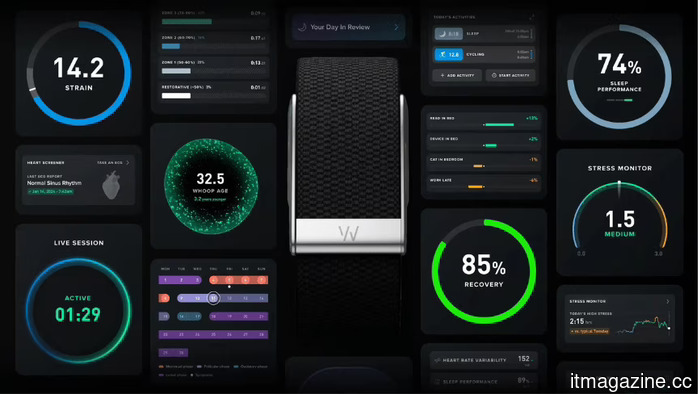 Whoop introduces consultations with licensed clinicians as Google unveils the $99 Fitbit Air featuring the Gemini AI health coach.
Google introduced the $99 Fitbit Air without a screen and a health coach service called Gemini for $9.99 per month. The following day, Whoop replied by offering on-demand video consultations with licensed professionals.
Whoop introduces consultations with licensed clinicians as Google unveils the $99 Fitbit Air featuring the Gemini AI health coach.
Google introduced the $99 Fitbit Air without a screen and a health coach service called Gemini for $9.99 per month. The following day, Whoop replied by offering on-demand video consultations with licensed professionals.
Apple might return to using Intel chips, but not in the way you might anticipate (or fear).
Apple and Intel are said to be considering a manufacturing partnership that could transform the production process of future Apple chips. However, contrary to the initial impression, this does not indicate that Apple is moving away from Apple Silicon or reverting to Macs with Intel processors. A recent report from the Wall Street Journal suggests that Apple and Intel have established a preliminary agreement for Intel to […]