
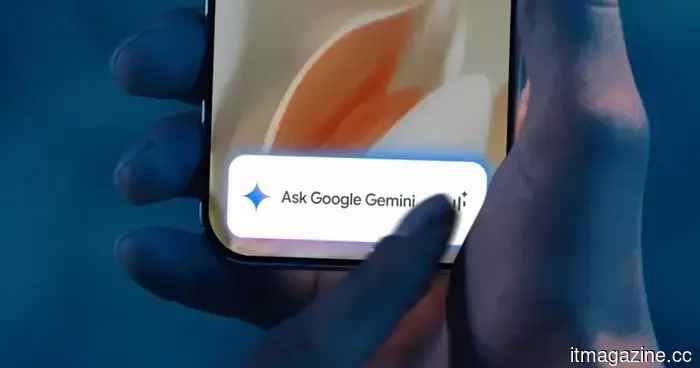
I'm really excited about the Google Gemini Intelligence leak, but I hope they reconsider that name.
Gemini Intelligence seems to be the Android counterpart to Apple Intelligence.
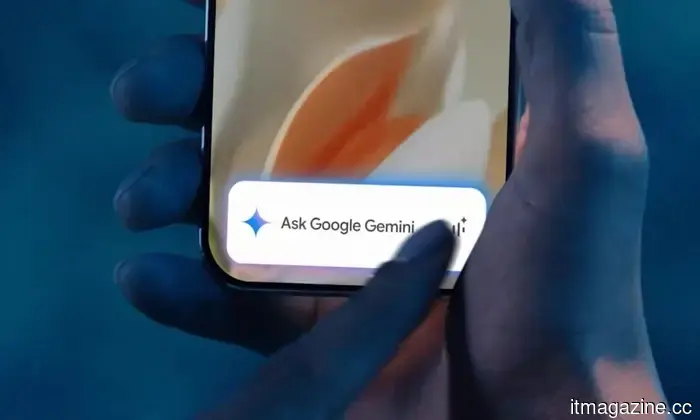
Google is assisting Apple in enhancing its AI, but it appears that the search giant has developed a fondness for the name Apple Intelligence. A recent leak from Mysticleaks on Telegram purportedly displays “Gemini Intelligence” within Google’s software functioning on what appears to be a Pixel smartphone.
For the time being, it’s advisable to approach this leak with caution until more definitive information is available. However, if the video is legitimate, Google might be gearing up to introduce this feature with the Pixel 11 series, which is anticipated to launch around August 2026.
Google can’t be serious with this name… Gemini Intelligence? 😭 They’re imitating Apple Intelligence, which has a rather poor reputation for AI? 😭 pic.twitter.com/Ha3x2VfQLf— Noah Cat (@Cartidise) May 7, 2026
Is Google actually naming it Gemini Intelligence?
The irony is striking. Apple Intelligence represents Apple’s significant investment in making Siri smarter, more personalized, and genuinely useful in the age of AI. Yet, Apple has established a multi-year collaboration with Google to enhance next-gen Siri using Gemini models. Thus, Google could be simultaneously supporting Apple Intelligence while launching Gemini Intelligence. This could either be seen as highly efficient or quite foolish in terms of branding.
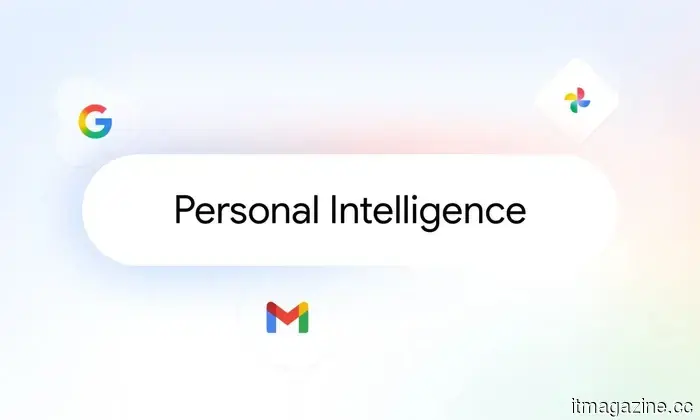
Google has begun expanding the Personal Intelligence capabilities of Gemini. These features allow Gemini to interact with applications such as Gmail, Google Photos, YouTube, and Search, enabling it to provide answers with a user's specific context. Instead of relying on a generic chatbot, users can request information linked to their emails, photos, saved data, and activities across Google services.
Why would the Pixel 11 be a fitting choice?
Pixel phones have traditionally served as Google’s testing ground for AI features, including call screening and AI-driven photo editing tools. Assuming “Gemini Intelligence” is legitimate, Pixel 11 would be the appropriate platform for its introduction as a deeply integrated, device-level AI layer. We can only hope that the name gets reconsidered. Provided, of course, that there’s a name to reconsider in the first place.
---
Robots are extremely precise, yet being delicate is not always their strong suit. A machine capable of assembling a car with near-perfect accuracy can still exert excessive pressure when working in sensitive areas where even the slightest error matters, such as inside a human eye or during intricate surgery. This is why researchers at Shanghai Jiao Tong University are developing a new type of force sensor that could enable robots to “feel” more accurately what they are touching.
The sensor is tiny, approximately the size of a grain of rice, measuring just 1.7 millimeters across, making it compact enough for advanced surgical tools. What makes this sensor particularly intriguing is that it doesn’t rely on conventional electronics. Instead, it utilizes light to measure force from all directions, including pressure, sliding, and twisting motions. Here’s the mechanism: at the tip of an optical fiber, a soft material slightly changes shape upon contact with an object. This minuscule deformation affects the way light passes through the sensor. The modified light pattern is then directed through optical fibers to a camera, which captures it like an image. Researchers employ a machine learning model to analyze these light patterns and convert them into precise force readings. In simple terms, the system learns to “interpret” touch using light alone, without the need for numerous wires or multiple sensors packed into such a small space.
---
If you wanted a glimpse of what happens when a tech giant attempts to push its workforce into an AI future, look no further than the situation at Meta. The company that built its reputation on understanding its users has turned that same focus inward, much to the discontent of its employees. Last month, Meta discreetly informed tens of thousands of its U.S. employees that their corporate laptops would start monitoring their keystrokes, mouse movements, clicks, and screen activity. The goal was to integrate that behavioral data into Meta's AI models so they could learn how people utilize computers. The response was swift—internal comment threads overflowed with frustration, confusion, and over a hundred emoji reactions making employees’ sentiments abundantly clear.
When an engineering manager inquired about opting out, Meta's Chief Technology Officer, Andrew Bosworth, had a straightforward response: there was no option to opt out, at least not on a company laptop. This is the same company that is also linking AI tool usage to performance evaluations, conducting mandatory "AI Transformation Weeks" to retrain its staff, and creating internal dashboards that gamify the number of AI tokens employees consume daily—a metric so rigorously monitored that some employees began creating AI agents to manage their other AI agents. The entire scenario started to resemble a self-consuming feedback loop.
---
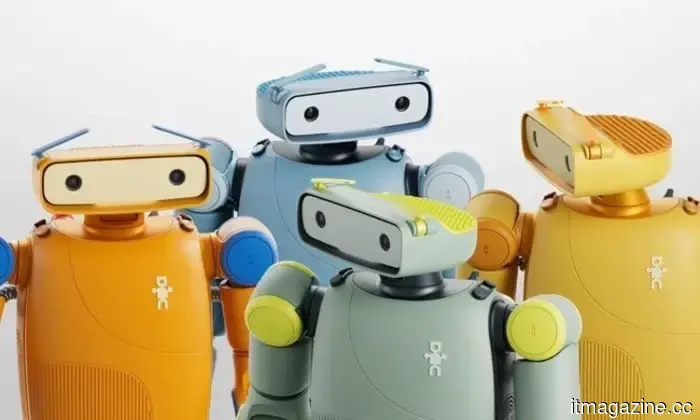
Sci-fi has accurately predicted many consumer technologies, yet reality often presents a more practical and compromised version of those dreams.
Recently, while waiting


Other articles
.jpg) Apple might return to using Intel chips, but not in the way you might anticipate (or fear).
Apple and Intel are said to be considering a manufacturing partnership that could transform the production process of future Apple chips. However, contrary to the initial impression, this does not indicate that Apple is moving away from Apple Silicon or reverting to Macs with Intel processors. A recent report from the Wall Street Journal suggests that Apple and Intel have established a preliminary agreement for Intel to […]
Apple might return to using Intel chips, but not in the way you might anticipate (or fear).
Apple and Intel are said to be considering a manufacturing partnership that could transform the production process of future Apple chips. However, contrary to the initial impression, this does not indicate that Apple is moving away from Apple Silicon or reverting to Macs with Intel processors. A recent report from the Wall Street Journal suggests that Apple and Intel have established a preliminary agreement for Intel to […]
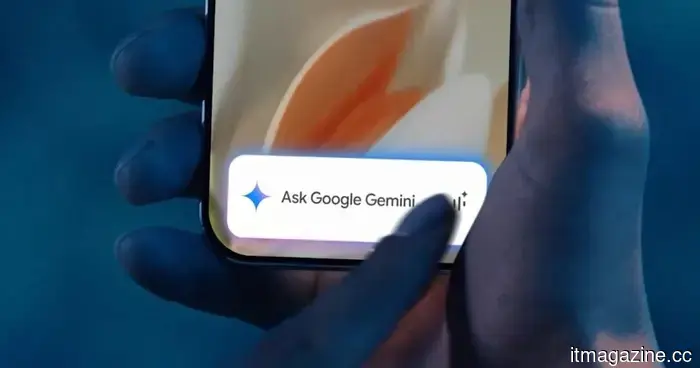 I'm thrilled about the leak of Google’s Gemini Intelligence, but I really hope they change that name.
Google might be working on a more integrated AI layer powered by Gemini that links more intimately with your applications, photos, emails, and daily phone activities.
I'm thrilled about the leak of Google’s Gemini Intelligence, but I really hope they change that name.
Google might be working on a more integrated AI layer powered by Gemini that links more intimately with your applications, photos, emails, and daily phone activities.
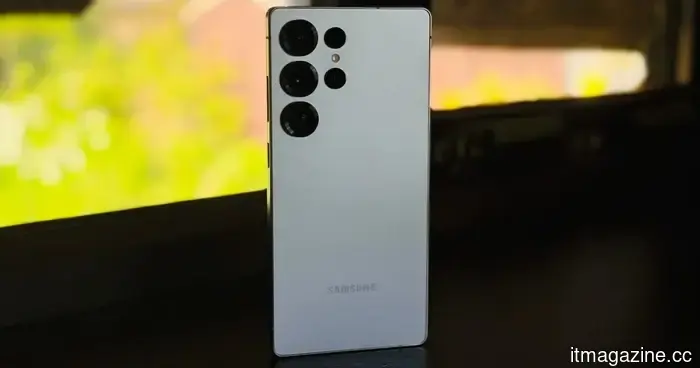 Samsung provided Galaxy S25 users with One UI 8.5, but left out the most sought-after features.
One UI 8.5 is being released for the Galaxy S25 series, introducing new features; however, users are primarily discussing the absence of the Now Nudge and 24MP camera mode.
Samsung provided Galaxy S25 users with One UI 8.5, but left out the most sought-after features.
One UI 8.5 is being released for the Galaxy S25 series, introducing new features; however, users are primarily discussing the absence of the Now Nudge and 24MP camera mode.
 Sci-fi accurately portrayed the gadgets, but missed the mark on the overall atmosphere.
Science fiction envisioned holograms, floating interfaces, and enchanted computers. Meanwhile, consumer technology brought us phones, video calls, smart speakers, and the mundane reality that has actually made it to market.
Sci-fi accurately portrayed the gadgets, but missed the mark on the overall atmosphere.
Science fiction envisioned holograms, floating interfaces, and enchanted computers. Meanwhile, consumer technology brought us phones, video calls, smart speakers, and the mundane reality that has actually made it to market.
 Fraudulent stalking apps have garnered millions of downloads, reflecting on both Google’s security measures and our own choices.
Twenty-eight counterfeit Android applications claiming to spy on call histories garnered 7.3 million downloads on Google Play. The most alarming aspect is not that these apps were deceptive, but rather that such a large number of people desired them to function.
Fraudulent stalking apps have garnered millions of downloads, reflecting on both Google’s security measures and our own choices.
Twenty-eight counterfeit Android applications claiming to spy on call histories garnered 7.3 million downloads on Google Play. The most alarming aspect is not that these apps were deceptive, but rather that such a large number of people desired them to function.
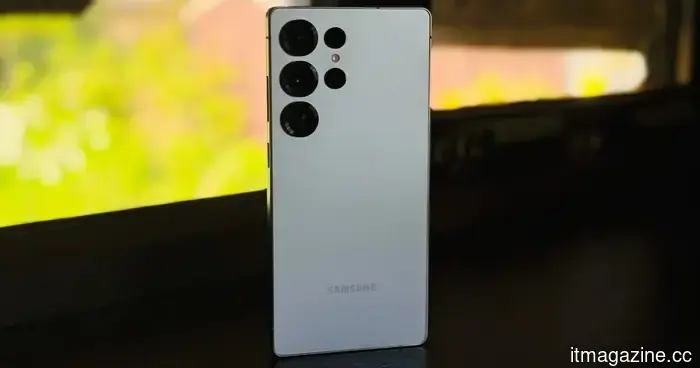 Samsung provided Galaxy S25 users with One UI 8.5 but omitted the features they desired the most.
One UI 8.5 is being released for the Galaxy S25 series, introducing new features; however, users are primarily discussing the absence of the Now Nudge and the 24MP camera mode.
Samsung provided Galaxy S25 users with One UI 8.5 but omitted the features they desired the most.
One UI 8.5 is being released for the Galaxy S25 series, introducing new features; however, users are primarily discussing the absence of the Now Nudge and the 24MP camera mode.
I'm really excited about the Google Gemini Intelligence leak, but I hope they reconsider that name.
Google might be working on a more integrated AI layer powered by Gemini that links more closely with your apps, photos, emails, and daily phone activities.