

What ways can companies obtain real-time financial insights and visibility?
This post is presented in collaboration with QuickBooks.
Accessing real-time financial insights provides you with a precise and current understanding of your business's financial situation whenever you need it.
When your reporting depends on month-end summaries or manually updated spreadsheets, you're always making decisions using outdated figures. For small businesses, this delay poses significant risks.
Decisions about spending, hiring, and cash flow management all hinge on knowing the present status, not just last week’s situation.
How can businesses gain real-time financial insights?
Accounting software that integrates directly with your bank accounts, payment systems, and invoicing continuously updates your financial information as transactions occur. Instead of waiting for weekly exports or monthly closures, you can view your income, expenses, and cash position live at any moment.
The most effective way to access this data is through a dashboard—a single screen that consolidates your critical numbers in one location. Instead of generating separate reports and combining them, a dashboard offers a quick overview of profits and losses, unpaid invoices, upcoming bills, and cash flow. Coupling this with automated reports that operate on a fixed schedule provides a financial reporting system that functions without needing to be built from scratch each week.
Here’s how to select accounting software with reporting considerations:
- Seek out live dashboards: A centralized display of your essential financial metrics that updates automatically as transactions are processed.
- Look for automated reporting: Scheduled profit and loss, cash flow, and accounts receivable reports that require no manual input.
- Find synced financial data: Direct connections to your bank accounts and payment systems ensure your figures are perpetually up to date.
- Search for forecasting tools: The capacity to predict future cash flow based on current income and expense trends.
Why real-time visibility enhances decision-making
When you have an accurate and immediate understanding of your financial position, every decision you make is better informed. Two areas where this is particularly evident for small businesses are cash flow management and expense control.
Cash flow decisions
Cash flow challenges are a prevalent issue for small businesses. According to the Intuit QuickBooks Small Business Insights survey, approximately 37% of small and mid-sized enterprises faced cash flow difficulties at the beginning of 2026.
The problem is that cash flow issues seldom arise suddenly; they accumulate gradually due to delayed payments, increased costs, and inconsistent revenue. A business owner reviewing last month's data may miss the warning signs. Conversely, one monitoring a live dashboard can recognize when issues are arising.
Example: Identifying a cash gap before it occurs
A small construction company finishes a significant project in March, but payment from the client won’t come until May. Meanwhile, expenses for wages, materials, and equipment keep accruing.
With a real-time cash flow perspective, the owner can recognize the emerging gap weeks ahead of time and take proactive measures. They can follow up on overdue invoices, postpone unnecessary purchases, or secure a short-term line of credit.
Without this level of visibility, the financial shortfall can catch the owner off guard. By the time it is reflected in the figures, options for resolution are often constrained.
Expense control
Real-time data allows for quicker identification of overspending before it becomes an issue. If a particular cost category exceeds expectations, a live dashboard will alert you immediately, rather than revealing it in a month-end report.
For instance, a business owner may observe that marketing expenses have already surpassed the budget by the third week of the month and can suspend further expenditures before the month concludes. Such rapid responses are only feasible with current data.
What tools can provide financial insights?
Typically, two types of tools are utilized to monitor business finances: static reports and live dashboards.
Many small businesses begin with static reports such as spreadsheets, exported PDFs, or manually created summaries. As a business expands and requires faster decision-making, live dashboards prove to be more effective. The fundamental differences between these tools relate to timing and effort.
A static report—like a spreadsheet or PDF export—captures data at a specific moment. It is accurate upon creation but becomes outdated immediately after saving. Updating it necessitates someone to gather fresh data, reformat it, and distribute it. For a busy small business owner, this is seldom a weekly task.
In contrast, a live dashboard functions differently. It links directly to your accounting data and refreshes automatically. When a payment is received, the accounts receivable total adjusts. When an expense is recorded, the profit and loss view changes. You don’t need to generate a report; the information is current whenever you log in.
The practical significance of this difference becomes evident when quick decisions are required. If a supplier offers a discount for early payment, you need to determine immediately whether you have the cash to take advantage of it. If a large invoice becomes overdue, you need to know today, not at month-end. Live financial tools provide that speed, in contrast to static reports.
How QuickBooks Online facilitates financial insights
QuickBooks Online offers small businesses a real-time overview of their finances
Other articles
 NHTSA is investigating Uber's partner Avride following 16 robotaxi accidents in Dallas over the span of four months.
The NHTSA has initiated an investigation into Avride, Uber's partner for autonomous vehicles, following 16 accidents in Dallas. The agency pointed to "excessive assertiveness and inadequate capability."
NHTSA is investigating Uber's partner Avride following 16 robotaxi accidents in Dallas over the span of four months.
The NHTSA has initiated an investigation into Avride, Uber's partner for autonomous vehicles, following 16 accidents in Dallas. The agency pointed to "excessive assertiveness and inadequate capability."
 Rocket Lab's revenue for Q1 2026 increases by 64% to a record $200 million, with backlog reaching $2.2 billion and stock prices rising by 30%.
Rocket Lab announced a record revenue of $200 million for Q1, along with a backlog of $2.2 billion and a $30 million contract with Anduril for hypersonics. The stock jumped by 30%, but the Neutron rocket has yet to make its flight.
Rocket Lab's revenue for Q1 2026 increases by 64% to a record $200 million, with backlog reaching $2.2 billion and stock prices rising by 30%.
Rocket Lab announced a record revenue of $200 million for Q1, along with a backlog of $2.2 billion and a $30 million contract with Anduril for hypersonics. The stock jumped by 30%, but the Neutron rocket has yet to make its flight.
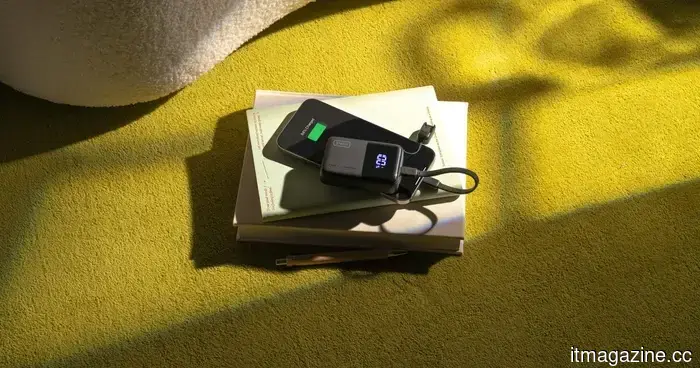 The INIU Pocket Rocket P50 is the tiniest power bank that your pocket truly requires.
Fed up with lugging around heavy power banks wherever you venture? The INIU Pocket Rocket P50 combines 10,000mAh capacity with 45W fast charging in a compact, macaron-sized form that easily fits in your pocket, ensuring you stay powered throughout the day, free from tangled cords or the hassle of searching for outlets.
The INIU Pocket Rocket P50 is the tiniest power bank that your pocket truly requires.
Fed up with lugging around heavy power banks wherever you venture? The INIU Pocket Rocket P50 combines 10,000mAh capacity with 45W fast charging in a compact, macaron-sized form that easily fits in your pocket, ensuring you stay powered throughout the day, free from tangled cords or the hassle of searching for outlets.
 An Apple leak predicts the arrival of a Spatial iPhone featuring a holographic 3D display. It's high time!
A leak indicates that Apple and Samsung are collaborating on a Spatial iPhone featuring a holographic display capable of creating depth effects without the need for glasses, with a target release around 2030.
An Apple leak predicts the arrival of a Spatial iPhone featuring a holographic 3D display. It's high time!
A leak indicates that Apple and Samsung are collaborating on a Spatial iPhone featuring a holographic display capable of creating depth effects without the need for glasses, with a target release around 2030.
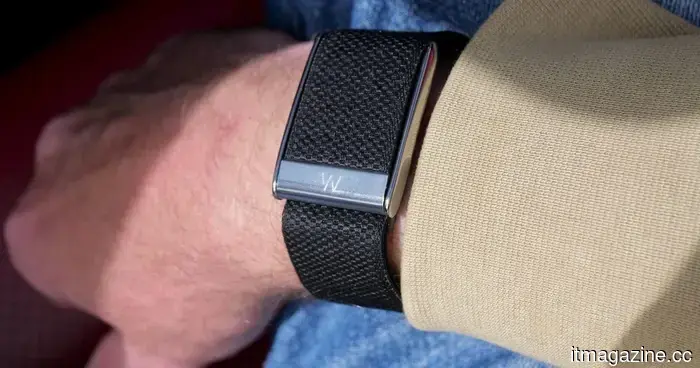 Whoop's reply to Fitbit Air and Google Health involves actual doctors rather than just an AI chatbot.
Google relies on Gemini to support your health, while Whoop is introducing a licensed physician to your display. Here’s what each method truly signifies for your financial situation and your health.
Whoop's reply to Fitbit Air and Google Health involves actual doctors rather than just an AI chatbot.
Google relies on Gemini to support your health, while Whoop is introducing a licensed physician to your display. Here’s what each method truly signifies for your financial situation and your health.
 NHTSA looks into Uber's partner Avride following 16 robotaxi collisions in Dallas over a four-month period.
The NHTSA has launched an investigation into Avride, the autonomous vehicle partner of Uber, following 16 collisions in Dallas. The agency pointed to "excessive assertiveness and inadequate capability."
NHTSA looks into Uber's partner Avride following 16 robotaxi collisions in Dallas over a four-month period.
The NHTSA has launched an investigation into Avride, the autonomous vehicle partner of Uber, following 16 collisions in Dallas. The agency pointed to "excessive assertiveness and inadequate capability."
What ways can companies obtain real-time financial insights and visibility?
This post is presented in paid collaboration with QuickBooks. Real-time financial insights provide you with a precise and current view of your business finances exactly when you require them. Recommended Videos When your reporting depends on month-end summaries or manually updated spreadsheets, you are consistently making decisions based on outdated figures. For small businesses, this delay […]