
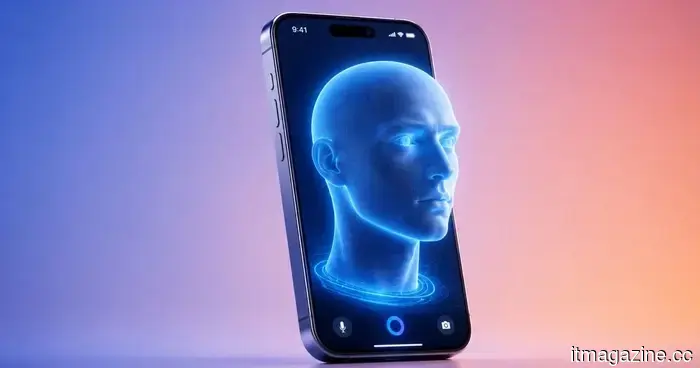
An Apple leak predicts the arrival of a Spatial iPhone featuring a holographic 3D display. It's high time!
Samsung is said to be developing a holographic display, aiming for a tentative release in 2030.
Holograms on an iPhone may seem like a concept from science fiction, but recent leaks suggest that Apple is indeed venturing into this territory. A leaker known as “Schrödinger” on X has claimed that Apple is creating a "Spatial iPhone" featuring a holographic display, which is reportedly in development by Samsung.
The display, codenamed "MH1" (Mobile Holographic 1), comes with some exciting yet unconfirmed details that should be approached with skepticism.
Samsung is allegedly transitioning its 3D Plate technology to mobile with the MH1 (H1) display. This new technology would provide glasses-free holographic depth and spatial AI avatars that hover above the screen. More information is expected from Schrödinger Intel soon.
How would a holographic iPhone screen operate?
The speculated screen integrates advanced eye-tracking with a method referred to as diffractive beam-steering. This technique employs microscopic structures within the display layer to precisely direct light toward your eyes. This would create a glasses-free 3D depth effect that appears to float above the screen.
Moreover, a nano-structured holographic layer is said to be built directly into the AMOLED panel. A proprietary algorithm would allow users to tilt the phone to navigate around objects in a video, which the leaker describes as “360-degree rotation.”
The display is also reported to maintain full 4K resolution for standard 2D usage, with the holographic layer activating only for particular content.
This represents a significant improvement over older 3D displays like the Nintendo 3DS, which was known for its compromised image quality. The project is currently in the first phase of research and development, with an anticipated completion date set for 2030 for holographic smartphones.
Apple’s own background indicates that this concept may not be as unrealistic as it appears.
Apple has been exploring this concept for nearly twenty years, filing patents for glasses-free 3D displays as early as 2008, and again in 2014 for touchscreen holography utilizing micro-lenses.
Apple's Senior Vice President of Hardware Engineering, John Ternus, recently referred to spatial computing as an “inevitability,” suggesting that the technology is still in its early stages.
Currently, iOS 26 features a function called Spatial Scenes, which enhances photos on iPhone 12 and later models with 3D parallax effects. This offers a brief but indicative glimpse into Apple's future aspirations.
While the prospect of a Spatial iPhone by 2030 isn't certain, Apple's patents, Samsung's research on holographic displays, and Ternus's statements imply that this is not mere speculation.
Manisha Priyadarshini is a tech and entertainment writer with over nine years of editorial experience.
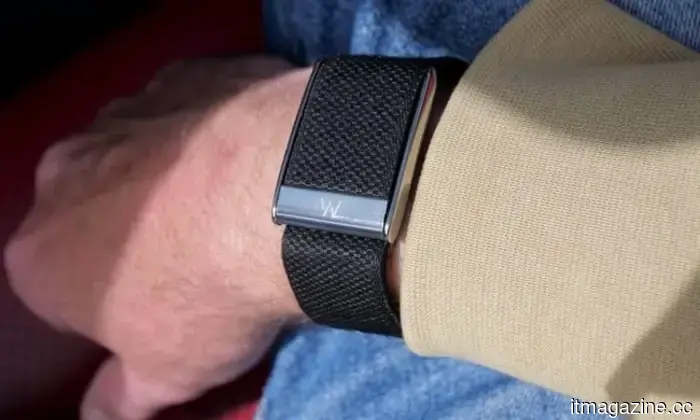
Whoop’s answer to Fitbit Air and Google Health focuses on real doctors, rather than just an AI chatbot.
In the competition for health data ownership, Google opted for AI, whilst Whoop chose to utilize real doctors. This key decision might determine which fitness tracker serious health users prefer in 2026 and thereafter.
Recently, Google unveiled the Fitbit Air to compete directly with the screenless Whoop fitness band, rebranded the Fitbit app to Google Health, and launched a Gemini-powered AI coach. A day later, Whoop countered with the introduction of on-demand video consultations with licensed clinicians for U.S. users.
The comparison is striking. While Google is betting on AI as a general health adviser, Whoop is focusing on engaging real, licensed physicians, arguing that they can better serve fitness-oriented users.
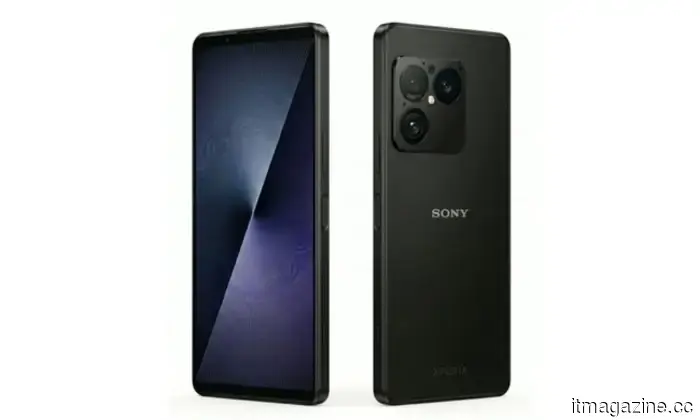
The Xperia 1 VIII leak finally gives Sony some confidence.
Vivid new colors might refresh Sony’s next flagship, provided the price doesn’t dampen enthusiasm.
Sony’s Xperia phones have rarely been dull, but they have often seemed overly restrained. The latest Xperia 1 VIII leak changes that, with images showing Sony’s upcoming premium phone in attention-grabbing colors.
In a competitive high-end Android market, the initial impression must work harder. Sony’s next device still requires the usual flagship features, but a more distinctive visual appeal could enhance its chances of standing out.
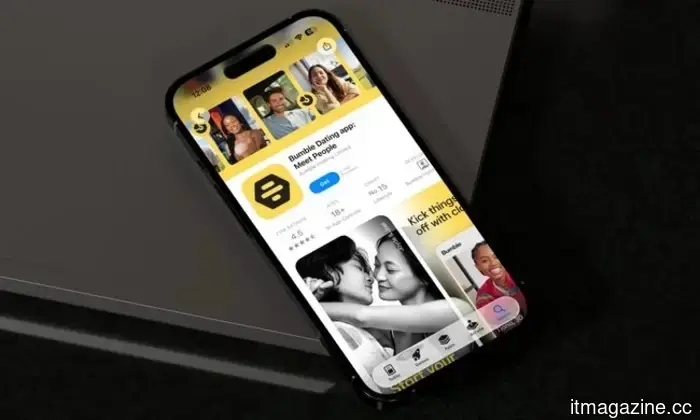
Bumble plans to eliminate the frustrations of swiping on dating apps, but the future remains uncertain.
Bumble is also moving away from its women-first rule, alongside the swipe feature, as it transitions to an AI-driven format.
If the endless cycle of swiping left and right feels tiresome, Bumble seems to agree. In an interview with Axios, CEO Whitney Wolfe Herd confirmed that Bumble will be abandoning the swipe feature entirely, replacing it with what she refers to as "revolutionary for the category." While she did not specify the new approach, the changes will begin rolling out in selected markets starting in Q4 2026.

Other articles
 NHTSA looks into Uber's partner Avride following 16 robotaxi collisions in Dallas over a four-month period.
The NHTSA has launched an investigation into Avride, the autonomous vehicle partner of Uber, following 16 collisions in Dallas. The agency pointed to "excessive assertiveness and inadequate capability."
NHTSA looks into Uber's partner Avride following 16 robotaxi collisions in Dallas over a four-month period.
The NHTSA has launched an investigation into Avride, the autonomous vehicle partner of Uber, following 16 collisions in Dallas. The agency pointed to "excessive assertiveness and inadequate capability."
 What ways can companies obtain real-time financial insights and visibility?
This post is presented in paid collaboration with QuickBooks. Real-time financial insights provide you with a precise and current view of your business finances exactly when you require them. Recommended Videos When your reporting depends on month-end summaries or manually updated spreadsheets, you are consistently making decisions based on outdated figures. For small businesses, this delay […]
What ways can companies obtain real-time financial insights and visibility?
This post is presented in paid collaboration with QuickBooks. Real-time financial insights provide you with a precise and current view of your business finances exactly when you require them. Recommended Videos When your reporting depends on month-end summaries or manually updated spreadsheets, you are consistently making decisions based on outdated figures. For small businesses, this delay […]
 NHTSA is investigating Uber's partner Avride following 16 robotaxi accidents in Dallas over the span of four months.
The NHTSA has initiated an investigation into Avride, Uber's partner for autonomous vehicles, following 16 accidents in Dallas. The agency pointed to "excessive assertiveness and inadequate capability."
NHTSA is investigating Uber's partner Avride following 16 robotaxi accidents in Dallas over the span of four months.
The NHTSA has initiated an investigation into Avride, Uber's partner for autonomous vehicles, following 16 accidents in Dallas. The agency pointed to "excessive assertiveness and inadequate capability."
 The Pentagon has introduced war.gov/ufo, featuring 162 declassified UFO files as part of Trump's PURSUE initiative.
The Pentagon has made available 162 UFO documents on war.gov/ufo, which include mysterious Apollo 17 images and footage of military sightings. Among these files, 108 contain partial redactions.
The Pentagon has introduced war.gov/ufo, featuring 162 declassified UFO files as part of Trump's PURSUE initiative.
The Pentagon has made available 162 UFO documents on war.gov/ufo, which include mysterious Apollo 17 images and footage of military sightings. Among these files, 108 contain partial redactions.
 Hackers compromised Poland's water treatment facilities by exploiting default passwords, while the US encounters similar threats to its critical infrastructure.
Poland's ABW revealed that five water treatment facilities experienced ICS breaches due to the use of default passwords. The US EPA identified that 70% of American water utilities do not meet fundamental cybersecurity standards.
Hackers compromised Poland's water treatment facilities by exploiting default passwords, while the US encounters similar threats to its critical infrastructure.
Poland's ABW revealed that five water treatment facilities experienced ICS breaches due to the use of default passwords. The US EPA identified that 70% of American water utilities do not meet fundamental cybersecurity standards.
 Cloudflare reduces its workforce by 1,100 positions as it shifts focus to agentic AI, even though it surpassed earnings expectations for Q1 2026, resulting in a 24% drop in stock value.
Cloudflare reduced its workforce by 20% following a 600% increase in AI usage over three months. Despite Q1 revenue surpassing expectations at $640 million, shares dropped 24% due to the news of the restructuring.
Cloudflare reduces its workforce by 1,100 positions as it shifts focus to agentic AI, even though it surpassed earnings expectations for Q1 2026, resulting in a 24% drop in stock value.
Cloudflare reduced its workforce by 20% following a 600% increase in AI usage over three months. Despite Q1 revenue surpassing expectations at $640 million, shares dropped 24% due to the news of the restructuring.
An Apple leak predicts the arrival of a Spatial iPhone featuring a holographic 3D display. It's high time!
A leak indicates that Apple and Samsung are collaborating on a Spatial iPhone featuring a holographic display capable of creating depth effects without the need for glasses, with a target release around 2030.