
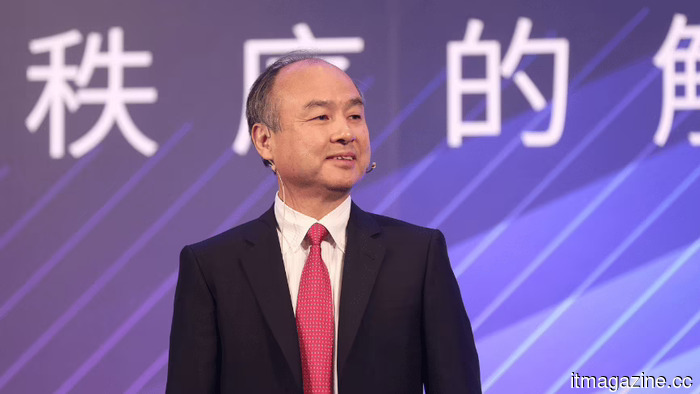
SoftBank reduces the target for its OpenAI-supported margin loan by 40% to $6 billion.
Lenders have expressed reluctance to accept OpenAI shares as collateral for loans. This setback comes just two weeks after the initial $10 billion request was made and serves as a clear indication that even a primary funding round valuing the company at $852 billion hasn't reconciled the difference between its valuation and what banks are willing to lend.
According to Bloomberg, SoftBank Group has reduced the amount of margin loan it aims to secure against its OpenAI investment to about $6 billion, down from the initial $10 billion, following hesitance from multiple creditors regarding the valuation. Over recent weeks, the Tokyo-based conglomerate and the banks coordinating the loan have been separately presenting a smaller transaction to lenders.
Discussions are ongoing, and the final amount could still fluctuate. The pricing details have not been re-released; the initial proposal included an indicative margin of approximately 425 basis points over SOFR, suggesting a borrowing rate close to 7.9% at current levels.
This borrowing arrangement is atypical for SoftBank, not because of the size but due to the collateral involved. Margin loans against publicly traded shares are a common treasury instrument, while those against stakes in private companies, regardless of size, are less conventional. The valuation confidence of creditors affects how these loans are priced, particularly in times of stress.
The issues lenders raised pertain to OpenAI's $852 billion post-money valuation established during March's primary round, which is both recent and substantial. SoftBank's initial $10 billion margin loan request already indicated conservative advance rates, reflecting a significant discount. The subsequent reduction hints at an even larger discount lenders are willing to apply.
There are two key pieces of evidence in the lenders' dossier. Firstly, in the secondary market, discussions about OpenAI share prices have tended to fall below the $852 billion threshold, with sellers outnumbering buyers by approximately five to one in recent transactions. Secondly, SoftBank has accumulated a considerable amount of debt against its stake.
The group secured a $40 billion bridge loan for the latest OpenAI follow-up and is leveraging its OpenAI shares for additional financing. Each new layer of debt diminishes the buffer banks have in case of a market shock affecting the collateral.
Last month, S&P downgraded SoftBank’s credit outlook due to worries that the scale of its exposure to OpenAI might jeopardize the group's liquidity and the overall credit quality of its asset base. The agency did not specifically mention the margin loan, as it was unnecessary; the overall signal remained the same.
Currently, SoftBank's total committed exposure to OpenAI will reach approximately $64.6 billion upon closing the latest $30 billion follow-on round, translating to about 13% ownership of the company. To attain this figure, Masayoshi Son sold the entire Nvidia stake (around $5.83 billion) and the remaining T-Mobile holding (approximately $12.73 billion) between June and December 2025, in addition to borrowing the $40 billion bridge secured to fund the OpenAI follow-on, which involved eight banks.
The group's total debt now stands at approximately ¥20.45 trillion ($135 billion). The downsized margin loan would increase this amount further, but it would do so at a favorable time in the financing structure: collateralized, accessible, and refinanciable, rather than being locked into long-term bonds.
SoftBank has been investing at a similar pace. Besides funding the OpenAI round, the company has also invested in Stargate, a joint AI infrastructure project with OpenAI and Oracle, as well as adjacent initiatives like converting a Sharp LCD factory into a battery facility for AI data centers. Each of these investments requires cash within a few quarters.
SoftBank has ample liquidity. The group has access to various debt avenues and has historically been able to refinance throughout economic cycles.
The interest in the margin loan situation is not solely whether the firm finalizes the loan at $6 billion, $8 billion, or revisits $10 billion, but rather what these developments indicate about how the financing industry values OpenAI in comparison to its primary marks.
There are two possible interpretations. The more optimistic view is that lenders are being methodically cautious when dealing with a new class of collateral, and that the discounts will shrink as OpenAI matures and a clearer public valuation emerges. The more pessimistic perspective is that the secondary-market pricing is accurate and the primary funding round was an exception; in this scenario, the entire SoftBank-OpenAI positioning is worth significantly less than initially reported.
Neither interpretation can be confirmed at this point. Both will be evaluated when SoftBank reports its earnings in early August, when OpenAI is anticipated to release updated revenue data, and when the next batch of secondary shares is sold.
A close at $6 billion with the original 425 basis points spread, or a wider spread for the same amount, will provide insight into the actual cost of borrowing against private AI equity. Additionally, it will be
Other articles
 This latest voice update from OpenAI makes Siri and Alexa seem like they could use some more training.
OpenAI has introduced three new audio models capable of reasoning, translating in over 70 languages, and transcribing speech in real time, establishing voice as a truly valuable interface for developers.
This latest voice update from OpenAI makes Siri and Alexa seem like they could use some more training.
OpenAI has introduced three new audio models capable of reasoning, translating in over 70 languages, and transcribing speech in real time, establishing voice as a truly valuable interface for developers.
 OpenAI introduces GPT-Realtime-2 along with two new voice API models.
OpenAI has released three new voice models: GPT-Realtime-2, GPT-Realtime-Translate, and GPT-Realtime-Whisper.
OpenAI introduces GPT-Realtime-2 along with two new voice API models.
OpenAI has released three new voice models: GPT-Realtime-2, GPT-Realtime-Translate, and GPT-Realtime-Whisper.
 ChatGPT now allows you to designate someone to reach out to if circumstances become difficult.
ChatGPT now has the ability to notify a trusted person if a situation becomes serious. Although it’s a straightforward feature, it could be one of the most human-like aspects that OpenAI has integrated into its chatbot.
ChatGPT now allows you to designate someone to reach out to if circumstances become difficult.
ChatGPT now has the ability to notify a trusted person if a situation becomes serious. Although it’s a straightforward feature, it could be one of the most human-like aspects that OpenAI has integrated into its chatbot.
 Top Global HR Software for International Businesses in 2026
In 2026, we evaluated the top global HR software platforms for international businesses, including HiBob, Rippling, BambooHR, Personio, UKG, Sage HR, and ADP.
Top Global HR Software for International Businesses in 2026
In 2026, we evaluated the top global HR software platforms for international businesses, including HiBob, Rippling, BambooHR, Personio, UKG, Sage HR, and ADP.
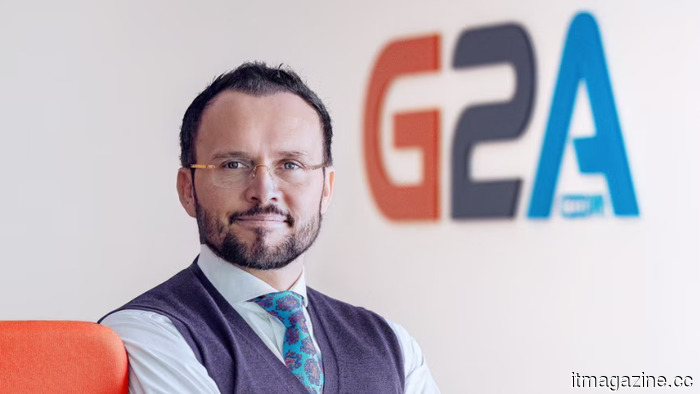 G2A appoints CVC veteran Krzysztof Krawczyk as the chair of its advisory board.
Krzysztof Krawczyk, who established CVC's Warsaw office, has taken a stake in G2A and has been appointed as the chair of its advisory board as the marketplace shifts its focus toward mergers and acquisitions and artificial intelligence.
G2A appoints CVC veteran Krzysztof Krawczyk as the chair of its advisory board.
Krzysztof Krawczyk, who established CVC's Warsaw office, has taken a stake in G2A and has been appointed as the chair of its advisory board as the marketplace shifts its focus toward mergers and acquisitions and artificial intelligence.
 NVIDIA secures a $2.1 billion warrant in IREN as part of a 5GW AI data center agreement.
NVIDIA plans to invest as much as $2.1 billion in data center operator IREN via a five-year warrant for 30 million shares.
NVIDIA secures a $2.1 billion warrant in IREN as part of a 5GW AI data center agreement.
NVIDIA plans to invest as much as $2.1 billion in data center operator IREN via a five-year warrant for 30 million shares.
SoftBank reduces the target for its OpenAI-supported margin loan by 40% to $6 billion.
SoftBank has reduced its margin loan target supported by OpenAI from $10 billion to potentially as low as $6 billion due to lenders' worries regarding the valuation of OpenAI shares used as collateral.