

The Pentagon has introduced war.gov/ufo, featuring 162 declassified UFO files as part of Trump's PURSUE initiative.
TL;DR: The Pentagon has launched war.gov/ufo, featuring 162 declassified UFO files, which include unexplained Apollo 17 images and military sighting reports. Two-thirds of the documents are partially redacted.
On Friday, the Department of War introduced a website named war.gov/ufo that houses 162 files, featuring unexplainable photographs from the Apollo 17 mission, infrared footage of unidentified objects, and internal memos detailing sightings in Iraq and Syria that remain unresolved. Approximately two-thirds of the files have partial redactions. The government claims this move is a step towards transparency.
This release marks the initial set from PURSUE, the Presidential Unsealing and Reporting System for UAP Encounters. This interagency initiative was created after President Trump directed the Department of War in February to locate, review, declassify, and publish unresolved records concerning unidentified anomalous phenomena. The acronym is a backronym, but the initiative itself is legitimate.
The files consist of 120 PDFs, 28 videos, and 14 images sourced from agencies including the FBI, the Department of War, NASA, and the State Department. The documents cover a span of decades and global locations. The approximately two dozen videos total 41 minutes, showcasing encounters from 2020 to 2026, mostly captured by infrared cameras focusing on white objects that appear as small dots in the footage.
The most talked-about document is a NASA photo from the Apollo 17 mission, taken in December 1972, which displays three dots in a triangular arrangement within the lunar sky. The Department of War noted in the accompanying caption that “there is no consensus regarding the nature of the anomaly,” although a preliminary analysis suggests it could be a “physical object.” The photo is 54 years old, but the analysis is fresh, leading to the conclusion that its nature remains unknown.
Additional files include internal military memos describing “one possible small UAP” sighted in Iraq in 2022 and “multiple glares or lights from an unidentifiable source” in Syria in 2024. The terminology used is bureaucratic and measured, contrasting with the nature of the phenomena.
PURSUE is coordinated among various government entities, including the White House, the Office of the Director of National Intelligence, the Department of Energy, the Department of War’s All-Domain Anomaly Resolution Office, NASA, the FBI, and other intelligence components. The AARO, established in 2023, previously released some UAP-related materials on its website, but the PURSUE initiative expands on this in scope and visibility.
Trump's directive, made via Truth Social on February 19, 2026, called on federal agencies to identify, review, and declassify documents about extraterrestrial life and unidentified aerial phenomena. The Department of War announced that new documents would be released regularly “as they are discovered and declassified,” with updates every few weeks.
The website features a stark design using white typewriter-style text against a black background, creating a distinctive atmosphere rather than institutional seriousness. This site is situated on war.gov, the domain for a department that also recently awarded Scale AI a $500 million contract to integrate artificial intelligence into military decision-making. The same department spending half a billion dollars on AI for classified networks is now sharing images of unexplained phenomena.
Of the 162 files, 108 include redactions. The Department of War explained that information was withheld to “protect the identity of eyewitnesses, the location of government facilities, or potentially sensitive military site information unrelated to UAP.” This rationale is standard for declassified documents. However, the effect is that most material released through a transparency initiative is only partially available.
The rate of redaction does not necessarily imply concealment. Government declassification protocols typically redact information that could jeopardize intelligence sources, methods, or individual safety. However, the discrepancy between the initiative's declared purpose of “historic transparency” and the reality of 108 documents with partial redactions contributes to the mistrust that this effort aims to alleviate.
The structure of the program also restricts what can be disclosed. Documents from intelligence agencies require their review before publication. The interagency collaboration that ensures the comprehensiveness of PURSUE also results in delays. While the Department of War manages the website, it does not control all content that may feature on it.
This release takes place against a backdrop of significant technological investment shaping the defense landscape, making the UAP issue increasingly intriguing and complex. SpaceX, confirming that Elon Musk maintains dominant voting control through its S-1 filing, is among eight companies authorized to deploy AI on the Department of War’s classified networks. SpaceX has invested over $15 billion in its Starship project and is striving to make space travel as routine as airline schedules. The surge in objects in low Earth orbit—ranging from satellites to debris and test vehicles—has grown dramatically since the period when most of the recently declassified UAP
Other articles
 Cloudflare reduces its workforce by 1,100 positions as it shifts focus to agentic AI, even though it surpassed earnings expectations for Q1 2026, resulting in a 24% drop in stock value.
Cloudflare reduced its workforce by 20% following a 600% increase in AI usage over three months. Despite Q1 revenue surpassing expectations at $640 million, shares dropped 24% due to the news of the restructuring.
Cloudflare reduces its workforce by 1,100 positions as it shifts focus to agentic AI, even though it surpassed earnings expectations for Q1 2026, resulting in a 24% drop in stock value.
Cloudflare reduced its workforce by 20% following a 600% increase in AI usage over three months. Despite Q1 revenue surpassing expectations at $640 million, shares dropped 24% due to the news of the restructuring.
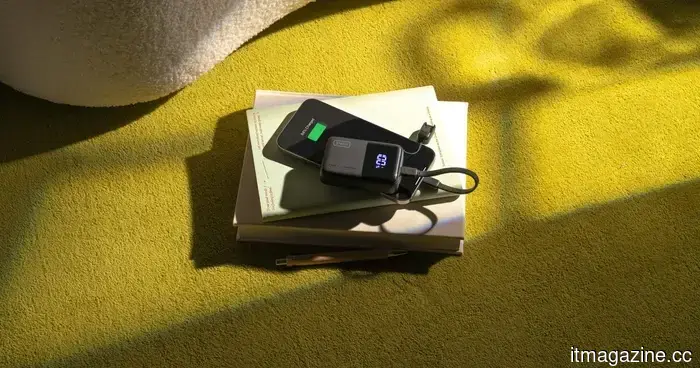 The INIU Pocket Rocket P50 is the tiniest power bank that your pocket truly requires.
Fed up with lugging around heavy power banks wherever you venture? The INIU Pocket Rocket P50 combines 10,000mAh capacity with 45W fast charging in a compact, macaron-sized form that easily fits in your pocket, ensuring you stay powered throughout the day, free from tangled cords or the hassle of searching for outlets.
The INIU Pocket Rocket P50 is the tiniest power bank that your pocket truly requires.
Fed up with lugging around heavy power banks wherever you venture? The INIU Pocket Rocket P50 combines 10,000mAh capacity with 45W fast charging in a compact, macaron-sized form that easily fits in your pocket, ensuring you stay powered throughout the day, free from tangled cords or the hassle of searching for outlets.
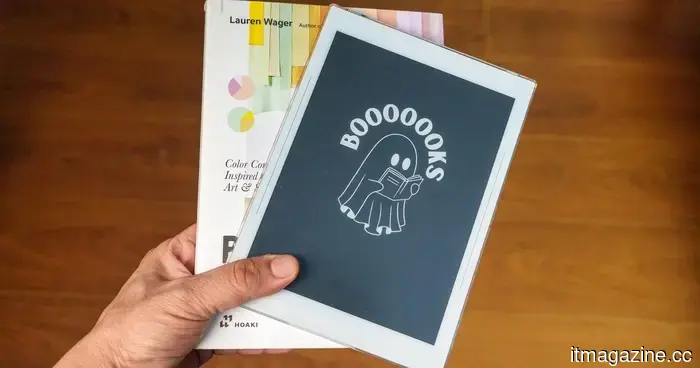 I stopped using physical books, and my reading experience has improved significantly.
Reading at night, integrated dictionaries, more affordable books, and notes you'll find useful later. This is the argument for abandoning physical books and never returning to them.
I stopped using physical books, and my reading experience has improved significantly.
Reading at night, integrated dictionaries, more affordable books, and notes you'll find useful later. This is the argument for abandoning physical books and never returning to them.
 How Google Workspace assists small businesses in scaling with an AI co-founder.
Google Workspace with Gemini assists small teams in working more efficiently by serving as a digital co-founder, streamlining tasks and enhancing productivity throughout daily workflows.
How Google Workspace assists small businesses in scaling with an AI co-founder.
Google Workspace with Gemini assists small teams in working more efficiently by serving as a digital co-founder, streamlining tasks and enhancing productivity throughout daily workflows.
 Hackers compromised Poland's water treatment facilities by exploiting default passwords, while the US encounters similar threats to its critical infrastructure.
Poland's ABW revealed that five water treatment facilities experienced ICS breaches due to the use of default passwords. The US EPA identified that 70% of American water utilities do not meet fundamental cybersecurity standards.
Hackers compromised Poland's water treatment facilities by exploiting default passwords, while the US encounters similar threats to its critical infrastructure.
Poland's ABW revealed that five water treatment facilities experienced ICS breaches due to the use of default passwords. The US EPA identified that 70% of American water utilities do not meet fundamental cybersecurity standards.
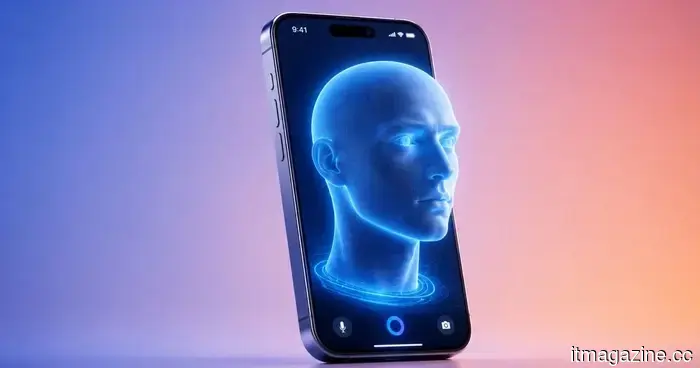 An Apple leak predicts the arrival of a Spatial iPhone featuring a holographic 3D display. It's high time!
A leak indicates that Apple and Samsung are collaborating on a Spatial iPhone featuring a holographic display capable of creating depth effects without the need for glasses, with a target release around 2030.
An Apple leak predicts the arrival of a Spatial iPhone featuring a holographic 3D display. It's high time!
A leak indicates that Apple and Samsung are collaborating on a Spatial iPhone featuring a holographic display capable of creating depth effects without the need for glasses, with a target release around 2030.
The Pentagon has introduced war.gov/ufo, featuring 162 declassified UFO files as part of Trump's PURSUE initiative.
The Pentagon has made available 162 UFO documents on war.gov/ufo, which include mysterious Apollo 17 images and footage of military sightings. Among these files, 108 contain partial redactions.