
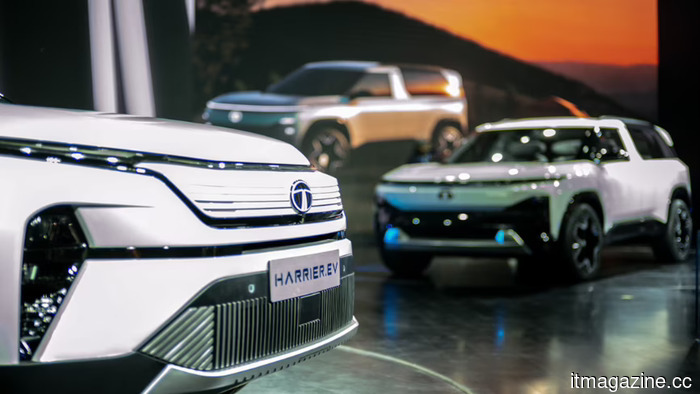
Tata and JSW to invest $1 billion in creating India's alternative to reliance on Chinese batteries.
The two conglomerates are each investing in separate R&D centers that concentrate on next-generation battery chemistries and advanced EV systems. This investment serves as a safeguard, as both companies currently rely on critical battery components from Chinese suppliers and seek alternatives in case Beijing tightens export regulations again. India's largest steel and diversified conglomerates are committing nearly $1 billion to address a pressing issue for the nation's electric-vehicle industry: what happens when Chinese suppliers become unresponsive?
Tata Group and JSW Group are individually funding research and development centers to cultivate in-house expertise in next-generation battery technologies and advanced EV systems, as reported by Bloomberg on Wednesday, citing insiders familiar with the initiatives. The total investment is slightly below $1 billion.
Both firms are reacting to the same vulnerabilities. India’s EV sector, including the operations of these companies, heavily depends on Chinese cells, materials, and equipment. The tightening of China's export controls on graphite, equipment for lithium processing, and machinery for battery production has transitioned this issue from a procurement concern to a challenge at the board level within the past year.
Details of their funding initiatives:
Tata's research and development initiative is integrated within Agratas, the group’s battery division, which is in the process of constructing a 20 GWh gigafactory in Sanand, Gujarat to supply Tata Motors. The new investment focuses on upstream areas: chemistry, cell design, and process expertise that the group has typically licensed or sourced from others. Agratas previously collaborated with Tata Technologies to expedite battery solutions for mobility and renewable energy storage; this new funding expands that work to include materials and proprietary cell formats.
On the other hand, JSW Group takes a different yet parallel approach. JSW Motors, the joint venture through which the conglomerate markets MG cars in India with SAIC, launched JNEXT, the JSW NextGen Technology Center, in Pune in February through a collaboration with Tata Elxsi. Neither company has publicly disclosed the investment amounts. However, Bloomberg's sources estimate a combined investment of "nearly $1 billion" allocated primarily across multi-year R&D programs rather than capital expenditure on production lines.
The catalyst for this shift is policy changes in China. Late last year, executives and engineers from Reliance Industries sought to secure around $1.1 billion worth of equipment for a planned battery plant in Wuxi; shortly after, Beijing announced stricter export controls on essential battery-making technology. Since then, numerous equipment shipments to India have faced delays or rerouting.
During this time, Tata Motors has increasingly relied on Chinese suppliers. The Curvv.ev was launched using cells from Octillion Power Systems, and the company established a sourcing agreement with Envision AESC for higher-density battery packs. These arrangements have further tightened the supply chain rather than broadening it, making the development of a domestic chemistry program an evident medium-term safeguard.
JSW’s exposure has a different structural dimension. The MG joint venture, which Sajjan Jindal’s group holds a 35% stake in, sources around 60% of its components from China. JSW has publicly announced a target of producing a million new-energy vehicles by 2030 and is planning to build a 10 GWh battery plant in collaboration with LG Energy Solution. The new R&D initiative aims to achieve these goals without having to renegotiate the SAIC arrangement whenever Beijing alters its regulations. This dependency situation mirrors the challenges Europe is facing and is influencing capital allocation in Mumbai and New Delhi, similarly to Berlin and Paris.
Competitive landscape:
Tata is no longer the dominant leader in India's EV market. Mahindra surpassed Tata in EV revenue in the most recent fiscal year, although Tata still leads in sales volume. JSW MG has seen its market share double in the past year. These competing R&D investments coincide with this evolving landscape: each conglomerate requires proprietary technology to protect its profit margins, not just keep pace with its competitors.
The situation resembles the push for homegrown battery cells in Europe, which has been driven by the collapse of Northvolt and the necessity for energy security. Indian companies have studied this closely: the principles of chemistry sovereignty, recycling capacity (as demonstrated by UK recycler Altilium’s recent funding round), and policy support for domestic cell production are now key topics in India as well.
However, India’s industrial policy, which includes the PLI scheme for advanced chemistry cells, has been in place for several years; what has been lacking is private R&D investment. The announcements from Tata and JSW fill that gap.
What’s at stake?
Even with a combined $1 billion allocated to research, neither conglomerate can expect to overcome China’s dominance in battery chemistry within this decade. The more achievable goal is to develop sufficient internal capability to design, validate, and customize battery cells, qualify alternative suppliers, and negotiate with Chinese partners from a stronger position.
This ambition influences their spending priorities. Most funds will be allocated to acquiring talent, lab equipment, and pilot production
Other articles
 Apple might offer an unexpected twist in repairability with its foldable iPhone.
The speculated iPhone Ultra might fold similar to its competitors, but its most notable feature could be simplifying the process of foldable repairs, making them less daunting.
Apple might offer an unexpected twist in repairability with its foldable iPhone.
The speculated iPhone Ultra might fold similar to its competitors, but its most notable feature could be simplifying the process of foldable repairs, making them less daunting.
 Huawei makes smart devices an extension of humanity.
Huawei held a global launch of its new products in Bangkok.
Huawei makes smart devices an extension of humanity.
Huawei held a global launch of its new products in Bangkok.
 Huawei makes smart devices an extension of humanity.
Huawei held a global launch of its new products in Bangkok.
Huawei makes smart devices an extension of humanity.
Huawei held a global launch of its new products in Bangkok.
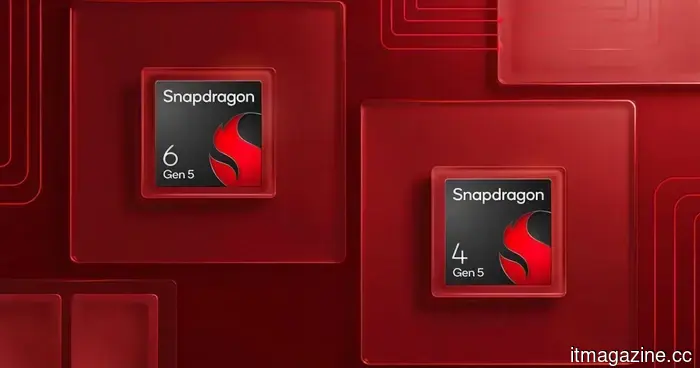 Qualcomm's latest Snapdragon processors enable AI camera features, 90FPS gaming, and improved connectivity for affordable smartphones.
Qualcomm's latest Snapdragon 6 Gen 5 and 4 Gen 5 processors introduce AI cameras, enhanced display fluidity, and improved gaming experiences for mid-range smartphones set to debut later this year.
Qualcomm's latest Snapdragon processors enable AI camera features, 90FPS gaming, and improved connectivity for affordable smartphones.
Qualcomm's latest Snapdragon 6 Gen 5 and 4 Gen 5 processors introduce AI cameras, enhanced display fluidity, and improved gaming experiences for mid-range smartphones set to debut later this year.
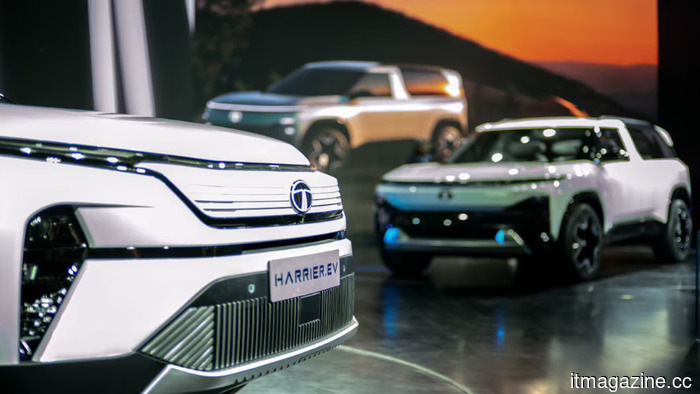 Tata and JSW to invest $1 billion in developing India's independence from Chinese batteries.
Tata Group and JSW Group are individually investing in research and development centers focused on next-generation batteries and electric vehicle systems, with a total funding of $1 billion.
Tata and JSW to invest $1 billion in developing India's independence from Chinese batteries.
Tata Group and JSW Group are individually investing in research and development centers focused on next-generation batteries and electric vehicle systems, with a total funding of $1 billion.
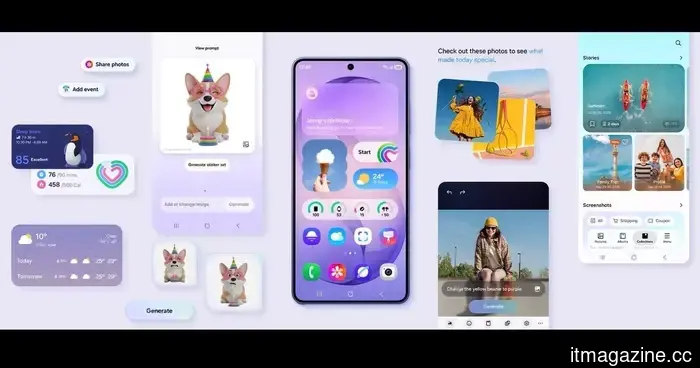 Samsung's One UI 8.5 update has officially been released, introducing new AI enhancements for these older Galaxy devices.
Samsung's One UI 8.5 update is providing older Galaxy smartphones and tablets with a new AI enhancement, featuring more intelligent call management, simplified photo editing, and several useful features taken from the Galaxy S26 series.
Samsung's One UI 8.5 update has officially been released, introducing new AI enhancements for these older Galaxy devices.
Samsung's One UI 8.5 update is providing older Galaxy smartphones and tablets with a new AI enhancement, featuring more intelligent call management, simplified photo editing, and several useful features taken from the Galaxy S26 series.
Tata and JSW to invest $1 billion in creating India's alternative to reliance on Chinese batteries.
Tata Group and JSW Group are independently investing in R&D centers focused on next-generation batteries and electric vehicle systems, totaling a joint investment of $1 billion.