

Google addresses the silent installation of Gemini Nano in Chrome but does not fully tackle the issue of user consent.
Google Chrome's Vice President and General Manager Parisa Tabriz has addressed the backlash regarding Chrome's method of automatically downloading a 4GB AI model onto users' devices without prior notification, stating that on-device AI is pivotal to the browser's security and development strategy.
What sparked the criticism
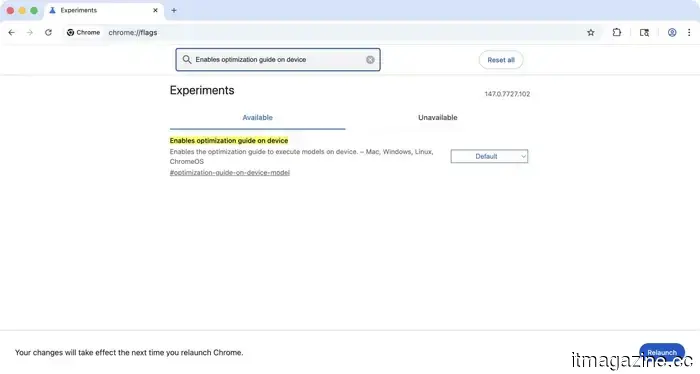
Privacy researcher Alexander Hanff highlighted this issue by finding that Chrome quietly downloads the Gemini Nano model, which is approximately 4GB in size, without alerting users or providing a straightforward opt-out option. Interestingly, if the file is manually deleted, it will be automatically re-downloaded upon the next restart of Chrome. We previously published details on how to disable this feature.
The criticism grew when observers pointed out a notable contradiction: the prominent "AI Mode" feature in the address bar does not utilize the locally stored model at all. Instead, queries entered into this feature are sent to Google's cloud servers, which means users store a 4GB file that has no relevance to Chrome’s most visible AI functionality.
Privacy advocates have also expressed worries about potential breaches of EU privacy regulations, particularly the ePrivacy Directive's mandate for user consent prior to storing data on devices.
Google's explanation
In her recent posts on X, Tabriz recognized the situation, explaining that Google has incorporated Gemini Nano into Chrome since 2024 as a lightweight, on-device model that is essential for both Chrome’s developer APIs and its security features, such as identifying scams.
She mentioned that the model processes information locally instead of sending it to Google’s servers and stated that it will automatically uninstall when a device runs low on storage.
However, Tabriz did not directly address the consent issue, nor did she clarify why the model reinstalls itself if it is deleted by the user. Google has separately stated that users are able to disable and remove the model through Chrome’s settings, and once turned off, it will not be re-downloaded.
Pranob is an experienced tech journalist with over eight years of experience in the consumer technology sector. His work has been…
A surprising study has led me to reconsider my use of AI, and it may be wise for you to do the same
The issue isn't AI itself, but rather what you are asking it to do for you.
I have typically perceived myself as a casual AI user, not relying on ChatGPT to compose my emails or convert my thoughts into narrative form. Primarily, I use it for quick searches or to fill in gaps in my memory. This approach felt responsible. As a journalist, I am cognizant of AI's hallucination issues and the need for "truth verification" when utilizing AI assistance. However, a recent study has made me question the limited benefits I have received from AI tools like Google's Gemini for everyday tasks.
The findings are tougher to ignore than one might anticipate.
Google has discontinued Project Mariner, the AI agent that browsed the web like a human.
The autonomous browsing agent that Google unveiled at the I/O 2025 event is no longer operational. The technology is now being integrated into the Gemini API and Gemini Agent.
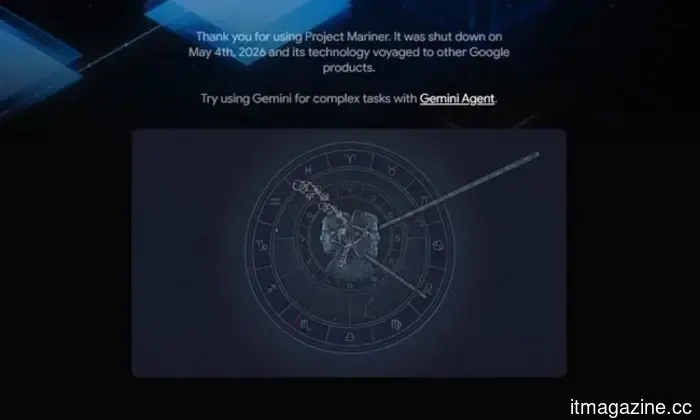
Google has terminated Project Mariner, the self-governing web browsing agent introduced at last year’s I/O. This tool was capable of navigating Chrome, completing forms, searching listings, and booking travel by taking screenshots and recognizing page elements visually. Its webpage now displays a notice indicating that the shutdown occurred on May 4, 2026.
A browser agent that saw exactly what you saw.
Anthropic has just enhanced Claude with the ability to dream between tasks, making agents significantly smarter.
This ability to dream transforms Claude from an AI that loses all memory once a session ends into one that gradually improves on its tasks in between active work periods.
Anthropic has added capabilities reminiscent of a science fiction narrative to Claude, including Dreaming, Outcomes, and Multiagent Orchestration. While the naming of Dreaming carries significant impact, it also holds practical importance for developers creating AI agents capable of managing complex, long-term tasks.



Other articles
 Huawei makes smart devices an extension of humanity.
Huawei held a global launch of its new products in Bangkok.
Huawei makes smart devices an extension of humanity.
Huawei held a global launch of its new products in Bangkok.
 ShinyHunters has breached Instructure's Canvas LMS, claiming to have accessed data from 275 million users and 3.65TB of student information from 9,000 educational institutions, including 44 in the Netherlands.
ShinyHunters compromised the Canvas LMS developer Instructure, alleging to have obtained data from 275 million users across 9,000 educational institutions. This incident has impacted 44 Dutch organizations, marking the largest data breach in the education sector to date.
ShinyHunters has breached Instructure's Canvas LMS, claiming to have accessed data from 275 million users and 3.65TB of student information from 9,000 educational institutions, including 44 in the Netherlands.
ShinyHunters compromised the Canvas LMS developer Instructure, alleging to have obtained data from 275 million users across 9,000 educational institutions. This incident has impacted 44 Dutch organizations, marking the largest data breach in the education sector to date.
 Anthropic has recently enabled Claude to dream between tasks, enhancing the agents' intelligence significantly.
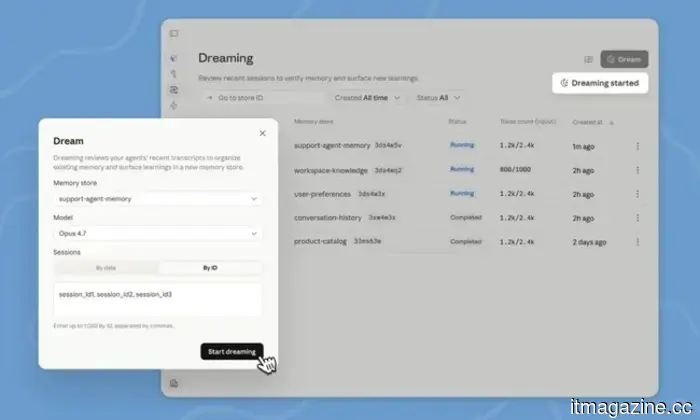
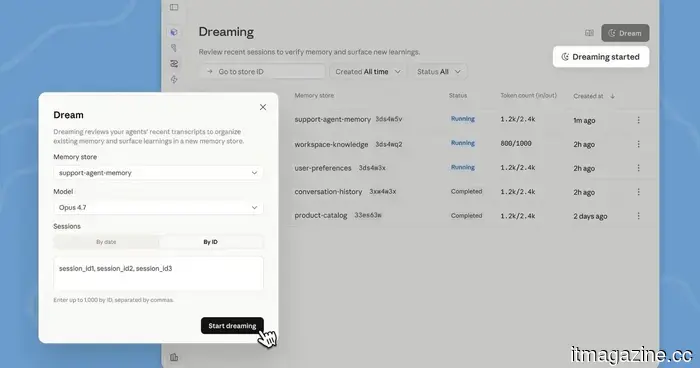
Claude's new Dreaming feature is a memory refinement system that operates between sessions, analyzing previous agent behavior to pinpoint frequent errors and workflow patterns, and subsequently updates the memory.
Anthropic has recently enabled Claude to dream between tasks, enhancing the agents' intelligence significantly.
Claude's new Dreaming feature is a memory refinement system that operates between sessions, analyzing previous agent behavior to pinpoint frequent errors and workflow patterns, and subsequently updates the memory.
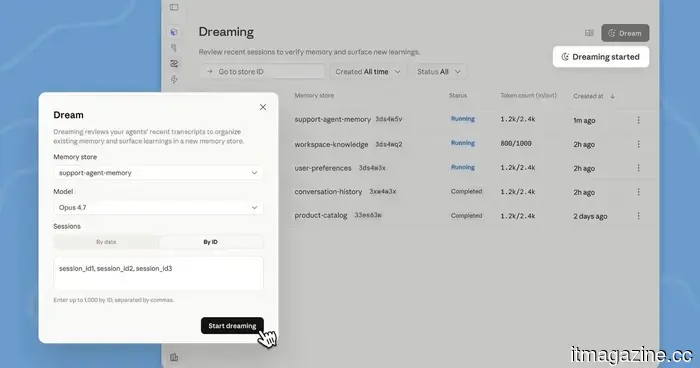 Anthropic has just instructed Claude to dream between tasks, which significantly enhances the intelligence of agents.
Claude's new Dreaming feature is a memory refinement system that operates between sessions, analyzing previous agent behavior to spot consistent errors and workflow patterns, and subsequently updates its memory.
Anthropic has just instructed Claude to dream between tasks, which significantly enhances the intelligence of agents.
Claude's new Dreaming feature is a memory refinement system that operates between sessions, analyzing previous agent behavior to spot consistent errors and workflow patterns, and subsequently updates its memory.
 Tata and JSW to invest $1 billion in developing India's independence from Chinese batteries.
Tata Group and JSW Group are individually investing in research and development centers focused on next-generation batteries and electric vehicle systems, with a total funding of $1 billion.
Tata and JSW to invest $1 billion in developing India's independence from Chinese batteries.
Tata Group and JSW Group are individually investing in research and development centers focused on next-generation batteries and electric vehicle systems, with a total funding of $1 billion.
Google addresses the silent installation of Gemini Nano in Chrome but does not fully tackle the issue of user consent.
Parisa Tabriz, the Vice President and General Manager of Google Chrome, has addressed the criticism regarding Chrome's approach of quietly downloading a 4GB Gemini Nano model onto users' devices.