
Snap's Q1 2026 reveals that the ongoing war in Iran is resulting in a monthly loss of $20-25 million in advertising revenue. Additionally, the $400 million deal with Perplexity has concluded, leading to a 16% reduction in workforce as the focus on augmented reality glasses increases.
**Summary**: Snap's Q1 revenue rose by 12% to $1.53 billion, but its stock dropped by 4% after revealing that the Iran war resulted in a loss of $20 to $25 million in advertising revenue in March alone and confirming the termination of its $400 million AI partnership with Perplexity. The company is reducing its workforce by 16% while maintaining its AR glasses subsidiary.
Snap's first-quarter earnings report was generally unremarkable, posting a revenue increase of 12% to $1.53 billion, with adjusted EBITDA more than doubling to $233 million and free cash flow nearly tripling to $286 million. The stock, however, fell by 4%. This decline was attributed not to the reported figures, but to the lowered projections and the lost partnerships. The second-quarter revenue guidance of $1.52 to $1.55 billion matched analysts' expectations, indicating no positive surprises for Wall Street. The geopolitical challenges from the Iran conflict led to a loss of $20 to $25 million in advertising revenue for Snap in March alone. Additionally, the company officially ended its AI partnership with Perplexity, which was supposed to generate about $400 million. Snap's stock has decreased by 24% this year to $6.11. Once a leader in mobile social media, Snap is now grappling with geopolitical tensions, an ineffective AI strategy, and a crucial hardware gamble that will determine its future beyond being merely a messaging app.
The impact of the Middle East conflict on advertising is not exclusive to Snap, yet Snap is more affected than many of its competitors. The company relies heavily on brand advertising, which is typically more vulnerable to geopolitical instability compared to the direct-response advertising prevalent among Meta and Google. During conflicts, advertisers often cut brand campaigns first and hold back on performance campaigns. Snap's reporting that the war in Iran resulted in a $20 to $25 million loss in just one month indicates that if the conflict persists, the annual loss could surpass $200 million—about 3% of Snap's projected revenue for 2026, though a significantly larger portion of its operating profit.
The latest earnings from major tech firms illustrate the growing divide between companies with advertising models shielded by scale and diversification and those that are not. Meta's advertising revenue surged by 33% to over $56 billion in the quarter, despite internet disruptions in Iran impacting its user count there. Alphabet's cloud and search sectors exceeded estimates across all divisions. In contrast, Snap's advertising revenue merely increased by 3%. This disparity is not just due to scale but also product differences: Meta and Google have invested substantially in AI-driven advertising tools that help optimize campaigns in real-time, thereby lessening the negative impact of broader economic challenges. Snap’s AI advertising tools are newer and less established, and the collapse of the Perplexity partnership—which was intended to enhance its AI capabilities—hinders its efforts.
The Perplexity partnership, announced in November 2025, was expected to integrate Perplexity's AI search engine into Snapchat, allowing its 483 million daily users to receive real-time answers within the app. The agreement involved a $400 million cash and equity exchange, a significant amount for a company with around $6 billion in annual revenue. The integration was projected to generate $324 million in revenue for 2026 and position Snapchat as a pioneer in social platforms with an integrated AI search function.
However, the deal was never launched. Snap's management indicated that disputes over terms hindered the rollout, and in its shareholder letter, the company confirmed that it “amicably ended the relationship in Q1” while assuming no contribution from Perplexity in its guidance. This outcome was somewhat anticipated, as Perplexity had dropped its advertising business in February 2026, believing that ads could damage the trust in its AI search engine. A company that views advertising as incompatible with its product was bound to struggle within a platform that earns 90% of its revenue from ads. The termination of this deal leaves Snap without a distinct AI strategy at a time when competitors are integrating AI into their core products.
Snap has taken proactive steps, laying off about 1,000 employees—around 16% of its workforce—and closing over 300 open positions in April. CEO Evan Spiegel informed staff that these cuts, projected to save over $500 million in annual costs by the second half of 2026, were facilitated by advancements in AI that allow smaller teams to accomplish tasks formerly handled by larger groups. This shift towards converting payroll into AI capital expenditures has marked the technology sector's restructuring efforts in 2026, with Meta and Microsoft also announcing significant layoffs and strategic shifts towards AI investments.
The layoffs were strategically aimed at safeguarding Specs Inc., Snap’s fully owned subsidiary established in January 2026 for its augmented reality glasses development. Specs Inc. remains unaffected by the cuts and is currently looking to fill nearly 100 positions. The AR
Other articles
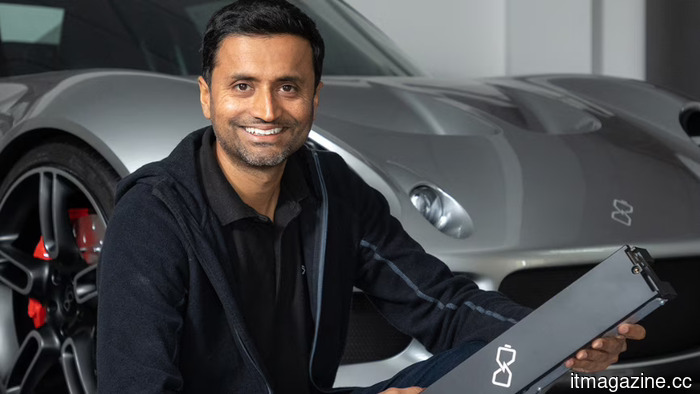 Nyobolt secures $60M in funding at a valuation of $1B, with Symbotic leading the round, to develop ultrafast-charging batteries for warehouse robots and AI data centers.
Cambridge-based battery startup Nyobolt has achieved unicorn status following a $60 million Series C funding round led by Symbotic. Their niobium batteries can charge in just seconds and endure over 20,000 cycles, making them suitable for robotics and data centers.
Snap Q1 2026: The war in Iran results in a monthly loss of $20-25 million in advertising revenue, the $400 million deal with Perplexity concludes, and a 16% reduction in the workforce occurs as the company doubles down on its investment in AR glasses.
Snap's revenue for Q1 increased by 12%, yet its stock dropped by 4%. The ongoing conflict in Iran resulted in a loss of $20-25 million in advertising revenue for March. The partnership with Perplexity AI has concluded. Additionally, the company has eliminated 1,000 jobs. The launch of Specs AR glasses represents its final wager.
Nyobolt secures $60M in funding at a valuation of $1B, with Symbotic leading the round, to develop ultrafast-charging batteries for warehouse robots and AI data centers.
Cambridge-based battery startup Nyobolt has achieved unicorn status following a $60 million Series C funding round led by Symbotic. Their niobium batteries can charge in just seconds and endure over 20,000 cycles, making them suitable for robotics and data centers.
Snap Q1 2026: The war in Iran results in a monthly loss of $20-25 million in advertising revenue, the $400 million deal with Perplexity concludes, and a 16% reduction in the workforce occurs as the company doubles down on its investment in AR glasses.
Snap's revenue for Q1 increased by 12%, yet its stock dropped by 4%. The ongoing conflict in Iran resulted in a loss of $20-25 million in advertising revenue for March. The partnership with Perplexity AI has concluded. Additionally, the company has eliminated 1,000 jobs. The launch of Specs AR glasses represents its final wager.
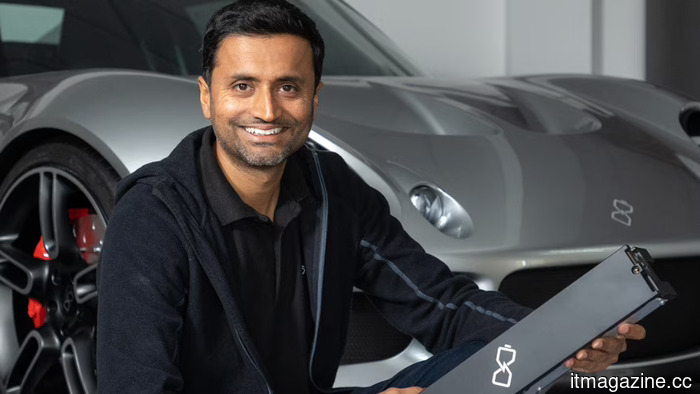 Nyobolt secures $60 million in funding at a $1 billion valuation, with Symbotic leading the investment, aimed at developing ultrafast-charging batteries for warehouse robots and AI data centres.
Cambridge-based battery startup Nyobolt has achieved unicorn status following a $60 million Series C funding round led by Symbotic. Their niobium batteries can be charged in mere seconds and have a lifespan exceeding 20,000 cycles, making them ideal for use in robots and data centers.
Nyobolt secures $60 million in funding at a $1 billion valuation, with Symbotic leading the investment, aimed at developing ultrafast-charging batteries for warehouse robots and AI data centres.
Cambridge-based battery startup Nyobolt has achieved unicorn status following a $60 million Series C funding round led by Symbotic. Their niobium batteries can be charged in mere seconds and have a lifespan exceeding 20,000 cycles, making them ideal for use in robots and data centers.
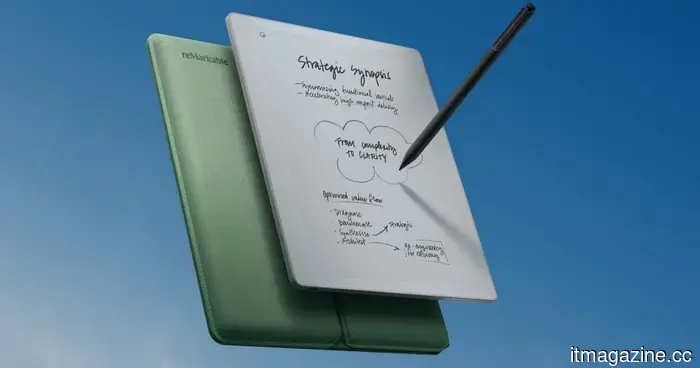 ReMarkable Paper Pure aims to be the sole notebook you'll ever require.
ReMarkable's latest offering, the Paper Pure, is a straightforward black-and-white paper tablet priced from $399. It boasts a three-week battery life, enhanced navigation speed, and a writing experience that closely resembles that of the top-tier Paper Pro.
ReMarkable Paper Pure aims to be the sole notebook you'll ever require.
ReMarkable's latest offering, the Paper Pure, is a straightforward black-and-white paper tablet priced from $399. It boasts a three-week battery life, enhanced navigation speed, and a writing experience that closely resembles that of the top-tier Paper Pro.
 Google Search updates aim to transform AI responses into a launching pad for you, rather than a cul-de-sac.
Google is introducing five updates to AI Mode and AI Overviews in Search aimed at bringing more links to the forefront and providing users with additional incentives to click on the websites associated with them.
Google Search updates aim to transform AI responses into a launching pad for you, rather than a cul-de-sac.
Google is introducing five updates to AI Mode and AI Overviews in Search aimed at bringing more links to the forefront and providing users with additional incentives to click on the websites associated with them.
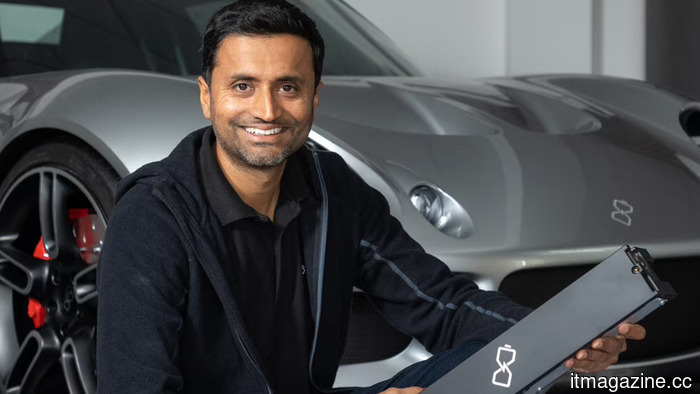 Nyobolt secures $60 million in funding at a $1 billion valuation, with Symbotic leading the investment, to develop ultrafast-charging batteries for warehouse robots and AI data centers.
Cambridge-based battery startup Nyobolt has achieved unicorn status following a $60 million Series C funding round led by Symbotic. Their niobium batteries can be charged in seconds and are designed to last over 20,000 cycles, making them suitable for use in robots and data centers.
Nyobolt secures $60 million in funding at a $1 billion valuation, with Symbotic leading the investment, to develop ultrafast-charging batteries for warehouse robots and AI data centers.
Cambridge-based battery startup Nyobolt has achieved unicorn status following a $60 million Series C funding round led by Symbotic. Their niobium batteries can be charged in seconds and are designed to last over 20,000 cycles, making them suitable for use in robots and data centers.
Snap's Q1 2026 reveals that the ongoing war in Iran is resulting in a monthly loss of $20-25 million in advertising revenue. Additionally, the $400 million deal with Perplexity has concluded, leading to a 16% reduction in workforce as the focus on augmented reality glasses increases.
Snap's revenue for Q1 increased by 12%, yet its stock dropped by 4%. The war in Iran resulted in a loss of $20-25 million in ad revenue for March. The partnership with Perplexity AI has concluded. The company has eliminated 1,000 positions. The launch of Specs AR glasses represents their final gamble.